This guide explains where indoor air pollution in a Nepali home comes from: the air that leaks in from outside and the smoke, gases, dust and damp made inside. Knowing the main source in your home tells you what will actually fix it.
What indoor air pollution is
Indoor air pollution is anything in the air inside a home that should not be there: fine particles such as PM2.5, dust, smoke, gases from cooking fuel and household products, mould spores, and the carbon dioxide we breathe out. The US Environmental Protection Agency says the sources inside a building are the main cause of indoor air problems.
The pollutants come in two kinds, and the difference matters. Particles, such as dust, smoke and PM2.5, can be caught by a filter. Gases, such as cooking fumes, VOCs and CO₂, mostly pass through a particle filter and need ventilation or source control instead.
The main sources of indoor air pollution at a glance
| Source | What it adds | Particle or gas |
|---|---|---|
| Outdoor air leaking in | PM2.5, road dust, smoke, pollen | Particle |
| Cooking, above all on firewood | Smoke, fine particles, carbon monoxide | Both |
| Incense, dhup, candles, mosquito coils | Smoke and fine particles | Both |
| Smoking indoors | Smoke and fine particles | Both |
| Paint, cleaners, new furniture | VOCs and smells | Gas |
| Household dust | Dust, fibres, dust mite allergens | Particle |
| Damp walls and leaks | Mould spores and musty smells | Both |
| People in a closed room | Carbon dioxide (CO₂) | Gas |
Outdoor pollution that gets inside
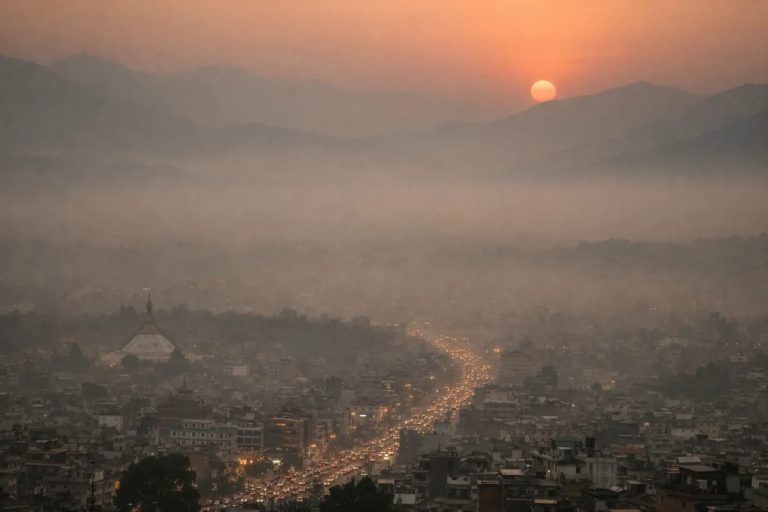
Closing the windows does not seal a house. The EPA says outdoor particles are an important source of indoor PM, and they come in through doors, windows and small cracks in walls and floors, because indoor and outdoor air are always mixing. In Kathmandu, where outdoor PM2.5 often sits above Nepal’s own limit in winter, this is the biggest particle source in many homes.
Homes near a busy road, a building site or a brick kiln get more of it. So do homes in the Terai during the winter haze and in spring when forest fires burn. For why the valley’s outdoor air is so bad, read why Kathmandu is so polluted, and for the daily reading, check the live Kathmandu AQI.
Cooking smoke and fuel
Cooking is the largest indoor source in many Nepali homes. The 2021 census found 51% of households still cook mainly on firewood and 44% on LPG, as reported by The Annapurna Express. Wood fires give off heavy smoke full of fine particles and carbon monoxide. The WHO puts deaths from household air pollution at about 2.9 million a year worldwide, mostly from cooking on open fires and simple stoves.
Gas is far cleaner than wood, but frying, roasting and tadka on high heat still throw fine particles and fumes into the kitchen. The best fix is to catch the smoke where it starts with an exhaust fan or chimney hood that vents outside. Our guide to cooking smoke, fumes and odour covers what a purifier can and cannot do in the kitchen.
Incense, dhup, candles and mosquito coils
Anything that burns indoors adds smoke. The EPA lists candles, smoking and other burning as indoor particle sources and advises good ventilation when burning candles or incense. Dhup, agarbatti and mosquito coils are part of daily life in many homes, and each one adds fine particles to a closed room. Burn them near an open window, or for a shorter time, and keep them out of bedrooms at night.
Tobacco smoke is on the EPA’s list too. If anyone smokes, the only real fix is to smoke outside.
Paint, cleaning products and new furniture
Fresh paint, varnish, glue, air fresheners, some cleaning sprays and new pressed-wood furniture give off VOCs (volatile organic compounds). These are gases, not particles, so a particle filter alone does not remove them. Airing the room well for the first days after painting does more than anything else. Read our post on VOCs from paint and furniture for the full picture.
Household dust
Dust in a Nepali home is a mix of road dust carried in from outside, soil on shoes, fabric fibres, skin flakes and dust mite allergens. It settles on floors and furniture and goes back into the air every time someone sweeps, walks or shakes out a blanket.
Damp mopping and wiping lift less dust than dry sweeping. A purifier catches the dust while it floats, but it cannot pick up what has settled. For homes with heavy dust, see our air purifier for dust guide.
Damp walls, leaks and mould
Monsoon leaks, damp ground-floor walls and rooms that never dry give mould a place to grow. Mould releases spores and musty smells into the air. The fix is to stop the water first: repair the leak, dry the wall and air the room. A purifier catches spores floating in the air, but it does not fix the damp behind them. Our post on air purifiers and mould explains how far a purifier helps.
People in a closed room
We breathe out carbon dioxide all day and night. In a small bedroom with the door and windows shut, CO₂ builds up and the air feels stuffy. No ordinary air purifier removes CO₂; only fresh air does. That is why a sealed room is not a healthy room. Read why air purifiers do not remove CO₂.
How to find the main source in your home
Answer these questions and the main source usually becomes clear:
- Is the air worse when the windows are open, or on high-AQI days? Outdoor air is getting in.
- Does the house smell of smoke or oil long after cooking? The kitchen needs better exhaust.
- Do you burn dhup, incense or mosquito coils most days? That smoke is adding up.
- Has the house been painted or new furniture arrived in the last few weeks? VOCs are likely.
- Is there dust on surfaces a day after cleaning? Dust is coming in or being stirred up.
- Are there damp patches, peeling paint or a musty smell? Look for a leak and mould.
- Does a bedroom feel stuffy in the morning? It needs more fresh air.
Once you know the source, fix it at the source first. For simple changes that cut indoor pollution without buying anything, read how to improve indoor air quality in Kathmandu homes.
Where an air purifier fits
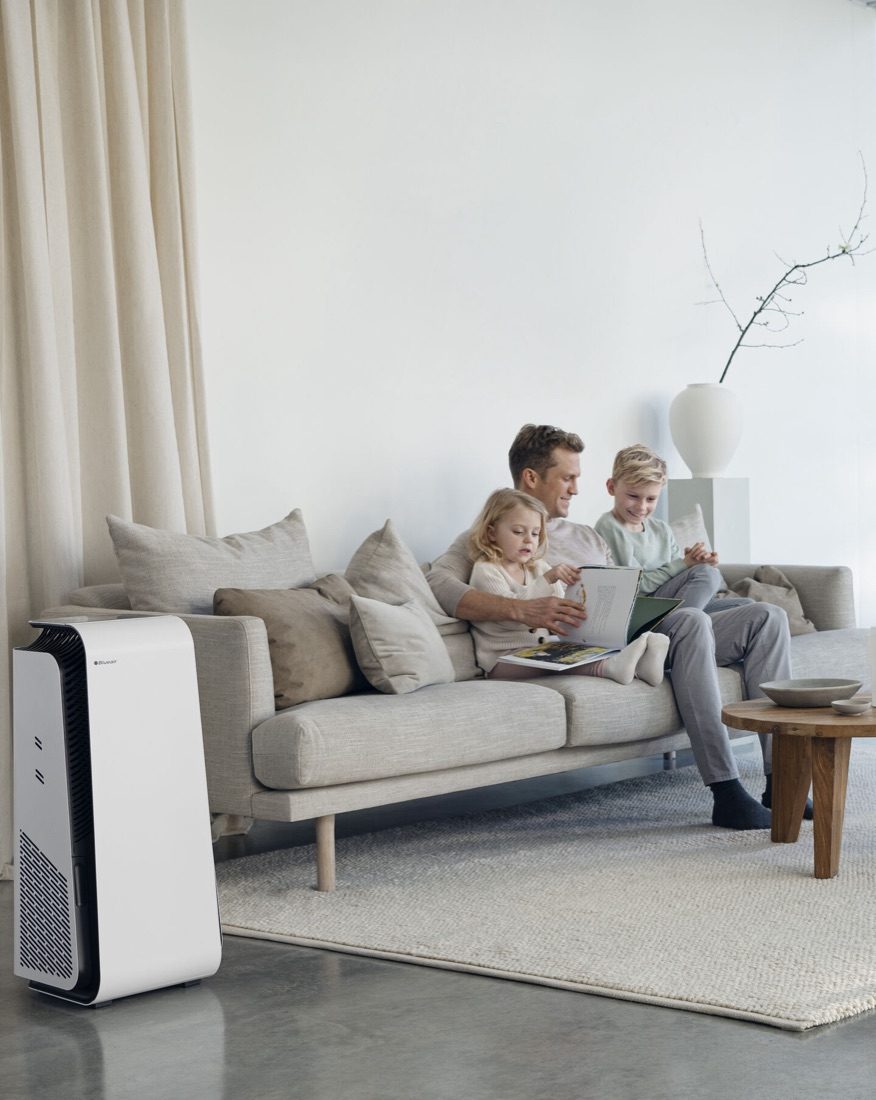
An air purifier deals with the particles: outdoor PM2.5 that leaks in, dust, smoke and pollen. It pulls the room air through its filter again and again, so it keeps working against the particles that get in through every gap. Blueair’s HEPASilent filtration captures 99.97% of particles down to 0.1 micron.
It works best when it is sized for the room. Our CADR and room size guide shows how to match one to your space, and our guide to choosing an air purifier for home has our picks.
Indoor air pollution: FAQs
What is the biggest source of indoor air pollution in Nepal?
In homes that cook on firewood, cooking smoke. Half of Nepali households still cook mainly on wood. In city homes on gas, outdoor PM2.5 leaking in is often the biggest particle source.
Can PM2.5 get inside a closed house?
Yes. Outdoor particles come in through doors, windows and small cracks even when everything is shut. Closing up cuts the amount but does not stop it.
Is burning dhup or incense bad for indoor air?
It adds smoke and fine particles to the room. Burn it near an open window, for a shorter time, and not in a closed bedroom at night.
Is cooking on gas cleaner than firewood?
Yes, much cleaner. But frying and cooking on high heat still release fine particles and fumes, so use an exhaust fan or hood that vents outside.
Does fresh paint pollute indoor air?
Yes. Paint and varnish give off VOCs, which are gases. Keep the room well aired for several days after painting.
Sources and references
- Sources of indoor particulate matter (PM), US Environmental Protection Agency
- Introduction to indoor air quality, US Environmental Protection Agency
- Household air pollution and health fact sheet, World Health Organization
- National Census 2021: significant shift in the lifestyle and usage of amenities in Nepali households (cooking fuel), The Annapurna Express
- Situation analysis of ambient air pollution and respiratory health effects in Kathmandu Valley, 2015, Nepal Health Research Council