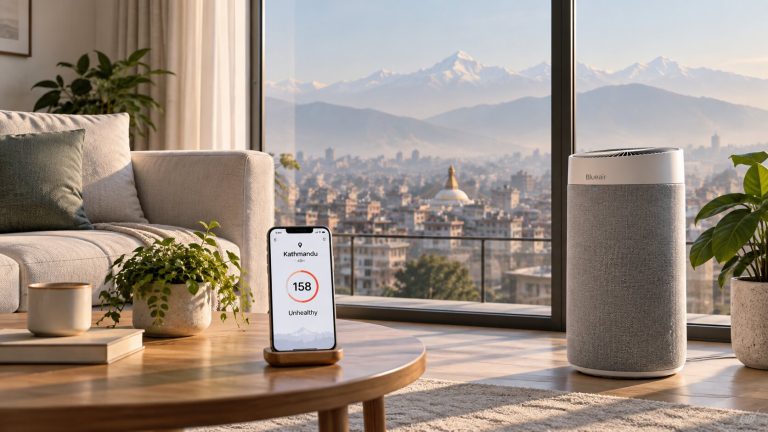
You’ve noticed your home feels stuffy on winter mornings. Your child coughs more indoors than outdoors. You wonder if you should be doing something different. And you’re frustrated that everyone says “Nepal’s air is fine” when you see the AQI on your phone hitting 200+.
Nepal’s natural beauty is real. The mountains, forests, and culture are remarkable. But natural beauty does not always mean clean indoor air. Research shows that the air in urban areas like Kathmandu is 2–4 times more polluted than in rural Nepal, based on government monitoring between 2002 and 2007. During the winter months, Kathmandu’s PM2.5 levels reach 3.5–5.9 times higher than the WHO annual guidelines.
Here’s the critical part: your home’s air can be worse than outside when windows are sealed. Without active purification, stale, polluted air accumulates inside, where you should be safest. In this guide, you’ll learn seven proven methods to improve indoor air quality, some costing nothing, others a modest investment. Whether you’re a parent protecting developing lungs, a health-conscious professional, or a caregiver managing a parent’s respiratory health, these strategies will help you create a clean-air sanctuary at home.
Why Indoor Air Quality Matters More Than You Realise
Indoor air quality matters because the air inside your home is affected by both outdoor pollution and daily activities like cooking, cleaning, burning incense, using fragrances, or opening windows during dusty hours. When these pollutants build up in closed rooms, the air can feel heavy, stale, dusty, and uncomfortable. Understanding the source of indoor pollution helps you take the right steps to keep your home air cleaner and healthier.
The Indoor Air Paradox in Kathmandu
When winter AQI exceeds 150, you close your windows. Smart decision. But this creates an unexpected problem: sealed homes without active purification trap stale, polluted air inside.
Government studies from 2002 to 2007 documented that urban Kathmandu air is 2–4 times more polluted than rural Nepal. This is the outside air trying to infiltrate your sealed home. Without countermeasures, it accumulates indoors where you spend 16–18 hours daily, especially in bedrooms where you sleep 6–8 hours nightly.
Research on indoor air quality shows that homes without mechanical ventilation or air purification can accumulate pollutants to concerning levels. Long-term exposure to these conditions contributes to respiratory disease, cardiovascular problems, and reduced lung function in children.
What Accumulates in Your Home
Even with windows sealed, pollution infiltrates through:
- Door gaps and window frames: Fine dust can enter through small openings, especially in older homes or apartments.
- AC and utility gaps: Spaces around pipes, vents, wires, and AC fittings can allow outdoor dust to move indoors.
- Cooking smoke and fumes: Gas stoves, frying, and poor kitchen ventilation can release fine particles and odours into the air.
- Incense, candles, and fragrances: These may make a room smell pleasant, but they can also add smoke and airborne particles.
- Pet dander and allergens: Pet hair, dander, and pollen can stay in the air and settle on furniture, carpets, and bedding.
- Dust mites: Mattresses, pillows, curtains, and carpets can collect dust mites and other common indoor allergens.
- Moisture and mould: Damp rooms, poor ventilation, and water leaks can create conditions where mould grows.
- Furniture and household products: Paint, furniture, cleaning sprays, and air fresheners may release VOCs into indoor air.
The result? Indoor air quality that requires active management, not passive hoping.
Method 1: Air Purification (The Most Effective Single Solution)
This is the method that works. When Kathmandu’s winter air forces you to seal your windows, air purification becomes your most reliable defence, removing 90%+ of PM2.5 that other methods miss.
Why Air Purifiers Work: The Science
If you implement only one method, air purification delivers the fastest, most comprehensive improvement. Air purifiers work by pulling indoor air through filters that capture fine particles such as dust, smoke, pollen, pet dander, and PM2.5. A good HEPA air purifier can help reduce airborne particles that are too small to see but easy to breathe in.
This is especially useful in cities like Kathmandu, where outdoor pollution can enter the home and build up indoors during winter or dusty months. For bedrooms, children’s rooms, and elderly parents’ rooms, air purification can be one of the fastest ways to improve indoor air quality.
Most Effective Solution for Kathmandu
Blueair air purifiers are engineered for exactly Kathmandu’s conditions:
- Multi-stage filtration: Helps capture fine dust, PM2.5, pollen, pet dander, and common airborne allergens.
- HEPA filter support: Helps reduce tiny airborne particles that are difficult to remove through normal cleaning.
- Activated carbon layer: Helps reduce cooking odours, smoke smell, traffic-related odours, and some VOCs.
- Strong CADR performance: Cleans indoor air faster and helps maintain better air quality in bedrooms, living rooms, and family spaces.
- Quiet operation: Suitable for continuous use in bedrooms, children’s rooms, and elderly parents’ rooms.
- Premium design: Blueair’s Swedish design fits well in modern homes without looking bulky or intrusive.
Which Rooms to Prioritise
You do not need an air purifier in every corner of your home. Start with the rooms where your family spends the most time.
Bedroom (Most Important): You spend 6–8 hours here nightly. A Blueair air purifier in your bedroom ensures you’re breathing clean air while your body repairs and your immune system regenerates. The health impact is measurable: better sleep quality, less morning congestion, improved daytime energy.
Children’s Rooms (Second Priority): Young lungs are developing. Chronic exposure to PM2.5 reduces lung function that may never fully recover. Protecting children’s air now prevents long-term respiratory problems.
Living Rooms & Study Areas (Third Priority): High-traffic spaces accumulate more dust. Clean air in these spaces improves concentration for work and studying, and ensures your family’s social spaces are healthy.
Blueair: Built for Nepal’s High-Dust Environment
Blueair air purifiers specifically address Kathmandu’s harsh conditions. The multi-stage filtration handles the constant bombardment of PM2.5, construction dust, and seasonal pollution. Models are available for every room size, from compact bedroom units to powerful living room systems.
The activated carbon filter is essential here: it removes cooking odours and traffic smells that would otherwise accumulate in sealed homes.
Method 2: Ventilation & Air Circulation
Even with a purifier, air needs to move. Stagnant air, even clean stagnant air, is unhealthy.
Strategic Window Opening
Opening windows can refresh indoor air, but timing matters. In cities like Kathmandu, avoid opening windows during peak traffic or dusty hours because outdoor pollution can easily enter your home.
Open windows for 30 to 60 minutes in the early morning or evening when outdoor air is cleaner. If possible, check the AQI first. Short, smart ventilation helps reduce stuffiness, moisture, cooking smells, and stale indoor air.
Mechanical Ventilation
If opening windows is not practical, use mechanical ventilation to remove stale air, moisture, and cooking smells. Run the bathroom exhaust fan for 15 to 20 minutes after showers and use the kitchen exhaust fan while cooking, especially if it vents air outside.
Ceiling fans and stand fans do not remove pollutants, but they help keep air moving and reduce stuffiness in closed rooms. Good air movement supports better comfort, but it works best when combined with cleaning, ventilation, and air purification.
Ventilation + Air Purification = Optimal Results
A room with both a running air purifier and circulating air achieves the best possible indoor environment. The purifier removes pollutants; proper air circulation ensures purified air reaches every part of the room, not just near the purifier.
This is especially important in bedrooms where you want consistent, clean air throughout the space.
Method 3: Humidity Control (The Often-Overlooked Factor)
Moisture control isn’t glamorous, but it’s essential. When humidity rises above 60%, dust mites and mould proliferate; below 30%, your respiratory tract dries out, and both create health problems that air purifiers alone can’t fix.
Why Humidity Matters in Kathmandu
Humidity plays a big role in indoor air quality, especially in Kathmandu homes. When humidity stays too high, it can encourage dust mites, mould growth, musty smells, and indoor allergens. This can make rooms feel damp, stale, and uncomfortable.
Very low humidity during winter can also dry the nose and throat, making the air feel harsh. For better comfort, try to keep indoor humidity around 40% to 60% through ventilation, sunlight, exhaust fans, and moisture control.
Humidity Control by Season
Humidity changes with the season, so your indoor air strategy should change too. During the monsoon season, rooms can feel damp and musty because moisture gets trapped indoors. Use bathroom and kitchen exhaust fans, open windows during drier daylight hours, and consider a dehumidifier if your bedroom, living room, or storage areas stay damp for long periods.
During winter, indoor air can become too dry, especially when heaters are used. A humidifier can help, or you can use simple methods like placing a bowl of water near a heat source or hanging a wet towel overnight. The ideal indoor humidity range is around 40% to 60%, which helps keep your home more comfortable and reduces problems linked to dampness or dryness.
The Connection Between Humidity and Air Quality
When you combine a running air purifier with proper humidity control, optimal humidity ensures allergens and pollutants don’t activate and spread. This creates the most healthy, comfortable indoor environment.
Method 4: Cleaning Habits & Maintenance
You can’t purify what’s already settled. Cleaning prevents pollutants from accumulating in the first place.
Weekly Cleaning Routine
Even with windows closed, dust infiltrates. Without regular cleaning, it accumulates:
- Vacuum carpets and rugs: Twice weekly during winter. Use vacuums with HEPA filters (NPR 15,000–30,000 investment) that capture fine particles instead of recirculating them.
- Dust surfaces: Use damp cloths (not dry cloths, which release dust back into the air). Dust surfaces where particles accumulate.
- Mop hard floors: Wet mopping captures dust; dry sweeping just spreads it.
Monthly Deep Cleaning
- Wash all linens: Bedsheets, pillowcases, blankets harbour dust mites and allergens
- Clean air vents: Dust accumulates in the AC and ventilation vents; clean them thoroughly
- Wipe ceiling fans: Dust on fan blades recirculates through your home constantly
- Clean upholstered furniture: Vacuum sofas and chairs with a HEPA vacuum
How Cleaning Supports Air Purification
A home with good cleaning habits requires less work from air purifiers. Fewer particles on surfaces means fewer particles recirculating. This extends filter life, reduces purifier runtime, and results in longer-lasting effectiveness and lower operating costs.
Method 5: Remove Indoor Pollution Sources
Before you invest in solutions, remove the problems you control. Most homes create their own indoor pollution, and eliminating these sources makes every other method work better, costs nothing to start, and immediately improves your air quality.
Cooking Smoke & Fumes
Gas cooking produces nitrogen dioxide and PM2.5. Oil cooking creates particulate matter.
Solutions:
- Install a quality range hood that vents outside (not just recirculates). Cost: NPR 12,000–40,000
- Use smaller cooking vessels: Reduces steam and smoke
- Turn on exhaust fans before cooking: Removes smoke as it’s produced
- Avoid cooking at high heat when possible: Lower temperatures produce less smoke
- Combine with air purification: A Blueair with activated carbon filters removes cooking odours even if some smoke escapes ventilation
Incense, Candles & Burning
Incense and candles produce PM2.5 particles and VOCs. Secondhand smoke contains 7,000+ chemicals.
Solutions:
- Eliminate incense burning: Switch to essential oil diffusers (no combustion)
- Avoid scented candles: Use unscented alternatives or diffusers
- No smoking indoors: Designate an outdoor smoking area only
Furniture & Building Materials Off-Gassing
New furniture, paints, and adhesives emit VOCs for months or years.
Solutions:
- Air out new furniture before delivery: If possible, let pieces sit in open air for one week before bringing them home
- Specify low-VOC paints and adhesives for renovations
- Ventilate aggressively after renovations: Open windows daily for 1–2 weeks
- Air purifiers with activated carbon remove VOCs: Essential during and after renovation
Cleaning Products & Chemicals
Many conventional products release VOCs and cause respiratory irritation.
Solutions:
- Switch to natural cleaners: Vinegar, baking soda, and lemon juice clean effectively without fumes
- Avoid aerosol sprays: Use pump bottles instead
- Reduce product variety: Fewer chemical combinations mean fewer interactions and odours
- Ventilate while cleaning: Open windows during and 30 minutes after using any products
Pet Odours & Dander
Pet dander and urine odours accumulate in closed spaces, causing allergic reactions.
Solutions:
- Groom pets regularly: 2–3 times weekly for high-shedding pets, which reduces dander
- Wash pet bedding weekly: Kills dust mites that feed on dander
- Use washable furniture covers: Easier to clean than absorbing odour into furniture
- Air purifiers are especially effective in pet-friendly homes: Continuously remove pet dander and odours
Method 6: Indoor Plants (Supplementary, Not Replacement)
Indoor plants can make your home feel fresher, calmer, and more natural, but they should not be treated as a replacement for ventilation or air purification. Their ability to remove PM2.5, smoke, heavy dust, and allergens is limited, especially in cities like Kathmandu, where outdoor pollution often enters indoor spaces.
If you want to add greenery indoors, plants like snake plant, pothos, spider plant, peace lily, and Boston fern are good options. However, plants alone cannot replace proper air purification, which we explain in detail in our blog on the 10 best air-purifying plants and whether they really clean the air.
For best results, use plants as a supportive addition while relying on regular cleaning, smart ventilation, humidity control, and a good air purifier for fine airborne particles.
Method 7: Sealing & Weatherproofing
Outdoor pollution infiltrates through gaps and cracks. Sealing your home reduces the amount of external pollution entering, which means less work for your air purifier.
Where Dust Infiltrates Your Home
- Door seals and hinges: Gaps between doors and frames allow dust to stream in
- Window frames: Especially older windows with poor seals, leak dust continuously
- AC unit gaps: Where AC refrigerant lines pass through walls
- Utility penetrations: Pipes, vents, and wires passing through walls create entry points
- Ceiling gaps: In older homes with settling and cracks
Even small gaps accumulate significant dust infiltration over time.
Budget-Friendly Sealing Solutions
Weatherstripping (NPR 1,000–3,000):
- Apply adhesive-backed foam or rubber strips around doors and windows
- Blocks gaps without permanent changes
- Easy DIY installation
Caulking (NPR 500–2,000):
- Use acrylic latex caulk (paintable, flexible)
- Seal cracks between walls and baseboards
- Apply around window frames and door frames
Door Sweeps (NPR 1,500–3,000):
- Install on exterior doors to block gaps at the bottom
- Prevents dust from being pushed under doors during wind
AC Unit Sealing (NPR 3,000–8,000):
- AC refrigerant lines pass through walls; seal gaps with foam or weatherstripping
- Prevents pollution from infiltrating through these openings
Realistic Impact
Sealing reduces pollution infiltration by approximately 30–50%, depending on how many gaps you address. Combined with air purification, you have a two-part defence: reduce what enters, purify what does.
Your Complete Air Quality System
The best way to improve indoor air quality at home is to combine different methods instead of depending on only one solution. For families in Kathmandu and other polluted urban areas of Nepal, a complete indoor air quality plan should include air purification, regular cleaning, smart ventilation, humidity control, and reducing indoor pollution sources.
Essential Steps for Cleaner Indoor Air
- Use an air purifier in priority rooms: A good HEPA air purifier in Nepal can help reduce PM2.5, dust, smoke, pollen, and common airborne allergens. Start with the bedroom, children’s room, elderly parents’ room, or living room.
- Clean regularly: Weekly vacuuming, dusting with a damp cloth, and washing bedding, curtains, and sofa covers can reduce dust buildup inside the home.
- Control humidity: During the monsoon, use exhaust fans or a dehumidifier to reduce dampness. During winter, manage dryness with a humidifier or simple moisture-balancing methods.
- Ventilate smartly: Open windows when outdoor air quality is better, and use kitchen and bathroom exhaust fans to remove moisture, cooking smells, and stale air.
- Reduce indoor pollution sources: Limit cigarette smoke, excessive incense, strong fragrances, chemical sprays, and poor kitchen ventilation.
- Seal obvious gaps: Weatherstripping doors and sealing gaps around windows, AC fittings, and pipes can reduce outdoor dust entering your home.
- Add indoor plants as support: Plants can improve the feel of a room, but they should support, not replace, proper ventilation and air purification.
For most homes, the minimum effective system is simple: one good air purifier, regular cleaning, and smart ventilation. A more complete system can include humidity control, better sealing, exhaust fans, and low-pollution household habits. This approach helps create cleaner indoor air in the spaces where your family sleeps, studies, works, and spends the most time.
Monitoring & Measuring Progress
To improve indoor air quality at home, it helps to track what is happening in your space. Many people only check outdoor AQI, but the air inside your bedroom, living room, or kitchen can be different depending on ventilation, dust, cooking smoke, humidity, and air purifier use.
You can start with free apps to check the outdoor AQI in Kathmandu:
- AirVisual: Useful for checking outdoor AQI before opening windows.
- IQAir: Shows real-time air quality data for different locations.
- Weather apps: Many phone weather apps now show the current AQI.
However, these apps do not measure the exact air quality inside your home. For more accurate tracking, you can use a home air quality monitor. Basic monitors usually show PM2.5 levels, while advanced models can also track CO₂, humidity, temperature, and indoor air trends.
Key numbers to watch:
- High PM2.5: Fine particles like dust, smoke, and pollution may be building up indoors.
- High CO₂: The room may need better ventilation or fresh air circulation.
- Humidity below 30%: Indoor air may feel too dry, especially in winter.
- Humidity above 60%: The room may feel damp and may support mould or dust mites.
Monitoring these numbers helps you understand whether your air purifier, ventilation habits, and humidity control are actually improving your indoor air quality.
FAQs
Is an air purifier really necessary if I clean regularly and open windows?
Yes, especially in cities like Kathmandu, where PM2.5 and dust can enter the home and stay trapped indoors. Cleaning removes settled dust, and window opening helps with ventilation, but an air purifier helps reduce fine airborne particles that normal cleaning cannot remove.
Which method is most important: air purification, ventilation, or humidity control?
Air purification is the most important for reducing fine airborne particles like PM2.5, dust, smoke, and allergens. However, it works best when combined with smart ventilation, regular cleaning, and humidity control.
How long before I notice air quality improvement?
You may notice fresher air and less stuffiness within a few days of using an air purifier regularly. For issues like coughing, allergies, or breathing discomfort, improvement can vary depending on the person and the condition.
Why should I buy a Blueair instead of cheaper air purifiers?
Blueair air purifiers are designed for strong filtration, good CADR performance, quiet operation, and long-term use. Cheaper purifiers may work for small spaces, but they often have lower coverage, weaker airflow, louder noise, or limited filter quality.
What’s the best placement for an air purifier?
Place the air purifier in a room where your family spends the most time, such as the bedroom, living room, children’s room, or elderly parents’ room. Keep it in an open area with enough space around it so air can flow properly.
Can’t I just open windows to fix the air quality?
Opening windows helps only when the outdoor air is clean. In Kathmandu, opening windows during high AQI, traffic hours, or dusty periods can bring more pollution inside. Use windows strategically, but do not depend on them alone.
Will this really help with kids’ health, elderly parents, or health-conscious lifestyles?
Cleaner indoor air can support better comfort for children, elderly parents, and people sensitive to dust, smoke, or allergens. It may help reduce exposure to airborne particles, but anyone with asthma, allergies, or respiratory problems should also follow medical advice.
How much does it cost to run an air purifier daily in Kathmandu?
Most air purifiers use relatively low electricity, especially when running on lower or auto mode. The daily running cost depends on the model, speed setting, and usage hours, but for most homes, it is usually a small addition to the electricity bill.
Should I use an air purifier in every room or just one?
You do not need to start with every room. Begin with priority rooms like the bedroom, children’s room, elderly parents’ room, or living room. These are the spaces where clean indoor air can make the biggest daily difference.
How should I maintain my purifier to ensure it works well?
Clean the pre-filter regularly, keep the purifier in an open space, and replace filters on time based on usage and dust levels. In Kathmandu, homes near roads, construction, or heavy dust may need filter checks more often.