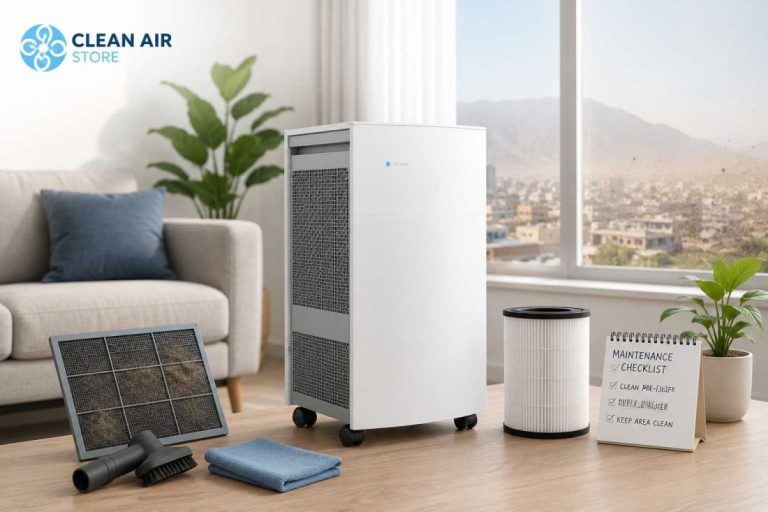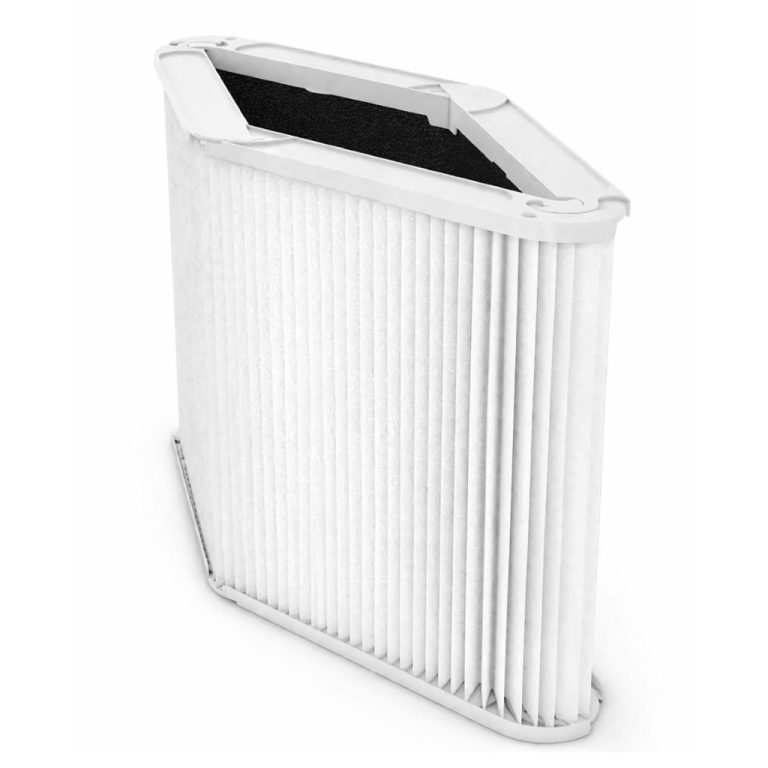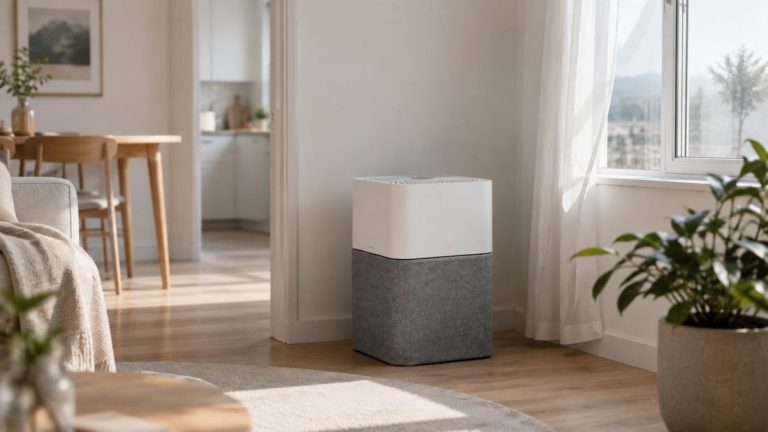
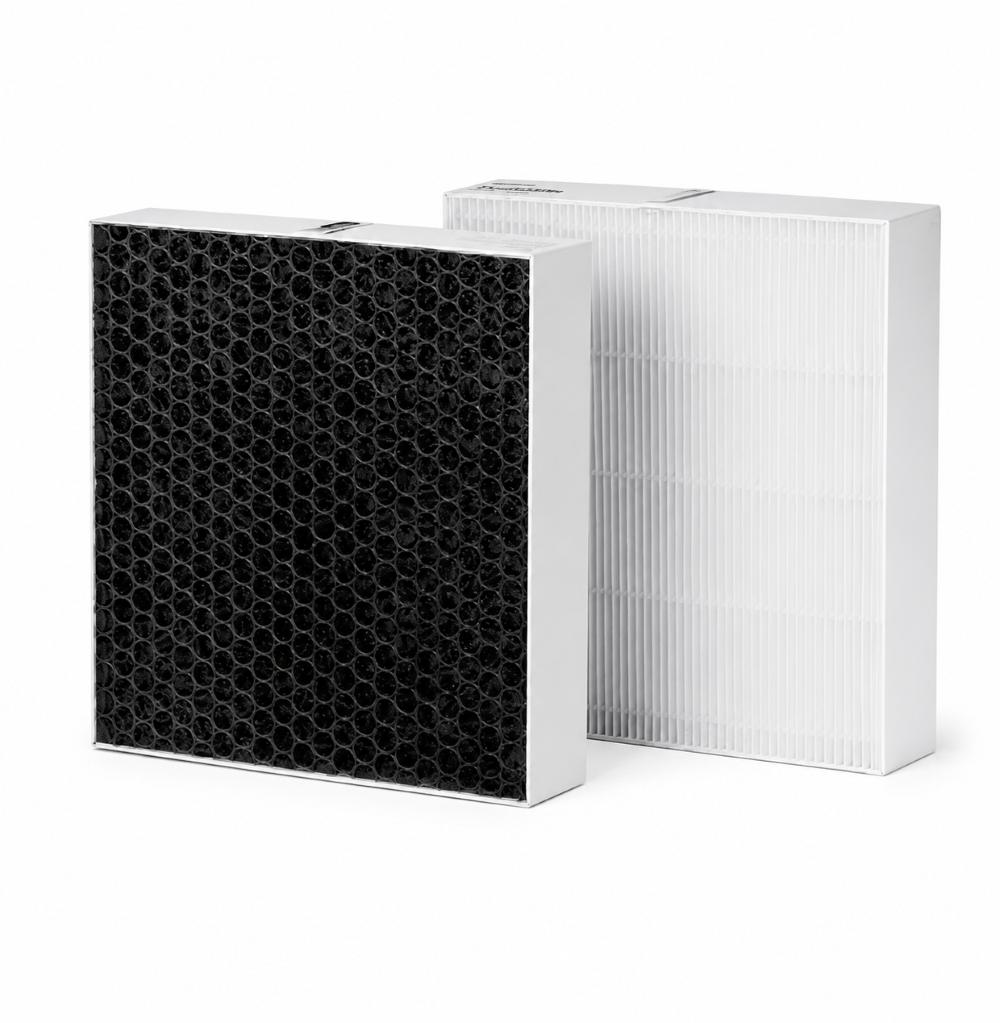
This guide covers one job: knowing when to change the filter in your Blueair air purifier. Most Blueair filters last about 6 months. DustMagnet and HealthProtect filters last 6 to 12 months. Below you will find the life and price of every genuine filter we sell, the six signs a filter is full, and what you can do to get the full life out of it.
Change the filter on time and your purifier keeps cleaning the room at the speed it was built for. Leave it too long and the machine still runs, but it catches less of the dust and smoke you bought it for.
How long each Blueair filter lasts
Find your purifier in the table. The life shown is Blueair’s own figure for normal daily use. The last column spreads the price over 6 months, so you can see what clean air costs you each month.
| Your purifier | Change the filter every | Filter price | About a month |
|---|---|---|---|
| Blue Pure 411 (also Joy S) | About 6 months | Rs 4,000 | Rs 667 |
| Blue 3410 | About 6 months | Rs 7,000 | Rs 1,167 |
| Blue 3610 | About 6 months | Rs 12,500 | Rs 2,083 |
| DustMagnet 5210i and 5240i | 6 to 12 months | Rs 8,500 (set of two) | Rs 1,417 |
| DustMagnet 5440i | 6 to 12 months | Rs 13,000 | Rs 2,167 |
| HealthProtect 7470i | 6 to 12 months | Rs 18,000 | Rs 3,000 |
| HealthProtect 7740i and 7770i | 6 to 12 months | Rs 22,500 | Rs 3,750 |
| Classic 280i | About 6 months | Rs 7,800 | Rs 1,300 |
| Classic 405 and 480i | About 6 months | Rs 15,000 | Rs 2,500 |
| Classic 680i | About 6 months | Rs 22,500 | Rs 3,750 |
| Cabin P1 and P2i (car) | About 6 months | Rs 4,000 | Rs 667 |
Not sure which model you have? The model name is on the label under or behind the purifier. Our Blueair filter price list matches every purifier to its filter.
Why filters in Nepal often need the shorter end
A filter fills up with whatever the air brings in. The more dust and smoke in your air, and the more hours the purifier runs, the sooner it is full. Plan for the shorter end of the range if any of these describe your home:
- A busy or dusty road nearby. Road and construction dust come in through windows and doors. Our air purifier for dust page shows the models with the most filter area for this.
- Winter smog. Winter brings smog, and with windows shut, more fine dust stays inside. More in our guide to winter air pollution indoors.
- Cooking smoke, dhoop and incense. Smoke is made of very fine particles, and it fills both the particle layer and the carbon layer. See air purifiers for cooking smoke and smells.
- Pets. Hair and dander add load every day.
- Windows kept open. The purifier then cleans the outside air too, and the filter carries that load.
- Long running hours. A purifier on all day and all night works through far more air than one used only in the evening. Our guide on how long to run an air purifier explains the best schedule.
This is why two homes with the same purifier can need a new filter at different times. Your purifier’s filter light already takes the hours into account, so trust it over the calendar.
6 signs your air purifier filter needs replacing
A filter does not stop working in one day. It fills up slowly, and the signs build up with it. Check for these.
1. The filter light is on
This is the surest sign, and it comes first. Blueair purifiers track filter life and tell you when it is due. The Blue Pure 411 light turns red after about 6 months. The Blue 3410 and 3610 turn yellow at about 5 months as an early warning, then red at 6. Wi-Fi models, such as the DustMagnet 5440i and HealthProtect range, also show the filter life left in the Blueair app.
A HealthProtect SmartFilter carries a small chip. Fit a new one and the purifier resets the count by itself. On other models you reset the light by hand after the change; your manual shows how.
2. Less air comes out, even on high
Hold your hand over the outlet. If the airflow on top speed feels weaker than it did when the filter was new, the filter is clogged. A clogged filter means the purifier moves less clean air into the room each hour.
3. The purifier sounds louder
Blueair lists a louder-than-usual purifier as a sign of a full filter. The fan works harder to pull air through it. Before you change the filter, check that the purifier is not pushed against a wall or a curtain, because a blocked intake can do the same.
4. Smells hang around longer
If cooking or smoke smells that used to fade now stay in the room, the carbon layer is full. This sign applies to filters with carbon: the Blue Pure 411, Blue 3410 and 3610, the DustMagnet 5440i and the HealthProtect SmartFilters. Classic filters are particle filters, so on a Classic watch the other signs.
5. The reading stays high on a normal day
On purifiers with an air quality light, a reading that stays high when the air outside is not bad can point to a full filter. There are other causes too, such as a dirty sensor or a room that is too big. Our guide on why an air purifier stays red takes you through each one.
6. The filter has turned dark grey
Some colour change after a few weeks is normal. A filter that has gone dark grey or black, or that drops dust when you tap it, is full. Use this sign together with the others, because fine smoke particles can fill a filter before it looks dirty.
What happens if you wait too long
The purifier keeps running, so it is easy to miss. But a full filter lets less air through, so the room is cleaned more slowly. Dust settles on tables and shelves sooner, smells stay longer, and the fan works harder for less result. On days when the outside air is at its worst, such as winter mornings or the spring forest fire season, you get the least protection exactly when you need the most.
Changing the filter on time keeps the purifier working at the clean air rate it was tested for. It is normal care, like servicing a motorbike, and it protects the money you spent on the purifier.
Pre-filter or main filter: what you can clean
Only the pre-filter is washable. The main filter is replaced, never washed. Water damages the fine fibres that trap particles, and a washed filter catches far less.
- Blue series fabric pre-filter: the coloured fabric cover on the outside. Vacuum it or wash it as the care label says, and let it dry fully before you fit it back. Blueair suggests cleaning it every 2 to 4 weeks in dusty homes or homes with pets.
- DustMagnet pre-filters: the two outer panels catch larger dust before it reaches the main filter. Wipe them clean regularly.
- Main filter: do not wash it. At most, vacuum loose dust off the surface gently.
A clean pre-filter takes the coarse dust, so the main filter spends its life on the fine particles that matter most. For a full care routine in the dusty months, read our air purifier maintenance tips.
How to change a Blueair filter
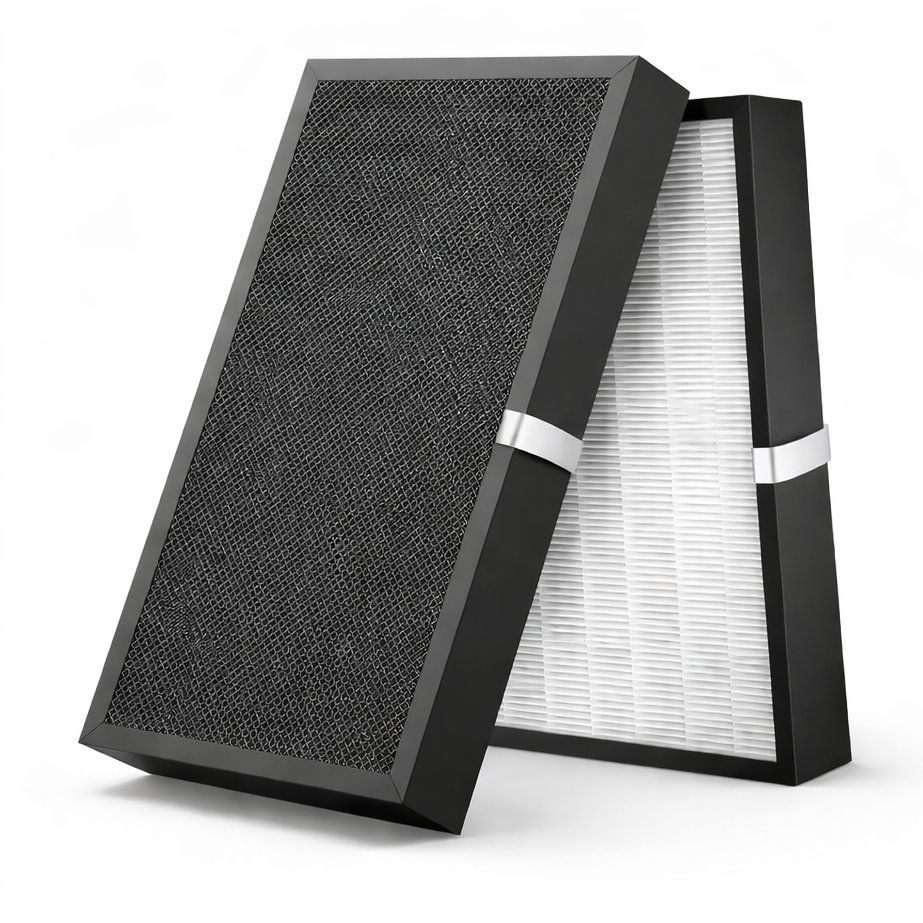
Changing a filter takes a few minutes and needs no tools. Switch the purifier off and unplug it, open the body, lift out the old filter, take the plastic wrap off the new one and fit it the same way round. Then plug in and reset the light if your model needs it.
Blueair has short official videos for the two models people ask us about most: replacing the HealthProtect SmartFilter and changing the DustMagnet main filter.
Genuine Blueair filters vs copy filters
Copy filters for Blueair models are sold online at lower prices. They look the same in a photo, but the filter is the part that does the cleaning. Blueair advises using genuine filters that match your purifier, and says cheaper third-party filters may not fit properly and might void your warranty.
| What to check | Genuine Blueair filter | Copy filter |
|---|---|---|
| Fit | Made for your model, sits tight in the frame | May leave gaps, so air slips around it |
| Filter media | HEPASilent media the purifier was tested with | Unknown media, no published test |
| Smart features | SmartFilter chip resets the count by itself | No chip, the light does not reset |
| Warranty | Keeps your purifier warranty valid | Might void it |
Every filter we sell is genuine Blueair, kept in stock in Nepal and delivered to your town: 1 to 2 working days in the Kathmandu Valley and 3 to 5 days in most other cities. Send a photo of your purifier’s label on WhatsApp and we will confirm the right filter.
FAQs
How often should I change my Blueair filter?
About every 6 months for Blue, Classic and Cabin filters, and every 6 to 12 months for DustMagnet and HealthProtect filters. Dusty months and all-day use fill a filter sooner, so change it when the filter light comes on, even if the date has not come yet. The table at the top of this guide lists the filter and price for each model.
Why is my filter light on when the filter still looks clean?
The light counts the hours the purifier has run, and the filter can be full of fine particles you cannot see. Smoke and PM2.5 are too small to colour the filter much. Trust the light and change the filter. Our genuine Blueair filters are listed by model.
Can I vacuum the main filter to make it last longer?
Only lightly, to lift loose dust off the surface. Vacuuming does not empty the fine dust trapped deep in the media, so it does not reset the filter’s life. Clean the pre-filter often instead; that is what helps the main filter last.
Which Blueair filters also remove smells?
Filters with a carbon layer: the Blue Pure 411, Blue 3410 and Blue 3610 filters, the DustMagnet 5440i filter and the HealthProtect SmartFilters. Blueair says they handle light household smells from cooking, pets and smoke. Classic filters are particle filters only. More on smells in our cooking smoke guide.
Should I keep a spare filter at home before winter?
It is a good idea if you live outside the Kathmandu Valley or run the purifier all day. Winter smog fills filters faster, and a spare means no days without clean air while a new one is on its way.
How do I know which filter my purifier needs?
Look at the label under or behind the purifier for the model name, then find it in the table at the top of this guide. If the label is worn, send us a photo of the purifier on WhatsApp and we will tell you.
Sources and references
- How often should you replace your air purifier filter? (signs, pre-filters, genuine filters), Blueair
- How do I clean the pre-filter?, Blueair
- How often should I replace the SmartFilter? (maximum 1 year), Blueair
- Blue Pure 411 Auto (filter every 6 months), Blueair
- Guide to Air Cleaners in the Home, US Environmental Protection Agency
- Replacing the HealthProtect SmartFilter (official video), Blueair