This guide explains one thing: what a HEPA filter is and how it cleans the air inside an air purifier. You will learn what the 99.97% figure really means, how true HEPA, H13 and “HEPA-type” labels differ, how Blueair’s HEPASilent filtration compares, and what a HEPA filter cannot remove.
Ready to buy instead? Our HEPA air purifier price list for Nepal shows every Blueair HEPASilent model we stock, with room sizes and filter prices.
What HEPA means
HEPA stands for High Efficiency Particulate Air. It is not a brand. It is a standard for how much of the dust and smoke in the air a filter must catch.
The standard comes from the US Department of Energy. A HEPA filter must stop at least 99.97% of particles 0.3 micron in size. A micron is one thousandth of a millimetre, so a 0.3 micron particle is about 200 times thinner than a human hair.
The US EPA explains why the test uses 0.3 micron. It is the hardest size to catch, called the most penetrating particle size. Particles larger and smaller than 0.3 micron are caught even more easily. So 99.97% is the worst result a HEPA filter is allowed, not the best.
How a HEPA filter catches particles
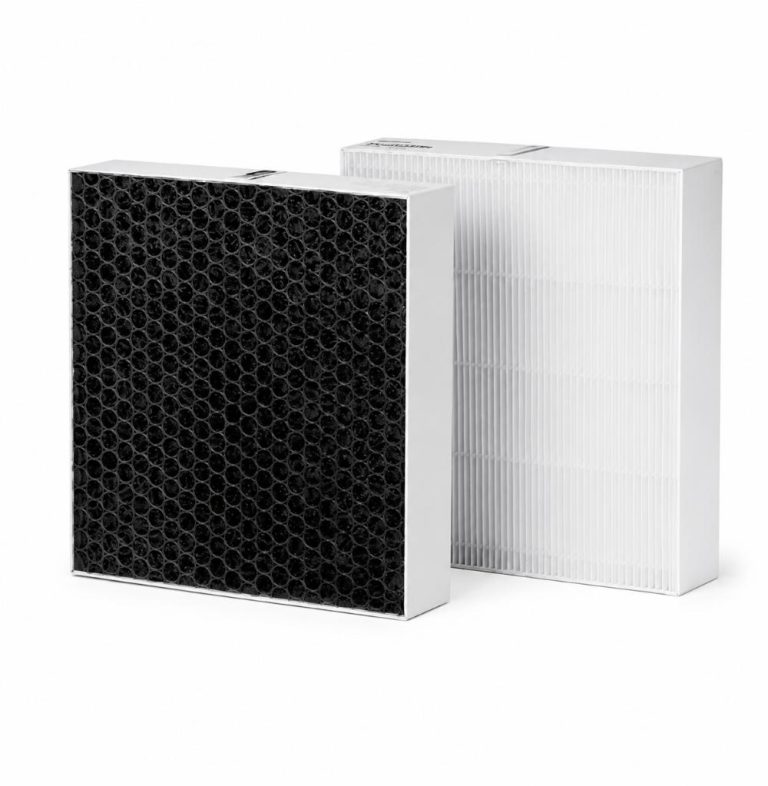
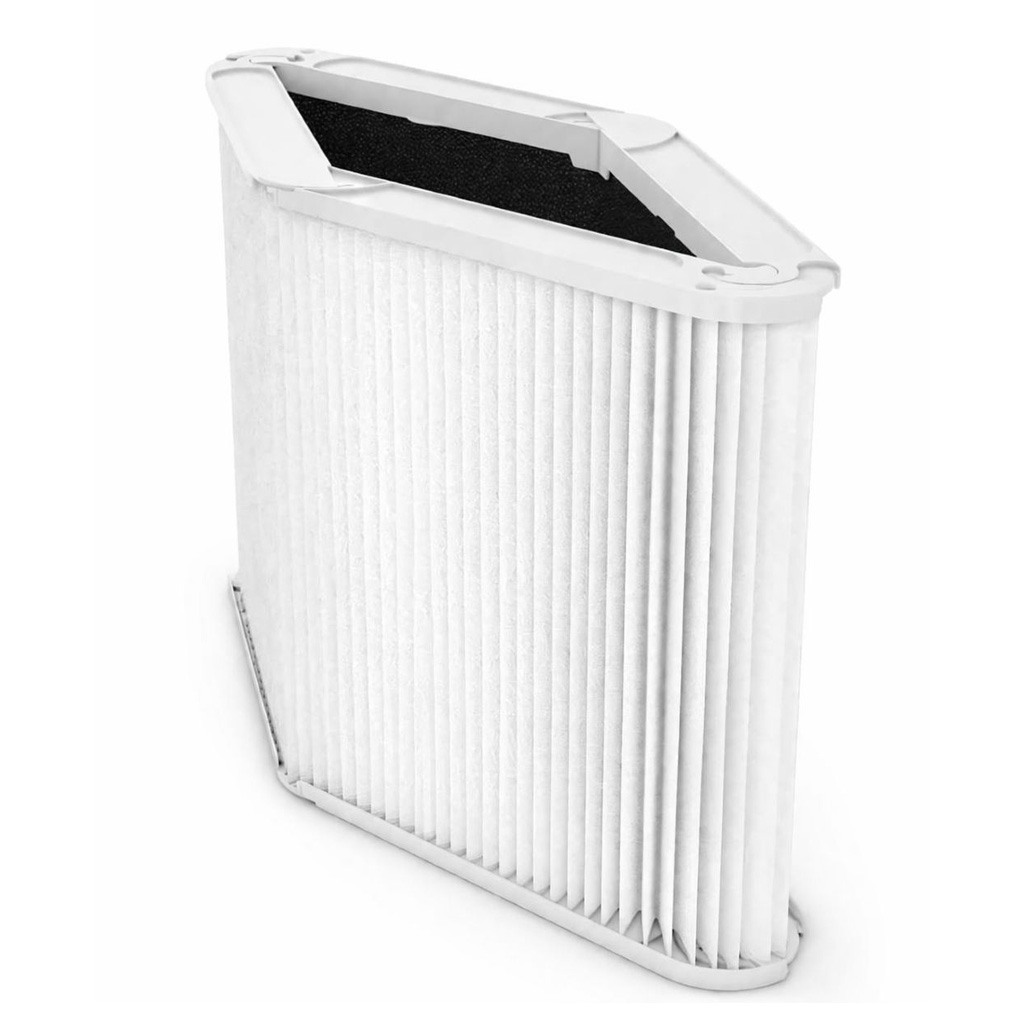
A HEPA filter is a sheet of very fine glass or plastic fibres, folded many times so a lot of filter fits in a small frame. The fan pushes room air through it. The fibres are not a simple sieve with holes smaller than the dust. They catch particles in four ways:
| How it catches | What happens | Typical particles |
|---|---|---|
| Impaction | Heavy particles cannot turn with the air and hit a fibre head on. | Coarse dust, lint, large pollen |
| Interception | Particles following the air pass close to a fibre, touch it and stick. | Pollen, mould spores, pet dander |
| Diffusion | The tiniest particles zigzag in the air and bump into fibres. | Smoke, PM1, ultrafine particles |
| Sieving | Particles too big for the gaps between fibres are blocked. | Hair, dust clumps |
Diffusion is why a HEPA filter catches very small smoke particles so well. Impaction and interception handle the bigger ones. The middle sizes, around 0.3 micron, are the ones that slip past both, which is why the test is set there.
True HEPA, H13, H14 and “HEPA-type”: what the labels mean
Air purifier boxes use several HEPA labels. Only some of them point to a real test.
| Label | What it means | Tested to |
|---|---|---|
| True HEPA | Meets the US standard: at least 99.97% at 0.3 micron | US Department of Energy standard |
| H13 | European class: at least 99.95% at the most penetrating particle size | EN 1822 |
| H14 | European class: at least 99.995% at the most penetrating particle size | EN 1822 |
| “HEPA-type”, “HEPA-like”, “99% HEPA” | Marketing words. No standard sits behind them | None |
H13 and true HEPA are very close. The European test is stricter in one way: it measures each filter at its own weakest particle size, and H13 filters come with their own test report. If a box says only “HEPA-type”, ask the seller for the test result. If there is none, treat it as an ordinary filter.
Blueair HEPASilent: how it differs from true HEPA
Every Blueair home air purifier we sell uses HEPASilent, Blueair’s own filtration. It is not a true HEPA filter, and Blueair does not call it one. It works in two steps:
- Electrostatic step. Particles in the incoming air are given a small electrical charge.
- Mechanical step. The charged particles stick to the filter fibres far more easily than uncharged ones.
Because the charge does part of the work, the filter can be less dense than a true HEPA filter. Air passes through it with less effort. For you this means a quieter fan and a lower power bill for the same clean air. Blueair says HEPASilent removes at least 99.97% of airborne particles down to 0.1 micron, a smaller size than the 0.3 micron used in the HEPA test.
Our Blueair technology page shows the full process step by step, with Blueair’s own test notes.
What a HEPA filter removes, and what it cannot
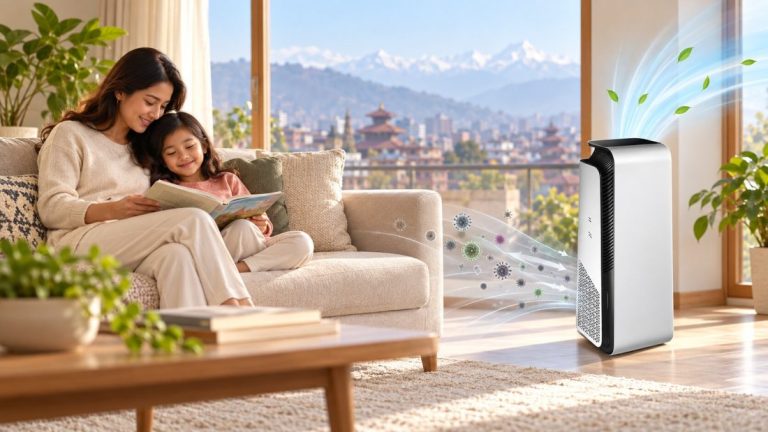
A HEPA filter works on particles: tiny bits of solid or liquid floating in the air. It does nothing to gases.
| In your air | Does HEPA help? | Note |
|---|---|---|
| Road and construction dust | Yes | Our air purifier for dust page shows the models with the most filter for dusty homes |
| PM2.5 and PM1 | Yes | These are the fine particles in winter smog and smoke |
| Pollen, pet dander, dust mite allergens | Yes | Caught while they float in the air |
| Smoke particles | Yes | The smell stays, because smell is a gas |
| Mould spores | Yes | The damp that grows the mould still needs fixing |
| Bacteria and viruses | Partly | Caught when carried on particles in the air |
| Cooking smells, odours | No | Needs activated carbon |
| VOCs and chemical fumes | No | Needs activated carbon |
For smells and fumes, a purifier needs a layer of activated carbon next to the particle filter. Our guide to air purifier types explains how carbon, UV and smart features add to HEPA.
Further reading: cooking smoke and smells, VOCs from paint and new furniture, viruses and bacteria and mould.
A good filter is only half the job: why CADR matters
The HEPA rating tells you how much of the dust a filter catches each time air passes through it. It does not tell you how much air the purifier moves. A purifier with a perfect filter and a weak fan still cleans a big room slowly.
That second number is CADR, the clean air delivery rate, shown in m³/h. It is tested to AHAM standards and already counts both the filter and the fan. Two purifiers with the same HEPA filter can have very different CADR. When you compare models, check the filter type first, then the CADR for your room size. Our CADR and room size guide shows how to work it out.
Looking after a HEPA filter
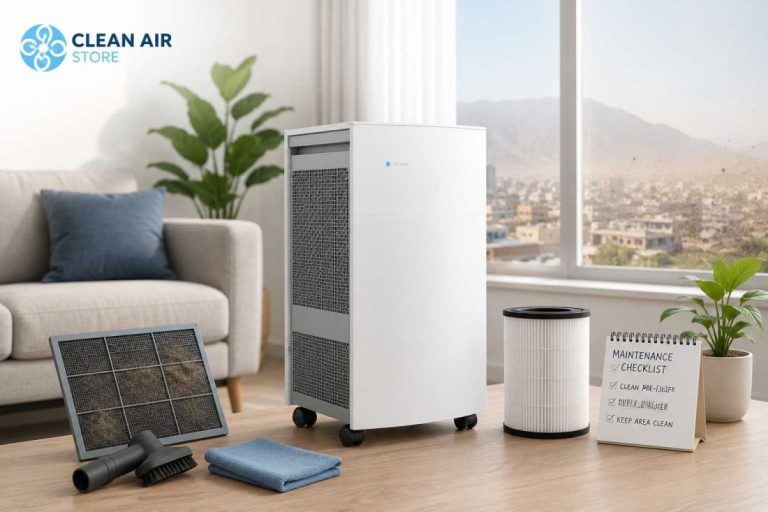
A HEPA or HEPASilent filter is replaced, not washed. Water and brushing damage the fine fibres. Blueair Blue Series models have a fabric pre-filter in front that you can vacuum or wash, which keeps hair and large dust off the main filter.
How long a filter lasts depends on the model and how dusty your home is. Our guide on how often to change Blueair filters lists the life and price of every genuine filter, and the signs that yours is full.
Buy a HEPA air purifier in Nepal
Every Blueair home air purifier we sell uses HEPASilent filtration, from the Blue Pure 411 at Rs 22,000 to the HealthProtect 7770i. We are the authorised Blueair dealer in Nepal, so the warranty is handled here, genuine filters are in stock, and we deliver across Nepal. Compare all six models on our HEPA air purifier page, or send your room size on WhatsApp and we will tell you which one fits.
FAQs
What does HEPA stand for?
HEPA stands for High Efficiency Particulate Air. It is a filter standard from the US Department of Energy: the filter must stop at least 99.97% of particles 0.3 micron in size.
Is an H13 filter the same as true HEPA?
They are very close. H13 is a European class that must stop at least 99.95% of particles at the hardest size to catch. True HEPA is the US standard of 99.97% at 0.3 micron. H14 is stricter than both, at 99.995%.
What does “HEPA-type” mean on an air purifier box?
Nothing official. “HEPA-type”, “HEPA-like” and “99% HEPA” are marketing words with no standard behind them. Ask the seller for a test result to EN 1822 or the US standard. Without one, treat it as an ordinary filter.
Does a HEPA filter catch PM2.5 and PM1?
Yes. PM2.5 and PM1 are particles, and they fall right in the range a HEPA filter is built for. Our post on PM2.5 and your health explains why these fine particles matter most in Kathmandu.
Why is the HEPA test done at 0.3 micron?
Because 0.3 micron is the hardest particle size for a filter to catch. Larger particles hit the fibres and the smallest ones zigzag into them, so both are caught more easily. Testing at 0.3 micron gives the worst-case result.
Sources and references
- What is a HEPA filter? (99.97% at 0.3 micron, most penetrating particle size), US Environmental Protection Agency
- DOE-STD-3020-2015, Specification for HEPA Filters, US Department of Energy
- EN 1822 filter classes (H13 at least 99.95%, H14 at least 99.995% at MPPS; H13 and up tested individually), MANN+HUMMEL
- HEPASilent removes 99.97% of airborne particles down to 0.1 micron (Blue Pure 211i Max FAQ), Blueair
- Guide to Air Cleaners in the Home (particles vs gases, activated carbon), US Environmental Protection Agency
- Particulate Matter Basics (a human hair is about 70 micrometres across), US Environmental Protection Agency
- AHAM Verifide air cleaner certification and CADR ratings