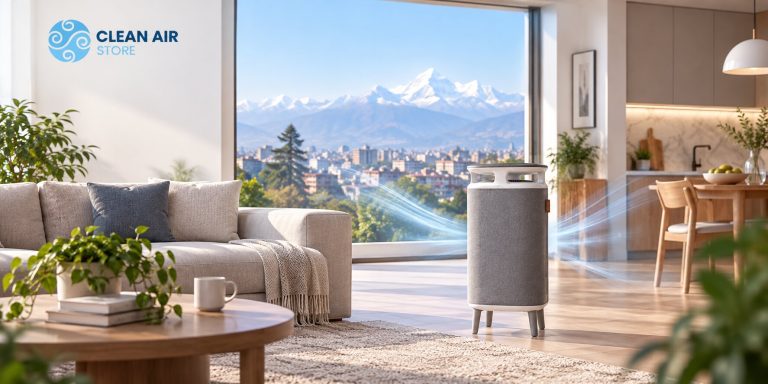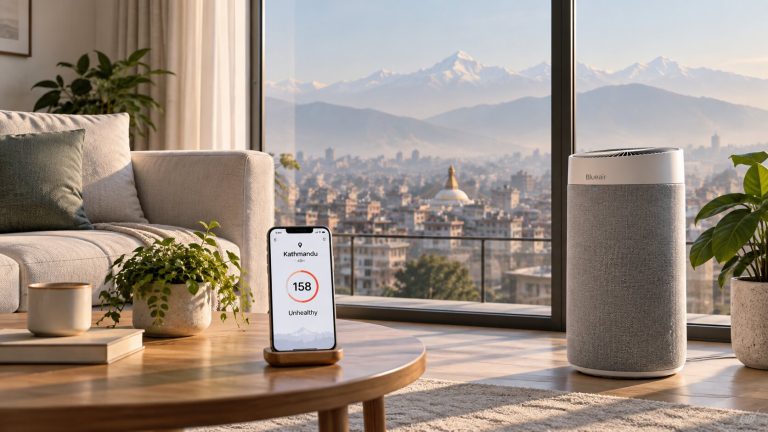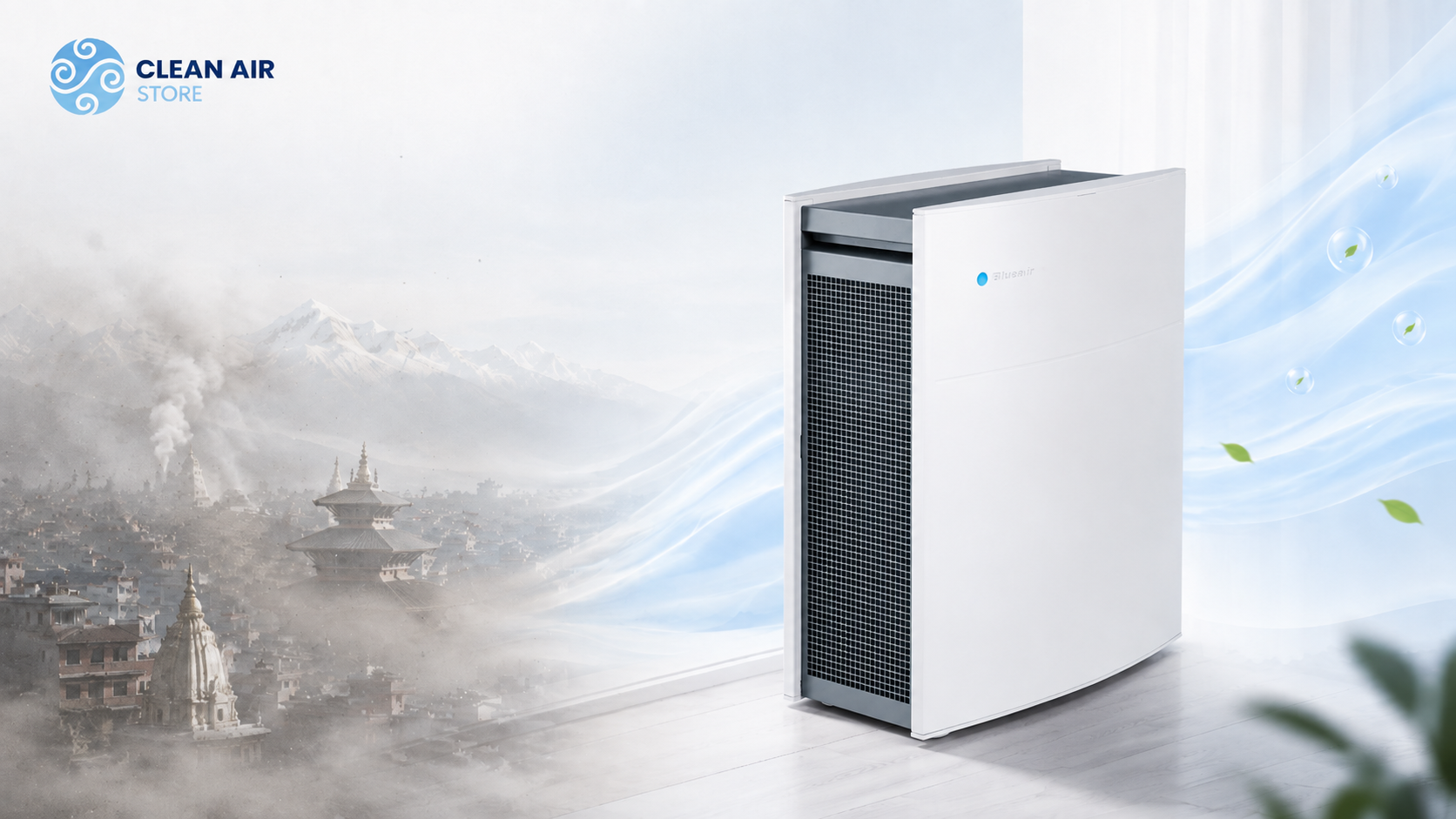
Kathmandu’s air often becomes visibly hazy during winter. Cold, dry weather, weak winds and pollution from vehicles, road dust, construction, industry, brick kilns and burning can combine to create long periods of poor air quality.
At the same time, people spend more time indoors and keep windows closed to stay warm. That may reduce some outdoor pollution entering the room, but it does not guarantee clean indoor air. Fine particles can still enter through doors, window gaps and ventilation openings. Cooking, incense, candles, dust and other indoor sources can increase indoor pollution at home.
Therefore, winter air pollution in Kathmandu is not only an outdoor concern. Keeping indoor air cleaner requires a combination of source control, sensible ventilation, regular cleaning and, when needed, effective air filtration.
Why Does Air Pollution Get Worse in Kathmandu During Winter?
Air pollution gets worse in Kathmandu during winter because the valley’s cold and stable weather traps pollutants close to the ground. Temperature inversions, less rain and weaker winds prevent vehicle emissions, smoke and dust from dispersing quickly, allowing pollution to accumulate over several days.
The pollution comes from several sources, including:
- Vehicle exhaust and congestion
- Road and construction dust
- Industrial boilers and furnaces
- Brick kilns in and around the valley
- Burning wood and other biomass for heat or cooking
- Open waste and outdoor burning
- Pollution transported from other areas within the wider airshed
Kathmandu’s air pollution comes from both local and regional sources. The World Bank identifies contributions from industry, households and transport, while recent ICIMOD monitoring also recorded poor winter air quality in the valley. Because pollution changes daily, checking a reliable AQI reading and understanding Kathmandu’s PM2.5 and AQI levels is more useful than assuming every morning or evening will be equally polluted.
Does Outdoor Pollution Affect Indoor Air?
Yes. Outdoor pollution can affect the air inside homes, apartments, classrooms and offices. Staying indoors may reduce direct exposure when outdoor air is poor, but it does not guarantee clean air. Keeping indoor air cleaner at home requires attention to both outdoor pollution and pollutants created inside the room.
Fine particles can enter through windows, doors, exhaust openings and small gaps around frames. Dust can also be carried indoors on shoes, clothes, bags and pets before settling on floors and furniture. Whenever doors or windows open, polluted outdoor air may enter and mix with the air already inside.
Indoor activities can make the problem worse. Frying, gas cooking, burning incense, lighting candles and smoking can release smoke, particles and odours, while dust from carpets, bedding and curtains can return to the air when disturbed. As the U.S. EPA explains in its indoor air guidance, indoor pollution comes from both outdoor air and sources within the building. Therefore, closing the windows is only one part of keeping indoor air cleaner during winter.
Common Indoor Air Problems During Kathmandu Winter
During winter, closed windows and limited ventilation can allow outdoor pollution and indoor pollutants to build up inside Kathmandu homes. The most common problems include PM2.5, cooking and incense smoke, dust, allergens and stuffy indoor air.
PM2.5 Fine Particles
PM2.5 refers to airborne particles measuring 2.5 micrometres or smaller. These fine particles can remain suspended in the air and come from sources such as vehicle exhaust, burning, industrial activity and cooking smoke.
Winter increases exposure because polluted air remains trapped near the ground. Outdoor PM2.5 can also enter closed rooms and mix with particles produced inside the home.
Smoke From Cooking and Incense
Frying, grilling, overheating oil and gas cooking can release fine particles, fumes and gaseous pollutants, especially when ventilation is poor. Incense, dhoop and candles can also produce smoke that remains trapped inside closed rooms.
Use an outdoor venting kitchen exhaust fan, ventilate when outdoor air is cleaner and limit unnecessary indoor burning. Particle filters can capture smoke particles, while activated carbon can help reduce some odours.
Dust and Allergens
Kathmandu homes often collect dust from roads, construction and everyday movement. Carpets, curtains and bedding can also hold dust, pollen, pet dander and other allergens before releasing them back into the air.
Air purifiers can reduce airborne particles, but regular cleaning is still necessary to remove settled dust. Learn how to choose the best air purifier for dust in Kathmandu based on filtration, room size and placement.
Stuffy Indoor Air
Closed windows can limit fresh air and allow odours, moisture and carbon dioxide to build up. An air purifier can filter airborne particles, but it does not remove carbon dioxide, so brief ventilation is still needed when outdoor air improves.
Dampness, condensation and musty smells should also be investigated because filtration cannot repair leaks or solve mould and moisture problems.
Who Should Be Most Concerned?
Understanding the health effects of PM2.5 in Kathmandu is especially important for:
- Babies and young children
- Older adults
- Pregnant women
- People with asthma or other respiratory conditions
- People with allergies or strong dust sensitivity
- People with heart or lung conditions
- Students who spend long hours in closed classrooms or study rooms
- Office staff and people working from home
An air purifier with effective particle filtration can help reduce airborne PM2.5, dust, smoke particles and common allergens inside the room. However, cleaner indoor air can only reduce avoidable exposure and is not a medical treatment. Anyone experiencing breathing difficulty, chest pain or worsening symptoms should seek appropriate medical care.
Practical Ways to Keep Indoor Air Cleaner During Winter
The best results come from controlling pollution at its source, ventilating at the right time, cleaning effectively and understanding how an air purifier can help when additional filtration is needed.
- Check outdoor air before opening windows. Use a reliable AQI source or local monitoring station. Keep windows closed when nearby air is heavily polluted, smoky or dusty.
- Ventilate when conditions improve. If outdoor air becomes cleaner later in the day, open windows briefly to replace stale air. The best time can vary, so use current local conditions rather than a fixed daily schedule.
- Use kitchen exhaust properly. Run a hood or exhaust fan that vents outdoors while cooking and for a short period afterwards. Keep the kitchen door closed if smoke spreads to bedrooms.
- Reduce indoor burning. Limit incense, dhoop and candles, especially in small rooms. Never smoke indoors.
- Use wet dusting. A damp cloth captures dust instead of pushing it back into the air. Clean window ledges, shelves, fan blades and other places where fine dust collects.
- Vacuum regularly. Give extra attention to carpets, sofas, mattresses and fabric furniture. If possible, use a vacuum with effective particle filtration and empty it carefully.
- Keep outdoor shoes near the entrance. This reduces the soil and road dust carried into bedrooms and living areas.
- Wash bedding and clean curtains. Follow the fabric instructions and clean them regularly, particularly in rooms used by people with allergies.
- Maintain heating, ventilation and air conditioning systems. Clean or replace filters according to the equipment instructions. Make sure vents and exhaust fans are working and not blocked.
- Control moisture. Repair leaks, dry wet areas and investigate condensation. Filtration alone does not solve dampness or mould growth.
- Create one cleaner room first. If cleaning the entire home is difficult, prioritise the bedroom or family room where vulnerable household members spend the most time.
Can an Air Purifier Help During Winter?
Yes. A correctly sized air purifier can help reduce airborne PM2.5, dust, pollen, pet dander, allergens and smoke particles. It is particularly useful when Kathmandu’s outdoor pollution is high, windows remain closed and fine particles begin accumulating indoors.
Its effectiveness depends on the filter, airflow, room size, fan speed, placement and operating time. In Kathmandu, air purifiers can be helpful for roadside apartments, homes near construction areas and rooms affected by cooking or incense smoke. However, filtration should be combined with dust control, timely ventilation and regular cleaning.
An air purifier cannot:
- Eliminate all indoor pollution
- Stop outdoor pollution at its source
- Replace ventilation with cleaner outdoor air
- Remove carbon dioxide from the room
- Fix dampness, leaks or mould growth
- Remove every gas, chemical or odour
- Replace regular cleaning of floors, furniture and fabrics
What Features Should You Look For?
The right air purifier should match your room size, main pollution concern and daily use. Compare filtration, airflow, noise, room coverage and replacement filter availability before choosing a model.
Effective particle filtration
A HEPA air purifier or another independently tested high-efficiency particle filtration system should be able to capture fine airborne particles.
Choose a purifier with effective particle filtration for PM2.5, dust, pollen, smoke particles and pet dander. The Blueair Blue 3410 uses HEPASilent technology and is listed for rooms up to 36 m², depending on your room size and indoor air quality needs.
Activated carbon
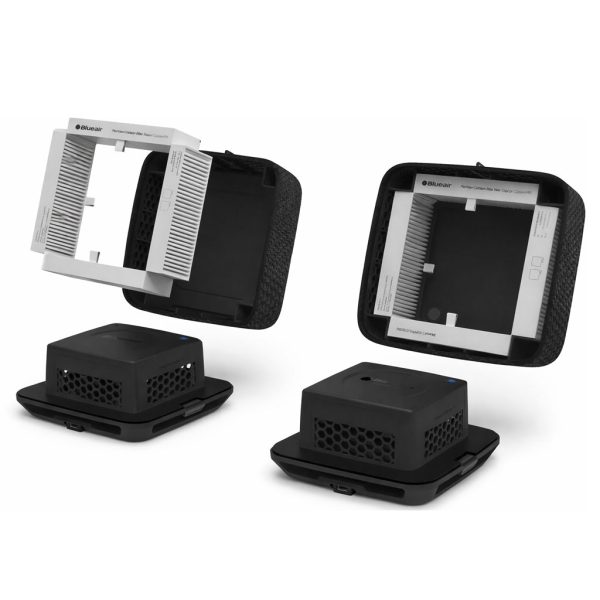
Activated carbon helps reduce cooking odours, incense smell, smoke odour and some gas-based pollutants. The replacement filter for Blue 3410 combines particle and activated carbon filtration, depending on your filtration and odour control needs.
CADR and room coverage
CADR shows how much filtered air a purifier can deliver. A purifier must provide enough airflow for the size of the room. The Blueair Blue 3610 is listed for rooms up to 51 m² and may suit larger bedrooms, living rooms or offices, depending on your room size and indoor air quality needs.
Noise and operating modes
For bedrooms, offices and study rooms, choose a purifier that is quiet enough for regular use. The DustMagnet 5440i provides quiet operation, auto mode and app control, depending on your room size and indoor air quality needs.
Filters, warranty and support
Before buying, check the replacement filter cost, filter availability, warranty and local service support. The HealthProtect 7770i includes a three-year warranty and uses a genuine replaceable filter, depending on your room size and indoor air quality needs.
What an Air Purifier Can and Cannot Do
An air purifier can reduce several airborne pollutants when it is correctly sized and used consistently. However, it should support ventilation, cleaning and pollution control rather than replace them.
| What It Can Help With | What It Cannot Do |
| Reduce airborne PM2.5 inside a room | Make heavily polluted outdoor air safe |
| Capture fine dust before some of it settles | Remove dust already settled on floors, carpets or furniture |
| Reduce airborne pollen, pet dander and other allergens | Cure asthma, allergies or other medical conditions |
| Capture smoke particles and reduce some odours | Remove every gas or replace a kitchen exhaust fan |
| Filter and recirculate indoor air | Supply fresh oxygen or remove carbon dioxide |
| Support a broader indoor air quality plan | Repair leaks, damp walls or mould growth |
Results depend on the pollution source, room size, airflow, placement and operating time.
Keep Your Indoor Air Cleaner This Winter
Start by measuring your room and identifying whether your main concern is PM2.5, dust, smoke, allergens or odours. The right purifier should match your space, filtration needs and daily routine.
Explore available Blueair air purifiers or contact the team for help comparing room coverage, filter availability, noise levels and suitable options for your home or office.
FAQs
Why is Kathmandu’s air pollution worse in winter?
Kathmandu’s air pollution worsens because temperature inversions, weak winds and limited rain trap vehicle emissions, smoke and dust close to the ground.
Is indoor air cleaner than outdoor air during winter?
Not always. Outdoor PM2.5 can enter through doors, windows and gaps, while cooking, incense and household dust can add more indoor pollution.
Can an air purifier remove PM2.5?
Yes. A correctly sized air purifier with effective particle filtration can reduce airborne PM2.5 inside the room where it operates.
Should I keep windows closed during winter pollution?
Yes, when the outdoor air is heavily polluted, smoky or dusty. Open them briefly for ventilation when the local AQI improves.
Which air purifier is best for Kathmandu?
The right purifier depends on your room size, CADR, filtration needs, noise preference, filter availability and local support. There is no single model that suits every home.
How often should I replace the filter?
Replace it according to the manufacturer’s instructions and filter indicator. Heavy dust, smoke and frequent use may require earlier replacement.
Can an air purifier help with allergies?
Yes. It can reduce airborne pollen, pet dander, dust mite particles and other allergens, but it cannot cure allergies.
Does an air purifier remove cooking smoke?
Yes. Particle filtration can capture smoke particles, while activated carbon can reduce some odours. A kitchen exhaust fan is still necessary.
Is an air purifier worth buying in Nepal?
Yes, particularly for homes regularly exposed to PM2.5, road dust, smoke or allergens. Its usefulness depends on correct sizing, regular use and timely filter replacement.
Can I run an air purifier overnight?
Yes, if the purifier is designed for continuous use. Choose a quiet setting, keep the airflow clear and follow the manufacturer’s safety instructions.