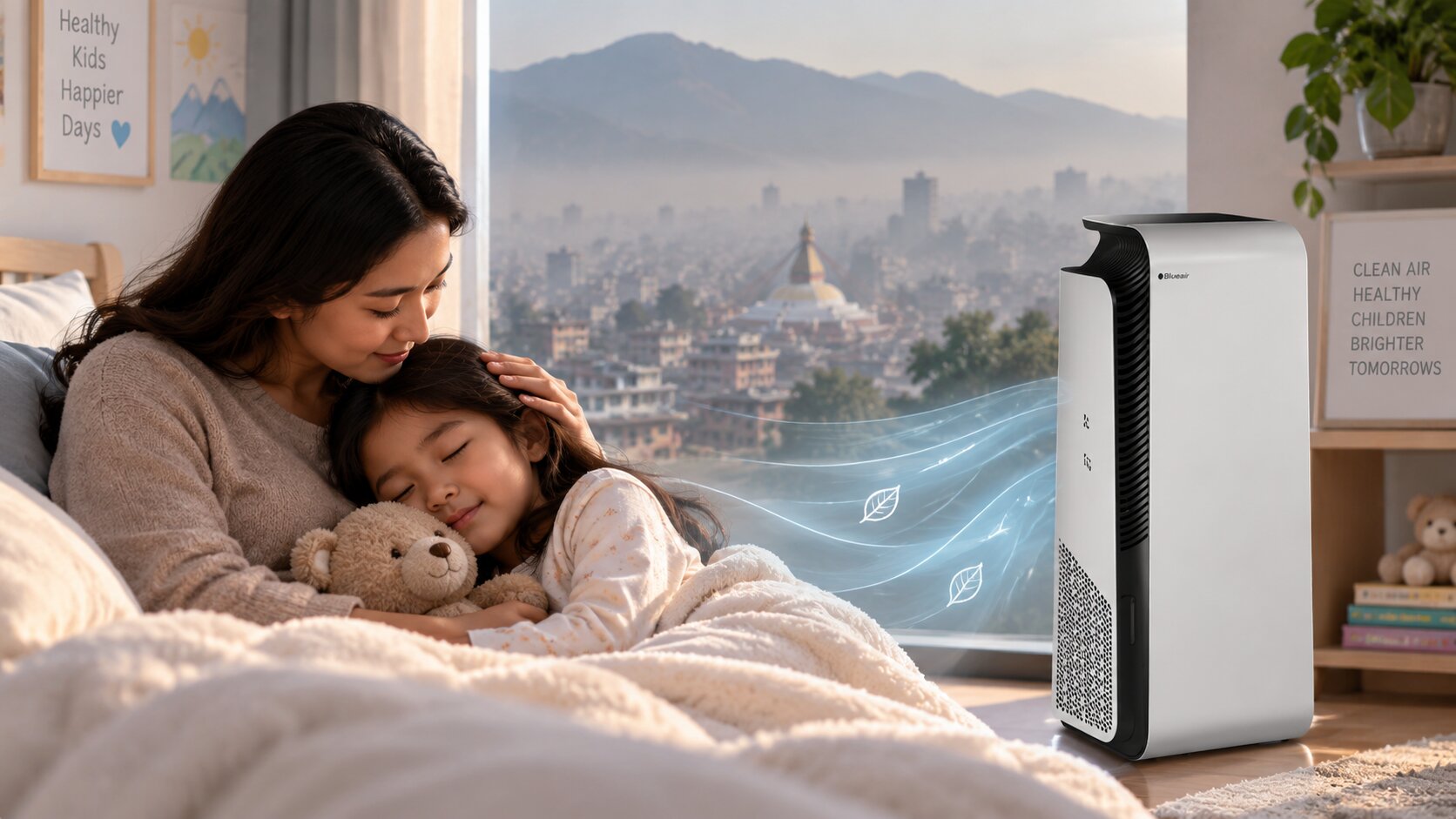
Children’s lungs and respiratory systems are still developing, which makes exposure to polluted air particularly important during childhood. The World Health Organisation’s guidance on air pollution and health links air pollution exposure with respiratory effects, including effects on lung function and worsening of respiratory conditions.
PM2.5, which means particulate matter measuring 2.5 micrometres or less in diameter, is especially concerning because these fine particles can travel deep into the lungs. Children exposed to polluted air may experience coughing, throat irritation, wheezing or breathing discomfort, although these symptoms can also have many other causes.
Repeated exposure also matters even when a child does not immediately appear unwell. Reducing unnecessary exposure during childhood can therefore be worthwhile as part of protecting long-term respiratory health.
Why Children Are More Vulnerable to Air Pollution
Several factors make children more susceptible to polluted air than healthy adults.
| Factor | Why it matters |
| Developing lungs | Children’s lungs continue growing and developing throughout childhood. |
| Higher air intake relative to body size | Children breathe more air in proportion to their body size than adults. |
| Physical activity | Running and playing increase breathing rates and therefore the amount of air inhaled. |
| Existing respiratory conditions | Children with asthma or other respiratory conditions may experience worsening symptoms during polluted conditions. |
Children also depend on parents, teachers and caregivers to make decisions about when and where they spend time outdoors. This makes exposure management a shared responsibility between families and schools rather than something children can manage themselves.
Which Air Pollutants Are Most Concerning for Children?
Air pollution is made up of different particles and gases, and they do not all affect the body in the same way. The World Health Organisation air-quality guidelines focus on several major pollutants because of the evidence linking them with adverse health effects.
| Pollutant | Common sources relevant to Nepal | Why it matters |
| PM2.5 | Traffic, fuel burning, cooking smoke, waste burning and forest fires | Fine particles can penetrate deep into the lungs. |
| PM10 | Road dust, construction and resuspended soil | Larger particles can enter the respiratory system and irritate. |
| Nitrogen dioxide (NO2) | Vehicle exhaust and other combustion sources | Associated with respiratory effects. |
| Ground-level ozone (O3) | Forms when pollutants react in sunlight | Can irritate the airways and lungs. |
| Carbon monoxide (CO) | Incomplete fuel combustion, generators and fires | Can reduce the amount of oxygen carried in the blood at harmful concentrations. |
| Smoke | Forest fires, biomass burning and waste burning | Contains a mixture of fine particles, gases and other pollutants. |
Parents should not assume that one intervention can remove every pollutant. A particle filter, for example, may help with airborne particles but should not be treated as a complete solution for gases such as carbon monoxide.
Common Health Effects of Air Pollution on Children
The effects of air pollution depend on the pollutant, concentration, duration of exposure and the child’s existing health. Short-term exposure may be associated with:
- coughing or increased coughing;
- throat and nose irritation;
- eye irritation;
- wheezing;
- breathing discomfort;
- worsening of an existing respiratory condition.
Longer or repeated exposure is more relevant to concerns about lung development and respiratory health. WHO evidence associates air pollution exposure with adverse respiratory outcomes in children, but it does not mean that every individual child will develop a particular illness.
Parents should therefore focus on reducing exposure rather than trying to diagnose symptoms based on air pollution alone.
Air Pollution Sources That Can Affect Children in Nepal
Children in Nepal can be exposed to pollution both outdoors and indoors. Important outdoor sources include vehicle emissions, road and construction dust, industrial activity, open waste burning and forest-fire smoke.
Indoor exposure can come from cooking smoke, tobacco smoke, incense, poorly vented fuel-burning appliances and pollutants entering from outside. Nepal’s Department of Environment publishes official air-quality monitoring information that parents can use alongside other reliable air-quality resources.
Seasonal events also matter. Forest fires during Nepal’s dry months can increase smoke and fine particles over large areas, while household and outdoor burning during festivals can temporarily affect local air quality. Clean Air Nepal also has a separate guide on air pollution during Dashain and Tihar for families who want more specific seasonal advice.
A Nepal-Specific Example
Example only, not a real case study: A child living beside a busy Kathmandu road may breathe traffic pollution while travelling to school, encounter construction dust around the school area and then return to a home where outdoor dust and PM2.5 enter through open windows.
No single exposure automatically causes a health problem. But reducing several of these exposures, such as changing travel timing, avoiding outdoor exercise beside heavy traffic and improving indoor air management, can reduce the child’s overall contact with polluted air.
How Indoor Air Pollution Affects Children
Outdoor pollution does not stay outdoors. PM2.5 and smoke can enter homes through doors, windows and gaps, while indoor activities can create additional pollution.
Common indoor sources include:
- smoke from cooking or fuel combustion;
- tobacco smoke;
- incense and other indoor burning;
- accumulated dust;
- poorly ventilated kitchens;
- outdoor pollution entering the home.
Parents can improve indoor air quality by removing smoke sources where possible, keeping homes smoke-free, managing dust and ventilating when outdoor air is cleaner. During severe outdoor smoke or high-pollution periods, opening every window may bring more particles inside, so ventilation should be timed according to outdoor conditions.
How Parents Can Reduce Children’s Exposure to Air Pollution
Protecting children from air pollution is mainly about reducing unnecessary exposure rather than trying to create a completely pollution-free environment.
- Check local air-quality conditions before outdoor activities. Reliable monitoring can help parents decide when prolonged outdoor exercise should be reduced.
- Limit strenuous outdoor activity during particularly polluted periods. Moving playtime to a cleaner time of day can be more practical than keeping children indoors all day.
- Ventilate when outdoor conditions are better. Fresh-air ventilation can help remove indoor pollutants, but avoid bringing severe outdoor smoke into the home.
- Reduce indoor smoke. Improve kitchen ventilation and avoid unnecessary indoor burning.
- Keep homes and vehicles smoke-free. Children should not be exposed to tobacco smoke.
- Manage accumulated dust. Regular cleaning can help, but avoid methods that simply throw settled dust back into the air.
- Use air purifiers correctly where appropriate. Room size, airflow, filter condition and placement all affect performance.
- Pay closer attention to children with existing respiratory conditions. Follow the child’s medical care plan and professional advice.
- Work with schools and daycare centres during pollution events. Outdoor activities may need to be modified when pollution becomes severe. Schools can also review this guide to air purifiers for schools, classrooms and daycare centres in Nepal.
- Seek medical advice when symptoms are persistent, worsening or severe. Exposure reduction is not a substitute for medical care.
Should Parents Use an Air Purifier?
An air purifier can help reduce airborne particulate matter inside a room when it has effective particle filtration, is appropriately sized and is operated correctly. It cannot eliminate every form of pollution, prevent every respiratory problem or treat an illness.
High-efficiency particulate air, or HEPA, filters are designed to capture airborne particles. The U.S. Environmental Protection Agency’s guide to air cleaners recommends considering room size, filtration performance and Clean Air Delivery Rate when choosing a portable air cleaner.
Parents should also continue controlling pollution at its source. A purifier should not be used as a reason to allow tobacco smoke, unnecessary indoor burning or poorly ventilated cooking. Families considering one can explore air purifiers available for different room sizes in Nepal while also considering proper sizing and filter maintenance.
When Should Parents Seek Medical Advice?
Persistent or worsening respiratory symptoms should be assessed by a qualified healthcare professional, especially if a child already has asthma or another respiratory condition.
Parents should seek prompt medical attention for symptoms such as:
- difficulty breathing;
- persistent or worsening wheezing;
- severe shortness of breath;
- unusual lethargy or difficulty waking;
- lips or face appearing blue or grey;
- breathing symptoms that are not improving.
Severe breathing difficulty, blue or grey colouring, reduced responsiveness or other emergency symptoms require urgent medical attention. Do not assume serious symptoms are simply caused by air pollution or attempt to manage them only with ventilation or an air purifier.
Create a Cleaner Indoor Space for Your Child
Reducing outdoor exposure is only part of the solution. Improving the air inside your home can also help lower your child’s contact with dust, smoke and fine particles.
Explore air purifiers suited to different room sizes, or contact us for help choosing an option for your home.
FAQs
Is PM2.5 More Concerning Than Ordinary Dust?
PM2.5 is more concerning because these tiny particles can travel deeper into the lungs than larger dust particles such as PM10.
Can Outdoor Pollution Enter a Closed Home?
Yes, fine particles can enter through windows, doors, ventilation openings and small gaps, even when the home is mostly closed.
Is Kathmandu Traffic Pollution a Concern for School Children?
Yes, children near busy roads can be exposed to higher levels of traffic-related pollution, especially while walking, travelling or exercising outdoors.
Is Keeping Children Indoors Enough During Bad Air Days?
No, outdoor pollution can still enter buildings, and indoor sources such as cooking smoke, tobacco smoke and dust can also affect air quality.
Can a Child Use an Air Purifier While Sleeping?
Yes, if the purifier is suitable for the room, positioned correctly and maintained according to the manufacturer’s instructions.
How Can Parents Learn More About Air Quality at Home?
Parents can read the Clean Air Nepal Insights hub for practical guidance on indoor air quality, pollution and filtration.