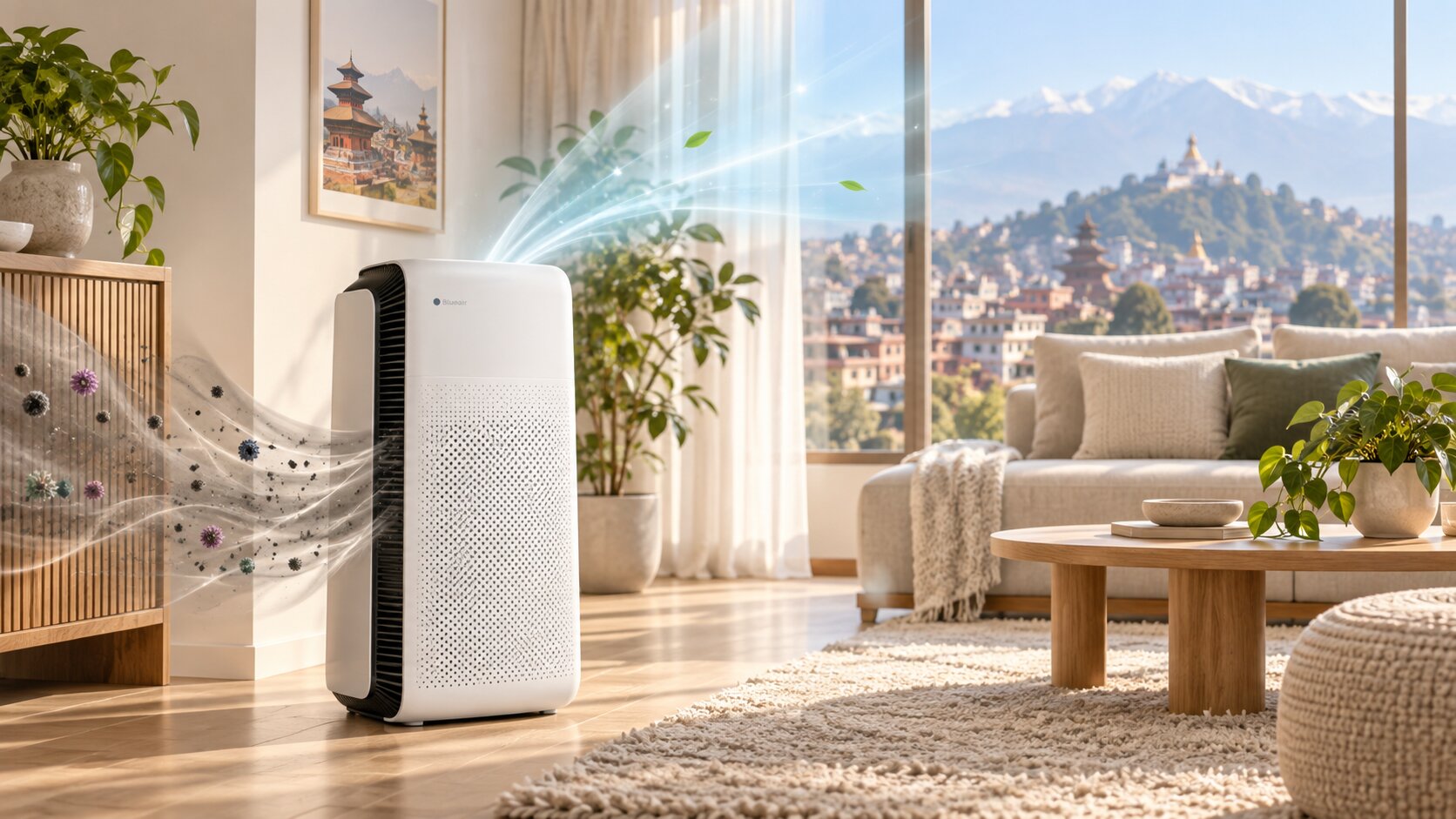
HEPA air purifiers can reduce airborne particles that carry viruses and bacteria, but they are not a complete infection-prevention solution. Their effectiveness depends on how much room air passes through the filter and how long the purifier runs. HEPA filters can remove at least 99.97% of airborne particles around 0.3 microns, including many bacteria-containing particles.
A suitable air purifier works by drawing contaminated room air through its filtration system and returning cleaner air to the room. Respiratory viruses are commonly carried in droplets and smaller aerosol particles produced when an infected person breathes, talks, coughs or sneezes, rather than floating around only as individual virus particles.
That does not mean an air purifier can capture every virus, prevent every infection, sterilise a room or replace ventilation. Real-world performance depends on the filter, airflow, room size, fan speed, placement, occupancy and exposure time.
For homes, classrooms and offices in Nepal, the key question is therefore how effectively the purifier cleans the air people are actually breathing and what its limits are.
Can HEPA Filters Capture Virus-Containing Particles?
A common misconception is that viruses are too small for HEPA filters because some individual viruses are smaller than 0.3 microns. In reality, a High Efficiency Particulate Air (HEPA) filter is at least 99.97% efficient at capturing particles around 0.3 micrometres (µm), which is approximately its most penetrating particle size. HEPA filters can also capture many particles both larger and smaller than this size, according to CDC/NIOSH guidance on HEPA filtration.
Respiratory viruses also usually travel inside human-generated respiratory particles rather than floating through the air alone. Droplets and aerosols released through breathing, talking, singing and coughing are larger than the virus itself, which is why the claim that “viruses are too small for HEPA filters” is misleading.
HEPA filtration does not work like a simple sieve with fixed-size holes. It captures particles through several filtration mechanisms across a wide range of sizes. For a broader explanation, see our HEPA filter air purifier guide.
Do Air Purifiers Remove Bacteria?
High-efficiency particle filtration can capture many airborne bacteria and bacteria-containing particles that enter the purifier. But capturing microorganisms is not the same as killing or inactivating them.
Air purifiers also do not disinfect surfaces or solve problems caused by damp materials, water damage or other contamination sources. They should be viewed primarily as air-cleaning devices, not whole-room sterilisation systems. Understanding these limitations can also help you avoid common air purifier mistakes when choosing and using a purifier.
Capturing Viruses Is Not the Same as Preventing Infection
Air filtration can reduce the concentration of virus-containing particles in the air, but infection risk depends on several factors beyond filter efficiency.
Key factors include:
- How many infectious particles are released into the room
- How many people are sharing the space
- Room size and overall air volume
- How long people remain exposed
- Ventilation and air-cleaning rates
- How well air circulates throughout the room
- Distance from an infected person
- Other infection-control measures being used
A correctly sized purifier can remove airborne respiratory particles as they circulate, but close-range exposure may happen before those particles reach the purifier. This is why filtration should be treated as one layer of protection, not a guarantee against infection.
How to Make an Air Purifier More Effective Against Airborne Germs
Air purifiers work best when they are correctly sized, properly placed and used alongside other indoor-air measures. Their effectiveness depends on both the purifier itself and how the room is managed.
Use Effective Filtration
Choose a purifier with reliable high-efficiency particle filtration. HEPA filtration provides a recognised benchmark for capturing airborne particles, including many respiratory droplets and aerosols that can carry viruses and bacteria.
Check CADR and ACH
Clean Air Delivery Rate (CADR) shows how much filtered air a purifier delivers over time, while Air Changes per Hour (ACH) relates that airflow to the size of the room.
A purifier should provide enough clean air for the space rather than being chosen only by its filter efficiency. You can estimate the right capacity using our CADR and ACH air purifier room-size guide.
Run It at a Suitable Fan Speed
Higher fan speeds usually move more air through the filter and increase clean-air delivery. Running a purifier continuously during occupancy can also increase the total amount of air filtered over time.
Place the Purifier Properly
Keep the air intake and outlet unobstructed.
Avoid placing the purifier:
- Behind large furniture
- Directly against curtains
- Inside enclosed corners
- Where objects block airflow
For more setup guidance, see 10 Air Purifier Mistakes That Reduce Performance in Nepal Homes.
Combine Filtration With Ventilation
Air purifiers recirculate and filter indoor air but do not bring fresh outdoor air into the room. When outdoor air quality is suitable, ventilation can help dilute indoor pollutants and increase overall clean-air delivery.
During periods of high outdoor PM2.5 or smoke in Nepal, ventilation should be managed carefully so that polluted outdoor air is not unnecessarily brought indoors.
Reduce Close-Range Exposure
An air purifier cannot immediately capture every respiratory particle released by someone nearby. If a household member is unwell, reducing prolonged close contact and improving airflow can complement filtration.
Maintain the Filter
Follow the manufacturer’s filter replacement guidance and check the filter condition regularly. A heavily loaded or overdue filter can reduce airflow and affect purifier performance.
Be Careful With Electronic Technologies
Do not assume ionisation, plasma or UV automatically provides better protection against airborne germs. Check the evidence and emissions documentation for the exact model, and avoid products that intentionally generate ozone.
Air Purifier vs Ventilation for Airborne Infection Risk
Air purification and ventilation solve related but different problems.
| Method | What it does | Main strength | Main limitation |
| Portable air purifier | Recirculates indoor air through filters | Adds clean-air delivery without requiring outdoor air | Does not provide fresh outdoor air |
| Natural ventilation | Replaces indoor air through windows and openings | Dilutes indoor contaminants | Depends on outdoor air quality and weather |
| Mechanical ventilation | Brings controlled outdoor air into a building | More predictable fresh-air exchange | Depends on system design and maintenance |
| Combined approach | Uses ventilation and filtration together | Increases total clean-air delivery | Requires correct operation of both systems |
CDC recommends improving indoor air through ventilation and portable HEPA cleaners. In Nepal, this needs to be balanced with outdoor air quality, since opening windows during high PM2.5, smoke, or seasonal haze can bring more pollution indoors. The best approach is to combine ventilation and filtration based on current outdoor conditions.
Are Air Purifiers Useful in Classrooms and Offices?
Air purifiers can help reduce airborne particle concentrations in classrooms and offices where many people share the same air for long periods. But simply placing a purifier in the room does not mean the space has enough clean air.
Schools and offices should consider:
- Room size and total air volume
- Number of people using the space
- Purifier CADR and target ACH
- Existing ventilation
- Noise at the required fan speed
- Purifier placement and airflow
- Filter condition and replacement schedule
A purifier is only useful if it can deliver enough clean air at a fan speed people can comfortably use throughout the day. Our guide to air purifiers for schools, classrooms and daycare centres in Nepal explains how to assess these factors in educational spaces.
What About UV, Ionisers, Plasma and Other Germ-Killing Technologies?
Not all air-cleaning technologies work in the same way, so they should not be evaluated as one category.
Germicidal ultraviolet (GUV or UVGI) can inactivate airborne microorganisms under suitable conditions, but performance depends on proper system design, UV dose, exposure time and installation.
- Best treated as a supplementary air-cleaning method
- Performance varies by system and setup
- Professional upper-room UVGI should not be compared directly with small UV lamps inside consumer purifiers
Ionisation and Plasma
Ionisation and plasma use different mechanisms from mechanical filtration, and their performance should be judged carefully because evidence can vary by technology and test conditions.
Check:
- Independent testing
- Exact pollutant or microorganism tested
- Test chamber size and duration
- Exact model tested
- Ozone or emissions certification
- Whether the claim refers to capture, removal or inactivation
Avoid relying only on claims such as “kills 99.9% of germs” without checking the test conditions.
Ozone Generators
Ozone generators should not be used in occupied spaces to control viruses or bacteria. The EPA’s guidance on air cleaners and viruses states that ozone at concentrations within public-health standards does not effectively remove viruses, bacteria, mould or other biological pollutants from indoor air.
Can Blueair Air Purifiers Remove Virus-Containing Particles?
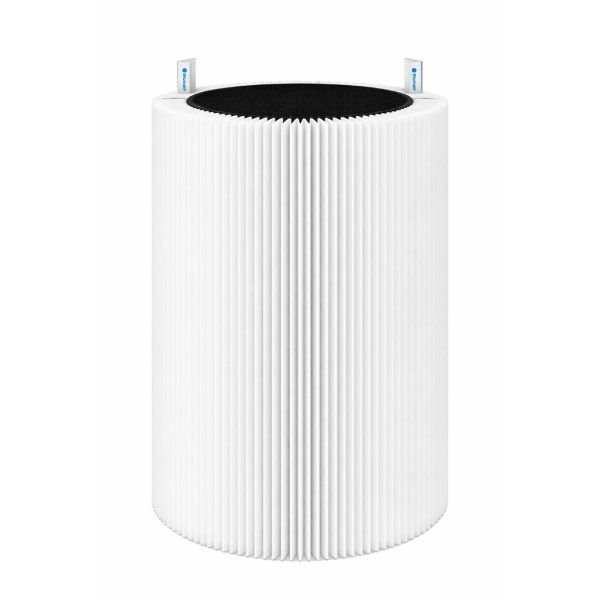
Selected Blueair air purifiers use HEPASilent™ filtration, which combines mechanical and electrostatic filtration. Blueair states that this technology removes 99.97% of airborne particles down to 0.1 microns under specified testing conditions.
For the HealthProtect 7470i, Blueair has also published model-specific testing involving bacteria and virus particles, including SARS-CoV-2. The manufacturer notes that this testing was conducted in a controlled chamber and has not been proven to prevent or reduce transmission of COVID-19. Actual performance can vary with room size, placement, settings, particle levels and runtime.
These results support particle-removal claims under the stated test conditions, not claims that a purifier prevents influenza, COVID-19 or other infections. When comparing models, check the filter type, CADR, room capacity and model-specific testing rather than assuming every Blueair purifier performs identically.
Common Mistakes When Using an Air Purifier for Airborne Germs
Common mistakes include:
- Choosing a purifier from a “99.9% removal” headline without checking the test conditions
- Assuming high filter efficiency means the entire room becomes clean immediately
- Using a purifier that is too small for the room
- Keeping it permanently on a fan speed that provides insufficient airflow
- Blocking the air intake or clean-air outlet
- Ignoring appropriate ventilation
- Delaying filter replacement
- Treating air purification as guaranteed infection prevention
Correct room sizing, airflow and operation matter just as much as the filtration label.
Need Help Choosing the Right Capacity?
Not sure how much clean-air capacity your bedroom, living room, classroom or office needs? Get in touch with our air-quality team to compare room size, CADR, filtration and suitable purifier options before choosing a model.
FAQs
Do HEPA Filters Remove Viruses?
HEPA filters can capture airborne respiratory particles that carry viruses, including droplets and aerosols.
Can an Air Purifier Kill Viruses?
Most air purifiers capture virus-containing particles rather than kill viruses. Inactivation requires separate technology and evidence.
Can HEPA Filters Capture Particles Smaller Than 0.3 Microns?
Yes. 0.3 microns is not the minimum particle size HEPA can capture. HEPA filters can capture particles both larger and smaller than this size.
Do Air Purifiers Remove Bacteria?
Yes, high-efficiency filters can capture many airborne bacteria and bacteria-containing particles, but they do not disinfect surfaces.
Can an Air Purifier Prevent Flu or COVID-19?
No. Air purifiers can reduce airborne particles, but they cannot guarantee prevention of flu, COVID-19 or other infections.
Should I Run an Air Purifier When Someone Is Sick?
Yes, a correctly sized purifier can help reduce airborne respiratory particles in the room. It should be used alongside other appropriate precautions.
Is an Air Purifier Better Than Opening a Window?
They do different jobs. Ventilation brings in outdoor air, while an air purifier filters indoor air. Using both can help when outdoor air quality is suitable.
What CADR Do I Need for Airborne Germs?
It depends on room volume and your target ACH. For example, a 60 m³ room needs about 300 m³/h CADR for 5 ACH.
Are Ionisers Good for Viruses?
Evidence varies by product. Check independent testing and emissions certification rather than relying on general ionisation claims.
Can an Air Purifier Make a Room Virus-Free?
No, an air purifier can reduce airborne particles, but it cannot make an occupied room completely virus-free.