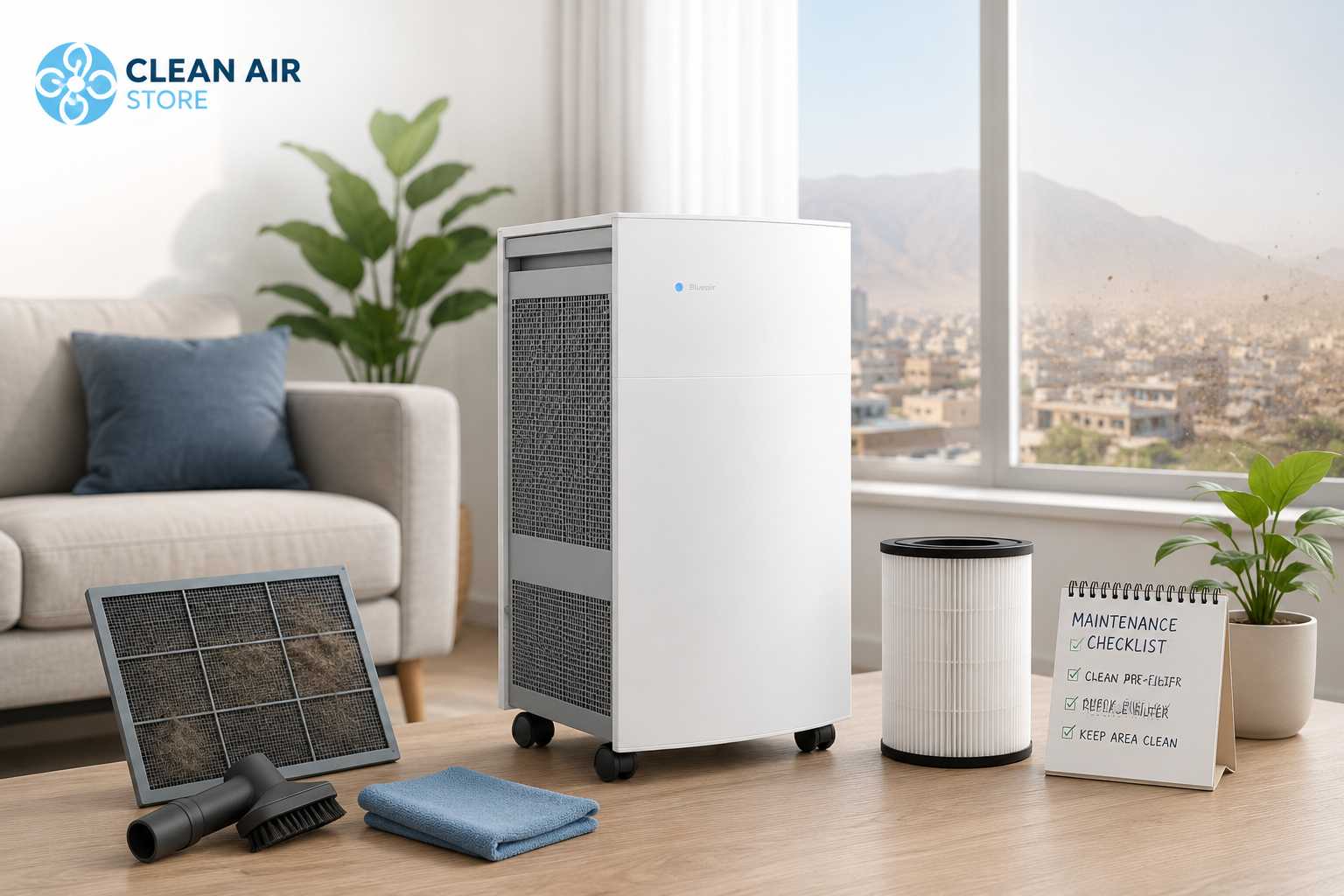
Air purifiers work especially hard in dusty environments, where road dust, construction particles, traffic pollution, smoke, and seasonal haze can quickly build up indoors. If you live near a busy road, an open construction area, or a pollution-prone city space, your air purifier needs regular care to keep performing properly.
The most important air purifier maintenance tips for Nepal’s dusty conditions are simple: clean the pre-filter regularly, replace the main filter on time, keep the purifier in the right location, avoid blocking airflow, and clean the room along with using the machine.
The good news is that air purifier maintenance is usually simple. With a few regular checks and cleaning habits, you can keep your air purifier performing at its best throughout the year.
Why Air Purifier Maintenance Matters
Air purifier maintenance matters because it helps the unit filter pollutants effectively, maintain proper airflow, and deliver consistent indoor air quality. Without regular maintenance, dust and particles can build up inside the purifier, reducing its performance and putting extra strain on the system.
In dusty environments, filters can become clogged much faster due to constant exposure to road dust, vehicle emissions, construction particles, and other airborne pollutants. Regular cleaning and timely filter replacement help ensure your air purifier continues to operate efficiently, lasts longer, and provides the level of air cleaning it was designed to deliver.
Regular maintenance helps your air purifier:
- Capture airborne particles effectively
- Maintain proper airflow
- Improve indoor air quality
- Extend filter lifespan
- Reduce unnecessary wear on the motor
- Deliver consistent performance during high pollution periods
Regular maintenance isn’t just about the machine; it’s about making sure the air you’re breathing in Kathmandu is actually clean.
How Often Should You Clean the Pre-Filter?
You should clean the pre-filter every one to two weeks in most homes. If you live near a busy road, construction area, or other dusty environment, weekly cleaning is recommended to prevent dust buildup and maintain proper airflow. This simple habit can help your air purifier perform consistently throughout the year.
The pre-filter captures larger particles such as dust, hair, lint, and pet fur before they reach the main filter. Regular cleaning helps the air purifier work more efficiently, improves filtration performance, and can extend the life of the main filter. It also reduces the amount of dust that reaches the more expensive filters inside the unit.
Tips for Maintaining an Air Purifier
The pre-filter is the first layer of protection in an air purifier. It captures larger particles such as visible dust, hair, lint, and pet fur before they reach the main filter.
In Nepal’s dusty conditions, especially in areas with road dust, construction work, or open windows, the pre-filter can collect dirt quickly. If your air purifier has a washable or vacuum-cleanable pre-filter, clean it every one to two weeks. For very dusty rooms or roadside spaces, weekly cleaning is a better habit.
How to Clean the Pre-Filter
First, turn off and unplug the purifier. Remove the outer cover carefully. Take out the pre-filter and check how much dust has collected.
You can usually clean the pre-filter by:
- Using a vacuum cleaner
- Wiping it gently with a dry cloth
- Washing it only if the manual says it is washable
- Letting it dry completely before reinstalling
Never place a wet filter inside the purifier. Moisture can create a smell, mould risk, or damage the machine.
Signs Your Pre-Filter Needs Cleaning
You do not always need to wait for a fixed schedule. In Nepal’s dusty conditions, the pre-filter may collect dirt faster than expected, especially if the purifier is used near a road, balcony, construction area, or open window.
Check and clean the pre-filter if you notice:
- Weak airflow from the purifier
- More dust is settling around the room
- A visible layer of dust on the pre-filter
- Unusual noise from the purifier
- The purifier is running harder than usual
- A dusty smell when the purifier is turned on
- Reduced performance even after regular use
If you notice these signs, clean the pre-filter before the dust reaches the main filter and reduces overall purification performance.
Do Not Wash the HEPA Filter Unless Allowed
Many people think every air purifier filter can be washed and reused, but this is a common mistake. Most HEPA filters are not washable, and washing them can damage the fine filter fibres that capture tiny dust, smoke, pollen, and airborne particles. If your filter is labelled as non-washable, do not rinse it, scrub it, or clean it with soap.
Instead, always follow the manufacturer’s instructions. Some filters need to be replaced after a certain period, while some air purifiers show a filter replacement alert when the filter is no longer performing well. If you are unsure how HEPA filters work or why proper care matters, this HEPA filter air purifier guide can help you understand its role in maintaining cleaner indoor air.
For better long-term performance, check the correct filter type before cleaning or replacing your air purifier filter. Using the wrong cleaning method can reduce purification quality and shorten the life of the filter.
Replace Filters on Time
In Nepal’s dusty conditions, air purifier filters may need replacement sooner than expected, especially if the room is close to a main road, construction area, kitchen, dusty neighbourhood, or high-traffic space. Even with regular pre-filter cleaning, the main filter gradually collects fine dust, smoke, pollen, and other airborne particles.
A filter may need replacement if the purifier shows a filter change alert, airflow becomes weak, dust returns quickly after cleaning, or there is a bad smell from the unit. You may also notice that allergy symptoms feel worse indoors or that the filter looks dark, clogged, or heavily loaded.
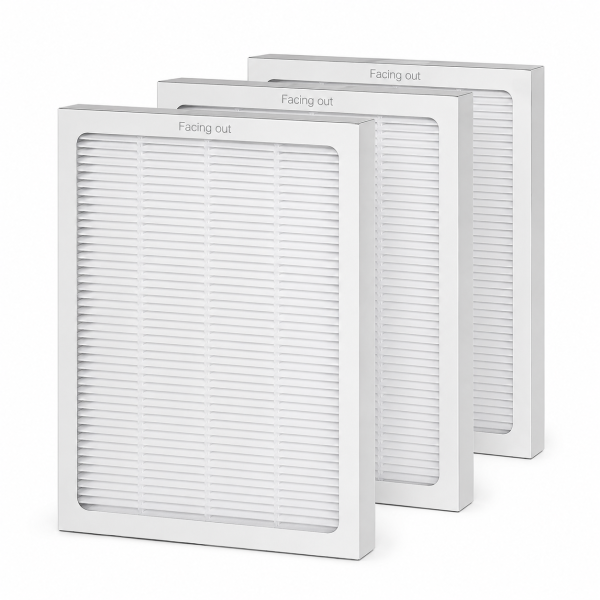
As a general habit, check the filter once a month. Even if your air purifier has a filter indicator, visual checking is useful in Nepal’s dusty environment. For better performance, always use the correct filter for your model. You can explore suitable air purifier replacement filters in Nepal before replacing your filter.
Place the Air Purifier in the Right Location
Placement has a big impact on how well an air purifier works. If the purifier is hidden behind furniture, pushed into a corner, or placed too close to curtains or walls, airflow can get blocked. When air cannot enter and leave the unit properly, the purifier may not clean the room effectively.
For best results, place the air purifier in:
- A room where people spend the most time, such as the bedroom, living room, office, or study area
- An open area with enough space around the air inlet and outlet
- A flat and stable surface
- A dust-prone area, but not directly beside an open window
- A location away from curtains, walls, sofas, TV cabinets, and large furniture
- A place where air can move freely across the room
In bedrooms, place the purifier where clean air can circulate easily while you sleep. In living rooms, keep it in an open area instead of behind a sofa or cabinet. If you are choosing a purifier based on room size and daily use, you can explore suitable air purifiers for home use in Nepal.
Keep Doors and Windows Managed
Many homes in Nepal keep windows open for fresh air, which is normal. At the same time, during dusty hours, heavy traffic, or nearby construction, open windows can bring more outdoor particles inside. If the purifier runs while dust keeps entering the room, the filter may clog faster, and the purifier may need to work harder.
A better routine is:
- Ventilate the room briefly when the outdoor air feels cleaner
- Close windows during traffic-heavy or dusty hours
- Run the purifier after closing the room
- Avoid placing the purifier directly beside an open window
This helps the purifier clean indoor air more efficiently.
Clean the Room Along With Using the Air Purifier
An air purifier helps reduce airborne dust, but it cannot remove dust already settled on floors, beds, shelves, curtains, and furniture. Regular cleaning, mopping, and wiping surfaces helps reduce dust buildup and allows the purifier to work more efficiently.
For Nepal’s dusty conditions, combine purifier use with simple room cleaning habits:
- Mop floors regularly
- Use a damp cloth for surfaces
- Wash curtains or vacuum them
- Keep shoes outside the room
- Clean carpets and rugs often
- Reduce unnecessary clutter
- Wash bedsheets and pillow covers regularly
This reduces the amount of dust entering the purifier and helps filters last longer.
Check the Air Quality Sensor
Some modern air purifiers come with air quality sensors that detect particles in the room and adjust the fan speed automatically. In dusty rooms, the sensor area can also collect dust over time, which may affect its accuracy.
If your purifier has a sensor, clean it gently as recommended in the user manual. Avoid poking it with sharp objects or spraying liquid directly into the sensor area, as this may damage the sensor or cause incorrect air quality readings.
Clean the sensor area if you notice:
- The purifier shows poor air quality even after the room feels clean
- The fan speed stays too high or too low without reason
- The air quality light or display changes slowly
- Dust is visible near the sensor opening
- Auto mode does not seem to respond properly
Use the Right Fan Speed
Keeping the purifier on low speed is useful when the room is already clean, and you want quiet operation. But when dust levels are high, low speed may take longer to clean the air. In Nepal’s dusty conditions, increasing the fan speed for a short period helps the purifier pull in more air, capture particles faster, and improve overall room freshness.
Use a higher fan speed when the dust, smoke, or smell is high in the room. Once the air feels cleaner, you can reduce the speed or switch to auto mode for regular use.
Increase the fan speed when:
- You enter a dusty room
- Windows have been open for a long time
- There is construction nearby
- Someone has just swept or cleaned the floor
- Outdoor pollution is high
- There is smoke, a cooking smell, or a strong odour indoors
- More people are using the room than usual
Avoid These Air Purifier Maintenance Mistakes
Some maintenance mistakes can reduce performance or damage the purifier, so always read the user manual before cleaning or replacing any filter. Even a high-quality air purifier may not work as expected if it is maintained incorrectly or placed in the wrong environment.
| Mistake | Why Avoid It |
| Washing a non-washable HEPA filter | It can damage the filter fibres |
| Using the purifier with blocked airflow | It reduces cleaning performance |
| Placing the purifier in a corner | Air circulation becomes weak |
| Ignoring the pre-filter | Dust reaches the main filter faster |
| Reinstalling a wet filter | It may cause a smell or mould risk |
| Using harsh chemicals | It can damage the purifier’s body or parts |
| Not replacing filters | Airflow and purification quality drop |
Simple Maintenance Schedule
A regular maintenance routine helps your air purifier perform better, especially in dusty homes, offices, classrooms, clinics, and roadside spaces. The exact schedule may vary depending on dust levels, room size, usage time, and filter type, but the following routine works well for most indoor environments:
- Wipe the purifier exterior: Once a week
- Clean the pre-filter: Every 1–2 weeks
- Check the main filter: Once a month
- Clean the sensor area: Every 1–2 months
- Replace the main filter: As recommended by the filter indicator or manufacturer
- Deep clean room surfaces: Weekly or as needed
If the purifier is used in a highly dusty area, such as a roadside room, hotel lobby, clinic, classroom, or busy office, maintenance may need to be done more frequently. Regular checking helps prevent clogged filters, weak airflow, and reduced purification performance.
When Should You Replace Your Air Purifier?
Sometimes the issue is not only the filter. The purifier itself may be too small, too old, or not powerful enough for the room. However, before considering a replacement, it is important to check whether the filter has reached the end of its lifespan. A clogged or overdue filter can significantly reduce performance, even if the purifier is otherwise working properly.
Consider upgrading if:
- The room stays dusty even after filter replacement
- The machine has weak airflow
- Replacement filters are difficult to find
- The purifier is too small for the room
- The motor makes an unusual noise
- You need better coverage for larger spaces
Final Thoughts
Air purifier maintenance is especially important in Nepal because dust, traffic pollution, construction particles, and seasonal smoke can quickly load the filter. A purifier will only perform well when the filter is clean, the airflow is open, and the room is managed properly.
The good news is that the routine is simple: clean the pre-filter regularly, never wash a non-washable HEPA filter, replace filters on schedule, position the unit in an open area, and take small steps to reduce indoor dust buildup.
If you want cleaner air at home, office, hotel, clinic, or classroom, choose the right purifier and maintain it regularly.
FAQs
How often should I clean my air purifier?
The exterior should be cleaned every one to two weeks, while filters and air vents should be checked monthly.
How often should air purifier filters be replaced?
Filter replacement depends on usage and air quality conditions. Always follow the manufacturer’s recommendations.
Can I wash a HEPA filter?
Most HEPA filters are not washable. Check your manufacturer’s instructions before cleaning any filter.
Why is my air purifier not working as well as before?
A clogged filter, blocked airflow, poor placement, or overdue maintenance may reduce performance.
Should I run my air purifier all day?
Yes. Most air purifiers are designed for continuous operation and generally perform best when run consistently.
Does dust affect air purifier performance?
Yes. Heavy dust accumulation can load filters more quickly and reduce airflow if maintenance is neglected.
Where should I place my air purifier?
Place it in an open area with good airflow, preferably in rooms where you spend the most time, such as bedrooms, living rooms, or home offices.
Can Clean Air Nepal help me choose replacement filters?
Yes. Clean Air Nepal can help you find genuine Blueair replacement filters and recommend the right maintenance schedule for your model.