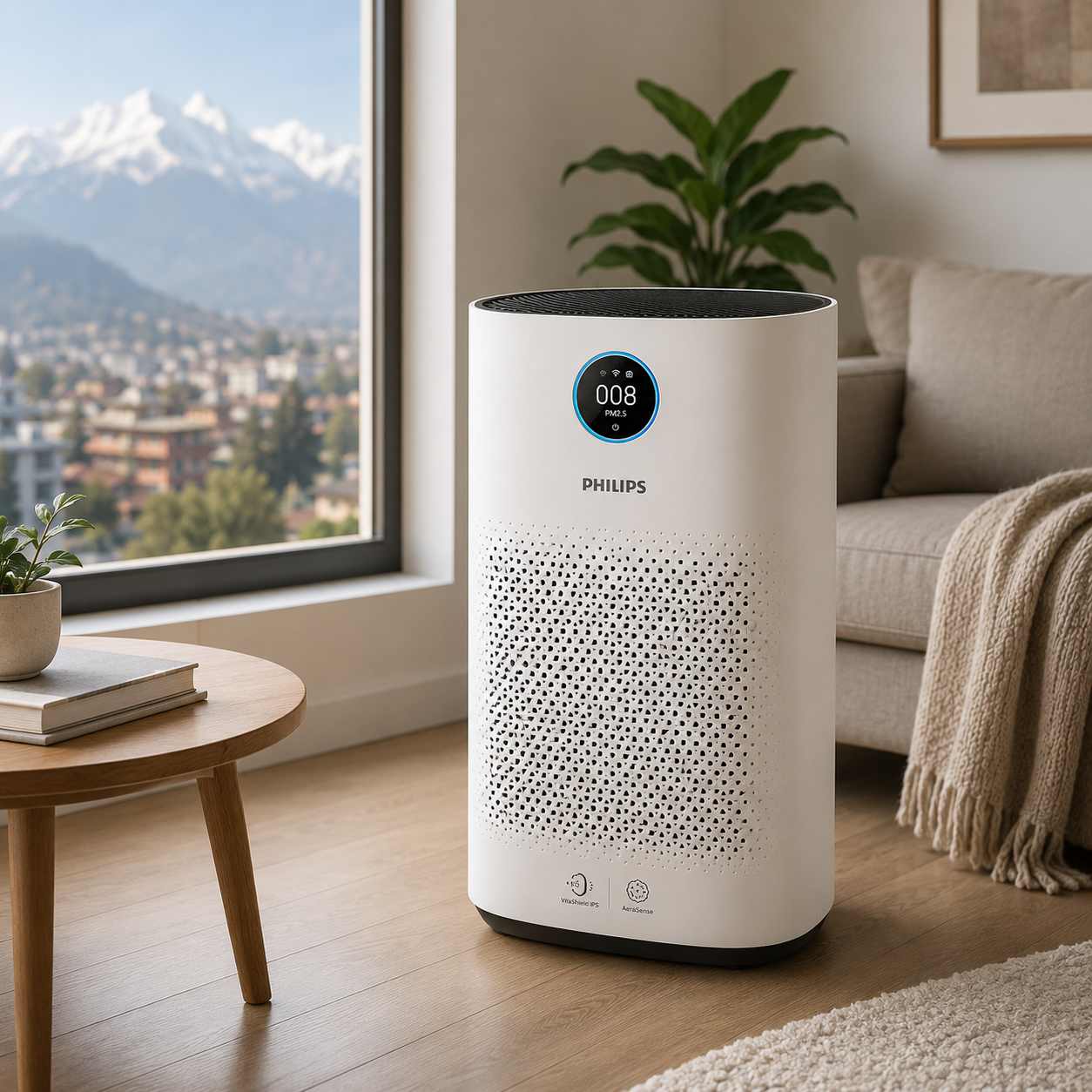
In Nepal, especially in cities like Kathmandu, indoor air can be affected by road dust, construction dust, traffic pollution, PM2.5, smoke particles, cooking odour, pet dander, pollen, and seasonal haze. Philips air purifiers may appeal to buyers seeking features such as particle filtration, activated carbon support, air quality sensors, auto mode, sleep mode, a digital display, and filter replacement indicators, depending on the model.
However, before buying, it is important to compare the exact model, room coverage, CADR, filter type, replacement filter cost, warranty, and the availability of genuine filters in Nepal. This guide explains how Philips air purifiers generally work, which filters and features to check, and how much they may cost in Nepal.
Why People Search for Philips Air Purifier in Nepal
People search for Philips air purifiers in Nepal because Philips is already a familiar name in home appliances and health technology. Many buyers trust the brand from products they may already use at home, so Philips naturally comes into consideration when they start looking for an air purifier for dust, PM2.5, allergies, smoke particles, and general indoor air quality.
Most Philips air purifier buyers usually want:
- A familiar home appliance brand
- A purifier for bedroom, living room, or apartment use
- Filtration support for dust, PM2.5, pollen, and allergens
- Activated carbon support for odors and smoke smell, depending on the model
- Quiet operation for daily indoor use
- Easy controls, display, sensor, or auto mode
- Replacement filters are available when needed
So, people are not only searching for Philips because of the brand name. They are usually trying to find a practical air purifier that fits Nepal’s dusty indoor conditions, works for their room size, and remains easy to maintain over time.
How Philips Air Purifiers Generally Work
Philips air purifiers generally work through a fan-based filtration system. The purifier draws indoor air in, passes it through filter layers, and sends cleaner air back into the room. The exact system depends on the model.
The basic process is simple:
- The fan pulls room air into the purifier.
- The pre-filter captures larger particles such as hair and coarse dust.
- The particle filter captures smaller airborne particles such as fine dust, pollen, pet dander, allergens, smoke particles, and PM2.5.
- The activated carbon filter helps reduce odors from cooking, smoke, traffic fumes, and certain gas-like pollutants.
- Cleaner air returns to the room through the outlet.
This cycle repeats while the purifier runs. The result depends on airflow, room size, filter quality, placement, and how often doors and windows stay open. Some models may have a pre-filter, a HEPA or NanoProtect HEPA filter, an activated carbon filter, an air quality sensor, auto mode, a digital display, or smart controls.
Philips describes some of its air purifier models as using a 3-layer filtration system with a pre-filter, a HEPA NanoProtect filter, and an activated carbon filter, though you should verify this by model before purchase.
What Filters Do Philips Air Purifiers Use?
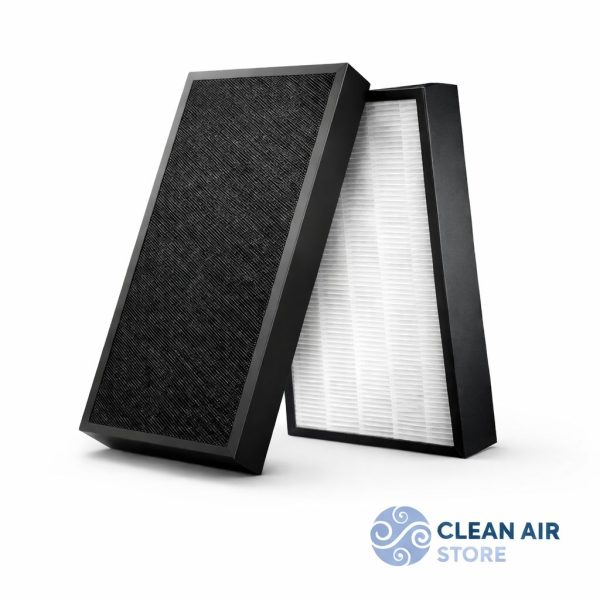
Philips air purifiers usually use a multi-layer filter system that can include a pre-filter, a HEPA (high-efficiency particulate air) filter, and an activated carbon filter, depending on the model. The pre-filter captures larger dust and hair, while the particle filter targets fine dust, PM2.5, pollen, pet dander, and other allergens.
Pre-Filter
A pre-filter captures larger particles before air reaches the main filter. It may collect hair, visible dust, lint, and larger airborne debris.
The pre-filter protects the deeper filter layers from clogging too quickly. Some pre-filters are washable, depending on the model, while others need to be replaced with the full filter set.
HEPA or High-Efficiency Particle Filter
A Philips HEPA air purifier, or any Philips air purifier with high-efficiency particulate air (HEPA) filtration, is typically designed to reduce fine airborne particles. This type of filtration may help capture:
- Fine dust
- PM2.5 particles
- Pollen
- Pet dander
- Mold spores
- Allergens
- Smoke particles
This is important for Kathmandu homes because dust is not only visible dust on furniture. Fine particles can stay suspended in the air and enter indoor spaces through doors, windows, clothing, ventilation gaps, and daily movement.
Activated Carbon Filter
An activated carbon filter helps control odor. It can reduce cooking smell, smoke odor, traffic fumes, and some gas-related indoor air pollution.
A carbon filter supports homes where smell is a daily problem. It is useful near kitchens, roads, smoking sources, incense use, and urban traffic areas.
Particle filtration and activated carbon filtration serve different purposes. A strong home air purifier often uses both.
Why Filter Availability Matters?
Filter availability matters because an air purifier depends on clean, compatible filters to maintain airflow, particle capture, and long-term performance. When filters become clogged with dust, PM2.5, pollen, smoke particles, pet dander, and other pollutants, the purifier has to work harder, airflow weakens, and room cleaning slows.
For Philips air purifier buyers in Nepal, please confirm the exact replacement filter model, the availability of genuine filters, the price of the filter, and warranty support before buying the machine. A purifier may look like a good deal at first, but if the filters are hard to find later, its long-term value diminishes.
Common Features of Philips Air Purifiers
Common Philips air purifier features may include air quality sensors, auto mode, digital display, sleep mode, filter replacement indicator, and smart controls, depending on the model. These features help users monitor indoor air quality, automatically adjust fan speed, run the purifier quietly at night, and know when the filter needs replacement.
Air Quality Sensor
An air quality sensor detects changes in indoor air quality. It may help the purifier respond to dust, smoke, and PM2.5 particles. Sensor accuracy and display style depend on the model. A sensor helps with daily use, but it does not replace correct room sizing.
Auto Mode
Auto mode changes fan speed based on detected air quality. It increases airflow when pollution rises and lowers fan speed when air becomes cleaner. Auto mode helps homes where pollution changes during cooking, cleaning, traffic hours, or open-window periods.
Digital Display
A digital display may show air quality status, PM2.5 level, fan speed, mode, or filter condition, depending on the model. A display makes the purifier easier to understand. You should check which readings the exact model provides.
Sleep Mode or Quiet Operation
Sleep mode reduces noise and light during night use. A quiet air purifier is important for bedrooms, baby rooms, study rooms, and clinics. Noise level matters because air purifiers work best when used for longer periods. A purifier that feels too loud may stay switched off.
[Internal Link: Best Air Purifier for Baby Rooms]
Filter Replacement Indicator
A filter replacement indicator tells users when the filter needs attention. This feature helps maintain airflow and cleaning performance. The indicator may use runtime, sensor data, or model-specific logic. You should still inspect filters when pollution is heavy, especially in Kathmandu dust conditions.
Smart Controls
Smart controls let a Philips air purifier manage settings via digital controls, sensors, or a connected app, depending on the model. Technically, these controls work with the purifier’s sensor system to monitor air quality, adjust fan speed, set schedules, show filter status, and improve daily operation without constant manual adjustment.
Philips Air Purifier for Dust, PM2.5, Allergies, and Smoke
Philips air purifier for dust can help when the model has suitable particle filtration and enough airflow for the room. Dust-heavy homes need both filtration and clean air delivery.
Dust and Fine Dust
Kathmandu dust includes visible dust and fine dust. Visible dust settles on surfaces. Fine dust can remain airborne and enter the breathing zone.
An air purifier with HEPA or high-efficiency particulate air (HEPA) filtration can help reduce airborne dust particles. Regular cleaning still matters because settled dust can be stirred up when people walk, sweep, or move furniture.
[Internal Link: Air Purifier for Dust in Kathmandu Homes]
PM2.5 Particles
Philips air purifier for PM2.5 searches usually come from buyers concerned about traffic pollution, smoke, and seasonal haze. PM2.5 refers to very small particles that can stay suspended in the air. A purifier with suitable particle filtration can reduce PM2.5 in a closed or controlled room. Buyers should verify the model’s particle filtration specification and CADR.
Allergies
A Philips air purifier for allergies may help reduce airborne pollen, pet dander, mold spores, and dust mites. It does not cure allergies or replace medical advice. Allergy-sensitive users should run the purifier consistently, use genuine filters, keep windows closed during polluted hours, and clean fabric surfaces regularly.
Smoke and Odor
Smoke particles need particle filtration. Smoke smell and cooking odor need activated carbon filtration. A purifier with both a particle and a carbon filter is more suitable for smoke- or odor-prone rooms. Odor control performance depends on carbon quality, carbon amount, air circulation, and pollution source intensity.
How Much Does a Philips Air Purifier Cost in Nepal?
Philips air purifier prices in Nepal usually start at around Rs. 40,500–49,500 for smaller home models and can go up to around Rs. 63,000–70,499+ for higher-capacity models, depending on the exact model, seller, warranty, stock, and offer price.
Current Philips Air Purifier Price Reference in Nepal
| Philips Model | Price Seen in Nepal | What Buyers Should Know |
| Philips AC0950/60 | Around Rs. 40,500 | Entry-level home option; check room coverage, filter type, and filter availability before buying. |
| Philips AC1711/63 | Around Rs. 49,500 | Listed as a home air purifier option; compare CADR, room size, and filter cost. |
| Philips AC1715/60 | Around Rs. 63,000 | Mid-to-higher price range; verify exact specifications and warranty. |
| Philips AC3220/10 | Around Rs. 63,750 | Compare airflow, filter system, and room coverage before purchase. |
| Philips AC4221 | Around Rs. 68,000 | This is the higher-priced model; please check whether its features match your room size and air quality issues. |
| Philips AC2887/30 | Around Rs. 70,499 | Another seller listing shows this model at a premium price point; verify stock and filter support |
What Affects the Price of Philips Air Purifiers in Nepal?
The price of a Philips air purifier in Nepal depends on more than just the machine’s cost. Before buying, check these value factors:
- CADR/airflow: Higher airflow usually cleans the room air faster.
- Room coverage: Larger rooms require a purifier with greater capacity.
- Filter layers: HEPA or particle filtration handles dust and PM2.5, while activated carbon helps with odors and fumes.
- Smart features: Sensors, auto mode, display, and app control can increase the price.
- Replacement filter cost: Filters impact long-term ownership costs.
- Genuine filter availability: A purifier loses value if filters are hard to find later.
- Warranty and seller support: A clear warranty and after-sales service reduce the risk of purchase.
For homes in Nepal, especially in Kathmandu and other dusty areas, the cheapest Philips air purifier may not always be the best value. Choose a model that fits your room size, offers suitable filtration, and provides reliable replacement filter support.
Are Philips Air Purifier Filters Easily Available in Nepal?
Philips air purifier filter availability in Nepal depends on the exact model, seller, and current stock. Before buying a Philips air purifier, confirm the compatible replacement filter, its price, and warranty support, as the purifier’s long-term performance depends on clean, genuine filters.
Filters matter because air purifiers depend on airflow. A clogged filter reduces airflow and lowers cleaning performance. A non-genuine filter may fit poorly, restrict airflow, or provide inconsistent filtration.
Before buying, ask these questions:
- Is the replacement filter available in Nepal?
- Is the filter genuine?
- What is the exact filter model number?
- What is the current filter price?
- How often should the filter be changed in Nepal’s dust conditions?
- Does the seller provide warranty support?
- Does the seller keep a regular stock of filters?
- Is after-sales service available locally?
A purifier should not be treated as a one-time purchase. It is a filter-based appliance with recurring maintenance.
What Should You Check Before Buying a Philips Air Purifier?
You should check room size, CADR, filtration, filter cost, support, and warranty before buying a Philips air purifier. These factors decide real-world value.
Use this practical checklist:
- Measure your room in square feet or square meters.
- Compare the model’s recommended room coverage.
- Check CADR for particle cleaning speed.
- Confirm HEPA or high-efficiency particle filtration.
- Confirm activated carbon filtration if odor or smoke matters.
- Check pre-filter cleaning or replacement needs.
- Ask about genuine replacement filters.
- Confirm the filter price before buying.
- Check the warranty and after-sales service.
- Compare the noise level for bedroom use.
- Check energy use for daily operation.
- Confirm smart features only if you need them.
- Compare the exact Philips model with other air purifier options.
A smart air purifier with auto mode can be useful. Still, smart features cannot fix poor room sizing or unavailable filters.
Philips vs Blueair Air Purifier: What Should You Compare?
Philips is a familiar home appliance and health technology brand. Blueair is a premium Swedish air-purifier brand. Blueair’s HEPASilent™ technology uses a combination of electrostatic and mechanical filtration to capture and remove particles from indoor air.
| Comparison Area | Philips Air Purifier | Blueair Air Purifier |
| Brand positioning | Familiar home appliance and electronics brand | Premium Swedish air purification brand |
| Filtration | Depends on the exact model and filter system | Depends on the exact model and filter system |
| Room-size options | Buyers should compare model coverage | Buyers can compare room-specific model ranges |
| Smart features | Available on selected models | Available on selected models |
| Filter availability | Buyers should verify genuine filter stock | Genuine Blueair replacement filters are available through Clean Air Nepal; the current stock should be verified |
| Local support | Depends on the seller and the warranty channel | Available through Clean Air Nepal for Blueair buyers |
| Best buying method | Compare the exact model, filter, CADR, and support | Compare the exact model, room coverage, filter, and support |
When Does Blueair Make Sense as a Philips Alternative?
Blueair can be considered another option for buyers seeking a premium air purifier brand that focuses primarily on air purification.
It may make sense to compare Blueair if you are looking for:
- Premium Swedish air purification
- Room-specific model options
- Daily air cleaning for homes or offices
- Quiet operation
- Genuine Blueair replacement filters
- Local guidance through Clean Air Nepal
- Options for bedrooms, living rooms, offices, clinics, cars, and dust-heavy homes
- Long-term support and filter availability
This does not mean Blueair is automatically better than Philips. It means buyers should compare the exact Philips model with the exact Blueair model based on room size, filtration, filter cost, warranty, and local support.
Recommended Blueair Options by Use Case
Blueair has different model ranges for different room types and use cases. This section is only a simple guide. Exact model availability, specifications, coverage, and price should be verified with Clean Air Nepal.
| Use Case | Blueair Range to Consider | Why It May Fit |
| Small bedroom | Blue Series | Compact and suitable for smaller rooms |
| Family bedroom | Blue Series / DustMagnet | Useful for daily dust and particle reduction |
| Living room | DustMagnet / Classic / HealthProtect | Better for larger shared spaces, depending on the model |
| Office | Classic / HealthProtect | Suitable for regular daily air cleaning |
| Clinic or professional space | HealthProtect / Classic | Useful where cleaner shared indoor air matters |
| Dust-heavy home | DustMagnet | Designed for homes where dust settling is a concern |
| Car cabin | Blueair Cabin | Helps reduce dust, smoke, exhaust particles, and odors inside cars |
Philips Air Purifier in Nepal for Home Air Cleaning
Philips air purifiers can be a practical option in Nepal if you want a familiar home appliance brand with features such as particle filtration, activated carbon support, air quality sensors, auto mode, quiet operation, and filter indicators, depending on the model. Before buying, check the exact Philips model, room coverage, CADR, filter type, replacement filter cost, warranty, and genuine filter availability, because long-term performance depends on both the machine and regular filter replacement.
If you want a more premium option, Clean Air Nepal also offers Blueair air purifiers with genuine replacement filters and local support for homes, offices, clinics, cars, and other dust-heavy indoor spaces.
FAQs
Is the Philips air purifier good for homes in Nepal?
Philips air purifiers are suitable for homes in Nepal when the model matches the room size, pollution level, and filter needs. Buyers should verify CADR, HEPA filtration, carbon filtration, filter price, warranty, and the availability of genuine filters.
Does the Philips air purifier remove dust and PM2.5?
Philips air purifiers with high-efficiency particulate air (HEPA) filtration can help reduce airborne dust and PM2.5 particles. Performance depends on the exact model, CADR, room size, filter condition, and how consistently the purifier runs.
What filter does a Philips air purifier use?
A Philips air purifier may use a pre-filter, a HEPA (high-efficiency particulate air) filter, and an activated carbon filter, depending on the model. Buyers should check the exact product specification before purchase.
Are Philips air purifier filters available in Nepal?
Philips air purifier filters may be available in Nepal, depending on the model, seller, and stock. Buyers should confirm the exact filter model number, the availability of a genuine replacement filter, the current price, and warranty support before buying.
Can Blueair be an alternative to Philips air purifier in Nepal?
Blueair is an alternative to the Philips air purifier in Nepal. It is a premium Swedish air purifier brand available through Clean Air Nepal. Buyers should compare exact models, room coverage, filters, price, and support.