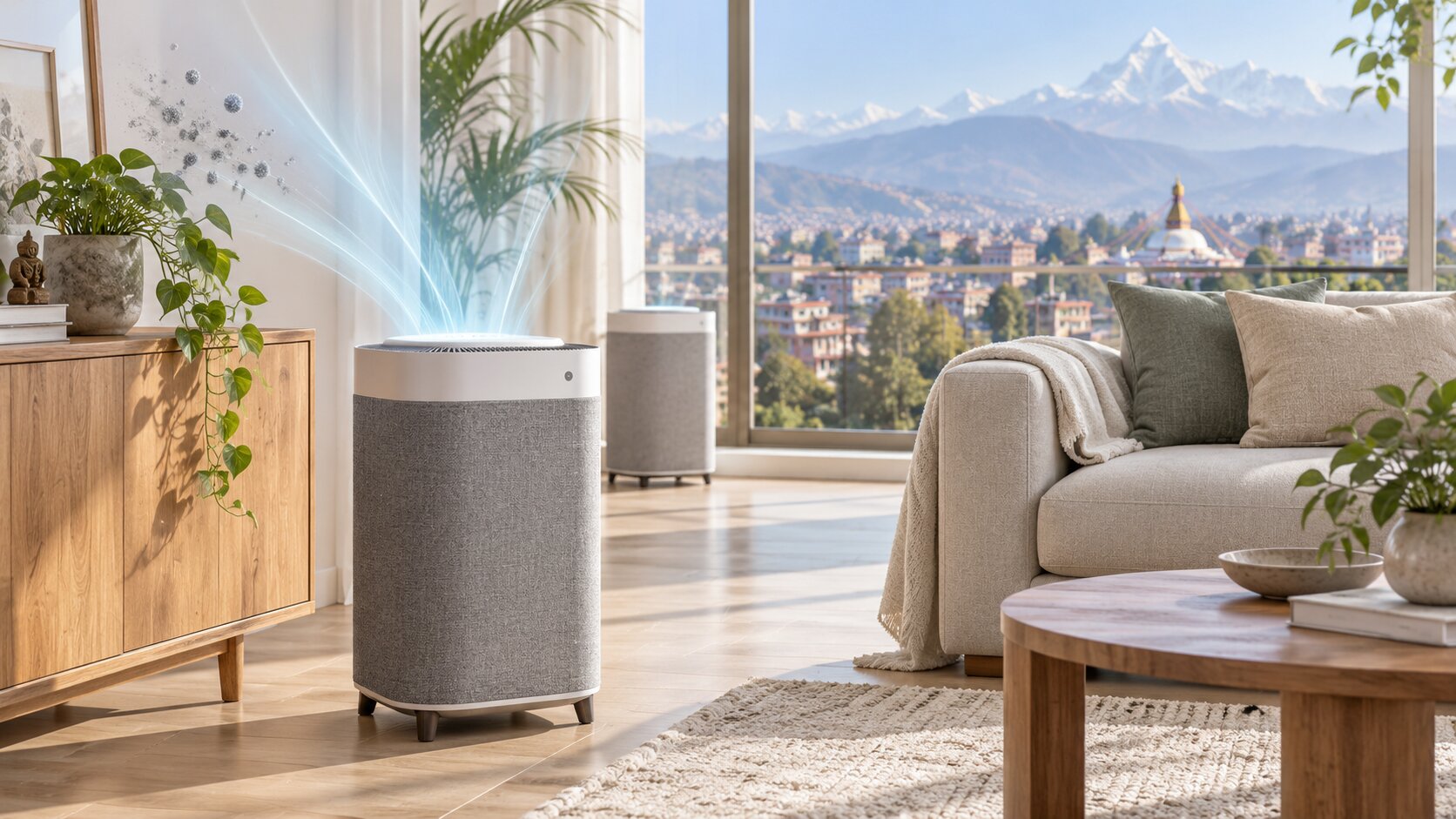
Some air purifiers can produce ozone, but not all do. Mechanical filtration, including HEPA filtration, does not generate ozone by itself, while some ionisation, electrostatic, bipolar-ionisation and certain UV systems can potentially emit ozone depending on their design. Intentional ozone generators are different because they are specifically designed to produce ozone.
The difference comes down to how the purifier cleans the air. Mechanical filters remove pollutants by passing air through filter media, while electronic technologies such as ionisers and electrostatic systems use electrical charges, and some UV systems use ultraviolet radiation. The U.S. Environmental Protection Agency guidance on ionisers and ozone-generating air cleaners notes that some electronic air cleaners can produce ozone as a by-product.
For buyers in Nepal, the important point is not to judge a purifier only by labels such as “HEPA,” “ioniser,” “UV,” or “ozone-free.” Check the exact model, the technologies it uses, and any credible ozone-emission testing or certification before deciding whether it is suitable for a home, office, classroom or other occupied space.
Which Air Purifier Technologies Can Produce Ozone?
Different technologies remove or treat pollutants in different ways.
| Technology | Main function | Ozone potential | What buyers should verify |
| Mechanical filtration | Physically captures airborne particles | Does not generate ozone through filtration | Filter performance and CADR |
| HEPA filtration | Captures fine airborne particles through dense filter media | HEPA filtration itself does not generate ozone | Whether the complete purifier contains additional electronic technology |
| Activated carbon | Adsorbs certain gases and odours | Does not intentionally generate ozone | Carbon quantity, design and replacement requirements |
| Ionizer | Electrically charges airborne particles | Some designs may generate ozone as a by-product | Model-specific ozone testing |
| Electrostatic precipitator | Charges particles and collects them on plates | Ozone can be produced by some designs | CARB status and applicable ozone testing |
| Bipolar ionization | Produces positive and negative ions to interact with airborne particles | Ozone potential depends on system design | Third-party ozone-emission validation |
| UV / UV-C | Uses ultraviolet radiation for microbial inactivation in suitable designs | Some UV sources can generate ozone | Lamp wavelength, enclosure design and emissions testing |
| Ozone generator | Intentionally creates ozone | Yes, by design | Not recommended for occupied-space air cleaning |
CARB, the California Air Resources Board, classifies mechanical devices separately from electronic devices in its certification database. CARB states that its “Mechanical” category consists of physical filtration without generation of ozone or ions, while covered electronic devices must meet its applicable ozone-emission limit.
Do HEPA Air Purifiers Produce Ozone?
A HEPA filter does not produce ozone. High-Efficiency Particulate Air, or HEPA, filtration is a mechanical process. Air passes through filter fibres that capture airborne particles rather than chemically changing them.
The distinction becomes important when a product is described as a “HEPA air purifier.” A device can contain a HEPA filter and additional ionisation, plasma, electrostatic or UV technology.
Therefore:
- HEPA filter: mechanical filter media that does not generate ozone.
- HEPA purifier: a complete device that may contain other technologies that need separate evaluation.
Do not use the presence of a HEPA filter alone as proof that the complete appliance has no ozone-emission considerations.
Are Air Purifier Ionisers Safe?
Ioniser safety cannot be determined from the word “ioniser” alone. Buyers need to know the specific design and its measured emissions.
How an Ioniser Removes Particles
An ioniser uses electrical energy to charge airborne particles. Those charged particles can then attach to surfaces, combine with other particles or, in some designs, be captured on oppositely charged collection components.
EPA notes that ion generators can remove some small airborne particles, but their effectiveness varies. They should not be confused with mechanical filtration, where particles are physically captured as air moves through a filter.
Why Ionisers Raise Ozone Questions
Electrical processes used by some ionisers can create ozone as an unintended by-product. This does not mean every ioniser produces the same amount of ozone or that every ionisation system is automatically unsuitable.
What matters is measured ozone emissions from the exact device under defined test conditions. A marketing description such as “advanced ion technology” does not provide that information.
What Is Bipolar Ionisation?
Bipolar ionisation produces both positively and negatively charged ions. These systems are marketed for several air-treatment purposes, but performance and emissions depend heavily on the particular equipment.
For a bipolar-ionisation system, buyers should look for independent ozone-emission testing. UL Solutions’ Zero Ozone Emissions Validation explains how UL 2998 is used to validate very low ozone emissions from air-cleaning technologies, including ionisation systems.
Do UV Air Purifiers Produce Ozone?
Some UV air-treatment systems can produce ozone, while others do not. The answer depends on the type of UV source, wavelength and overall product design.
UV-C, or ultraviolet-C radiation, is used in some ultraviolet germicidal irradiation (UVGI) systems to inactivate microorganisms under suitable exposure conditions. The U.S. Food and Drug Administration’s information on ultraviolet radiation notes that some UVC lamps can generate ozone, so buyers should not automatically treat every UV product as ozone-free.
UV also has a separate safety consideration: direct exposure. Direct UVC exposure can injure the eyes and skin. An enclosed UV component inside a properly designed appliance is different from an exposed lamp, so the presence of UV does not automatically mean occupants are being directly exposed to UV radiation.
Ozone Generator vs Air Purifier: What’s the Difference?
An ozone generator should not be confused with an ordinary particle-filtering air purifier.
| Feature | Conventional air purifier | Ozone generator |
| Primary purpose | Remove or reduce selected airborne pollutants | Intentionally generate ozone |
| Typical mechanism | Filtration, adsorption or other air-cleaning technology | Electrical or other process designed to create ozone |
| Ozone production | Depends on technology; mechanical filtration does not generate it | Intentional |
| Particle removal | Particle filters can physically capture airborne particles | Ozone itself does not mechanically filter particles |
| Suitable for occupied spaces | Depends on the device and correct use | Not recommended as an occupied-space air cleaner |
| Main safety concern | Depends on technology, sizing and emissions | Intentional exposure to ozone |
The EPA guidance on ozone generators sold as air cleaners states that these devices intentionally produce ozone and that no U.S. federal government agency has approved them for use in occupied spaces. EPA also explains that ozone can harm the respiratory system and has limited ability to control many indoor pollutants at concentrations that remain within public-health standards.
For a home, bedroom, classroom or occupied office, an intentional ozone generator should not be treated as an alternative to conventional filtration.
What Certifications and Tests Should You Check Before Buying?
Certifications can provide useful evidence, but each program measures something different. A certification for particle-cleaning performance should not be presented as proof of zero ozone emissions, and an ozone-emission test does not automatically prove that a purifier cleans a room effectively.
CARB Certification
The California Air Resources Board (CARB) certifies covered air-cleaning devices against its ozone-emission requirements. For electronic air cleaners, the applicable limit is 0.050 ppm, or 50 ppb.
CARB certification does not prove that a purifier is highly effective, suitable for every room, or completely ozone-free. Buyers in Nepal can use the CARB certified-device database to check whether the exact model meets CARB’s ozone-emission requirement.
UL 2998 Zero Ozone Emissions Validation
UL 2998 is used to validate very low ozone emissions from air-cleaning devices. UL Solutions states that validated products must remain below 0.005 ppm, or 5 ppb, under the applicable test conditions.
It supports a zero-ozone-emissions claim, but does not certify overall purifier performance or effectiveness. Read UL Solutions’ Zero Ozone Emissions Validation information.
UL 867 and Other Applicable Testing
UL 867 is a safety standard for electrostatic air cleaners and ion generators that includes requirements related to ozone emissions.
It is different from UL 2998, so a simple “UL tested” claim is not enough. Buyers should check which UL standard the exact model was tested against.
AHAM Certification
The Association of Home Appliance Manufacturers (AHAM) operates its AHAM Verified program for room air-cleaner performance.
Its key metric is Clean Air Delivery Rate (CADR), which indicates how much filtered air a purifier delivers for pollutants such as smoke, dust and pollen. AHAM verification helps buyers assess room sizing and cleaning performance, but it should not be presented as zero-ozone validation. Search the AHAM Verified air-cleaner directory.
What Should Buyers Compare?
Buyers should compare ozone-emission evidence and air-cleaning performance separately.
- CARB: Check whether the exact electronic air-cleaner model meets CARB’s ozone-emission limit.
- UL 2998: Check whether a claimed zero-ozone product has specific low-ozone emissions validation.
- UL 867: Check what safety and ozone-related testing applies to the electronic air cleaner.
- AHAM Verified: Compare CADR and room-size performance, not ozone emissions.
A purifier may perform well for particle removal but still require separate ozone-emission verification. Likewise, low ozone emissions do not automatically mean the purifier is powerful enough for your room.
How to Check Whether an Air Purifier Is Actually Ozone-Free
Before buying an ozone-free air purifier, verify the evidence behind the claim.
- Find the exact model number. Similar-looking products in the same family may have different electronics or certification records.
- Read the manufacturer’s current technical documentation.
- Look for a specific ozone-emission test or validation, not simply an “ozone-free” badge created for marketing.
- Verify CARB certification where applicable using the official database.
- Look for UL 2998 or another credible emissions validation if the manufacturer claims zero ozone.
- Check for ionisation, electrostatic, bipolar-ionisation, plasma or UV components.
- Read the conditions under which emissions were tested, if those details are available.
- Ignore vague wording as evidence. “Natural ioniser,” “advanced ion technology”, or similar language does not state measured emissions.
- Check when the certification or test information was issued or updated.
- Ask the manufacturer for model-specific documentation when the available information is unclear.
Verify the exact model, not just the brand.
Illustrative Buyer Example
Suppose a buyer in Kathmandu is comparing two purifiers. Model A uses mechanical filtration and activated carbon, while Model B also includes an ionisation system.
The buyer should check the exact model’s ozone-emission documentation or certification, then compare CADR and room coverage. Both emissions evidence and cleaning performance matter when choosing between models.
What About Blueair Air Purifiers?
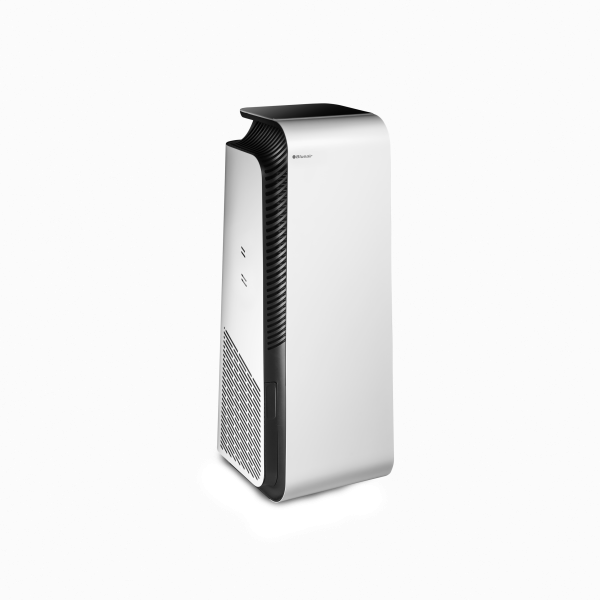
Blueair uses HEPASilent™ technology, which combines mechanical filtration with electrostatic particle charging. Because of that, buyers should still check the certification and ozone-emission information for the exact model rather than treating it as a mechanical-only purifier.
For the DustMagnet range currently sold in Nepal, DustMagnet 5210i, 5240i and 5440i were found in CARB’s electronic air-cleaner records and therefore meet CARB’s applicable ozone-emission requirement. You can view the Blueair DustMagnet air purifiers available in Nepal for current local model availability.
For other Blueair models, certification and ozone-emission documentation should still be checked at the exact model level. A certification or claim for one model or product family should not automatically be applied to the entire Blueair range.
What Should You Look for in an Ozone-Free Air Purifier?
For buyers in Nepal, the most useful checklist combines emissions evidence with actual air-cleaning performance.
Look for:
- mechanical particle filtration appropriate to the pollutants you want to reduce;
- clear model-specific ozone-emission documentation;
- CARB listing or applicable independent validation where relevant;
- UL 2998 evidence when a specific zero-ozone claim is made;
- transparent information about electronic or UV components;
- CADR appropriate for the room size;
- replacement filters readily available in Nepal;
- clear filter-replacement and maintenance instructions;
- no intentional ozone-generation mode for occupied-space air cleaning.
A purifier with excellent ozone documentation can still be too small for your room. Similarly, a purifier with a high CADR still deserves scrutiny if its electronic air-cleaning technology lacks clear emissions documentation.
For practical sizing, placement and maintenance advice, see the guide to air purifier mistakes that can reduce performance in Nepal homes. Schools and institutional buyers can also review guidance on air purifiers for schools, classrooms and daycare centres in Nepal.
Ready to Find Your Verified Ozone-Safe Purifier?
You now have the information needed to compare models more carefully. Use the verification checklist above, check the exact model’s certification or ozone-emission documentation, and make sure the purifier is suitable for your room size.
Need help comparing models? Contact us to discuss the available options and choose a purifier that fits your space and requirements.
FAQs
Do All Air Purifiers Produce Ozone?
No. Mechanical particle filtration and HEPA filtration do not generate ozone by themselves. Some electronic and UV technologies can have ozone-emission considerations depending on their design.
Do HEPA Air Purifiers Produce Ozone?
The HEPA filter itself does not produce ozone. Check whether the complete purifier also contains ionisation, electrostatic, plasma or UV technology.
Are Ioniser Air Purifiers Safe?
That depends on the exact device. Some ionisers can generate ozone, so buyers should check model-specific emissions testing rather than judging all ionisers the same way.
Do UV Air Purifiers Produce Ozone?
Some UV systems can produce ozone, while others do not. Check the UV source, product design and model-level ozone testing.
What Is the Difference Between an Ozone Generator and an Air Purifier?
An ozone generator intentionally creates ozone. A conventional purifier normally removes pollutants through filtration, adsorption or another air-cleaning process.
How Can I Tell if an Air Purifier Is Ozone-Free?
Check the exact model’s technical documentation and look for credible third-party emissions testing such as UL 2998 or other applicable model-level validation.
Is CARB Certification Proof That an Air Purifier Does Not Produce Ozone?
No. CARB’s electronic-device requirement establishes that the model meets its applicable ozone-emission limit of 0.050 ppm, not necessarily that measured emissions are zero.
What Is UL 2998?
UL 2998 is an environmental claim validation procedure used to verify very low ozone emissions from air-cleaning equipment, with a stated detection limit of 0.005 ppm.
Are Blueair Air Purifiers Ozone-Free?
Do not apply one blanket answer to every model. Specific DustMagnet 5210i, 5240i and 5440i CARB listings were verified for this article, but other models should be checked individually against current certification and technical documentation before making a model-level zero-ozone claim.