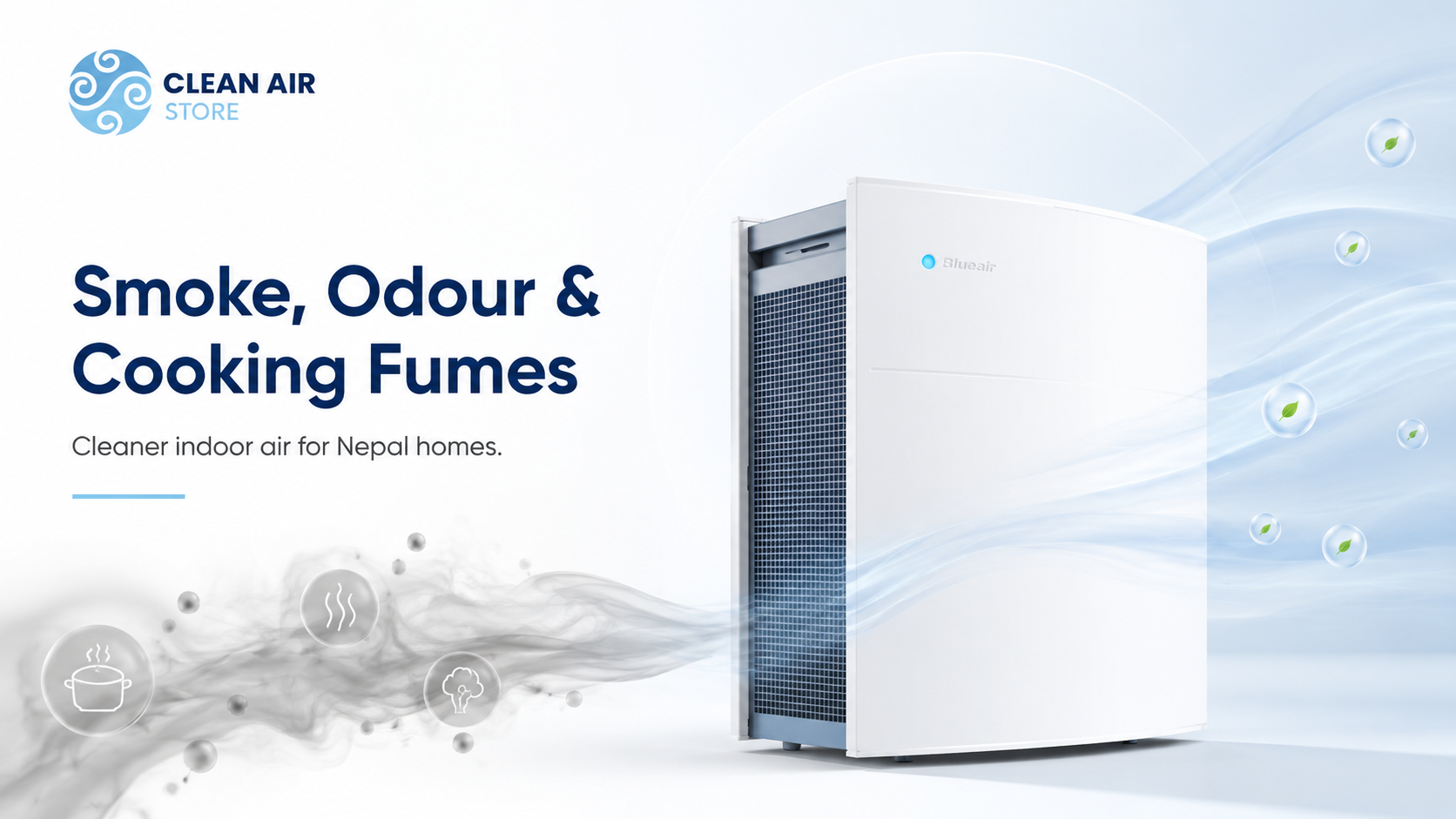
Yes, air purifiers can help reduce airborne triggers associated with asthma and allergies, while creating a cleaner environment for sleep. A correctly sized purifier can capture dust, pollen, pet dander, PM2.5, smoke particles and mould spores. It may also support better sleep when airborne irritants contribute to nighttime discomfort.
The level of improvement varies depending on the person, pollution source, filter quality, room size and operating time. An air purifier improves indoor air quality, but it is not a cure for asthma, allergies or sleep problems. It should support regular cleaning, ventilation when outdoor air is cleaner, moisture control and any treatment recommended by a qualified healthcare professional. This guide explains what filtration can realistically do and how to choose an air purifier in Nepal for your room.
How Does an Air Purifier Work?
An air purifier draws room air through filters and releases cleaner air back into the space. Particle filters capture dust, pollen, pet dander, smoke and PM2.5, while activated carbon helps reduce certain gases and odours. Its effectiveness depends on airflow, room size, placement and operating time.
What Does a HEPA Filter Do?
A HEPA air purifier uses dense, pleated media to capture airborne particles. Under the commonly used standard, a HEPA filter can theoretically capture at least 99.97% of particles measuring 0.3 microns from the air passing through it. This does not mean it removes 99.97% of every pollutant from an entire room.
HEPA filtration can capture dust, pollen, pet dander, mould spores, fine smoke particles and PM2.5 when the purifier provides sufficient airflow for the room. Explore more air purifier and indoor air quality guides to understand filtration, room coverage and proper purifier use.
What Does Activated Carbon Do?
Activated carbon adsorbs some gases and odour-causing compounds. It may reduce cooking, smoke and pet odours, as well as certain volatile organic compounds. It does not replace a kitchen exhaust fan, remove every gas or make indoor smoking safe.
The amount and quality of carbon matter. If smoke or odour is a main concern, compare both the particle filter and carbon filter rather than looking only for a HEPA label.
Which Airborne Pollutants Can Filtration Reduce?
A purifier works on pollutants that become airborne and reach its filter. It cannot collect every particle hidden in a mattress or settled on a shelf.
| Pollutant | How a Purifier May Help | What Else Is Needed |
| Dust and PM2.5 | Captures fine airborne particles | Wet dusting, vacuuming and reducing entry from outdoors |
| Pollen | Reduces pollen that remains suspended in room air | Closing windows during high pollen periods and cleaning fabrics |
| Pet dander | Captures some airborne skin flakes and allergen-carrying particles | Cleaning floors and furniture, washing bedding and managing pet access |
| Smoke particles | Particle filtration can reduce airborne smoke particles | Removing the smoke source and using proper exhaust or ventilation |
| Mould spores | Captures some spores floating in the air | Repairing leaks, controlling moisture and safely removing active mould |
| Odours and some gases | Activated carbon may reduce certain odours and gases | Source control and ventilation with cleaner outdoor air |
No air purifier removes every indoor pollutant. Source control and clean air ventilation remain the first steps, while filtration provides additional support. This is also the approach described in the EPA guide to air cleaners in the home.
How Can Air Purifiers Support Asthma, Allergies and Better Sleep?
Air purifiers can reduce airborne dust, pollen, pet dander, smoke particles and PM2.5, helping create a cleaner indoor environment. This may reduce exposure to common asthma and allergy triggers and support more comfortable sleep, although results vary between individuals.
Can an Air Purifier Help People with Asthma?
An air purifier for asthma may reduce airborne dust, pollen, pet dander, smoke particles and PM2.5. If these pollutants trigger a person’s asthma, lowering exposure may make the room more comfortable, especially during several hours of bedroom use.
Asthma triggers differ between people. The CDC advises people with asthma to avoid known triggers and follow their doctor’s advice. Never change prescribed treatment because an air purifier is being used. Seek urgent care for severe breathlessness, difficulty speaking, blue lips or symptoms that do not respond to the person’s action plan.
Can an Air Purifier Help with Allergies?
An air purifier for allergies can reduce pollen, pet dander, airborne dust mite material and mould spores. A trial involving people with dust mite-induced allergic rhinitis found reduced indoor PM2.5 and medication requirements with HEPA purifier use, although one study cannot predict every result. Read the PubMed summary.
Filtration cannot remove allergens that have already settled in mattresses, pillows, carpets or sofas. Allergy relief usually requires a combination of washing bedding, damp dusting, vacuuming, controlling moisture and keeping pets away from the bed when pet allergens are a known trigger.
Can an Air Purifier Support Better Sleep?
An air purifier may support better sleep when airborne dust, pollen, pet dander, smoke or odours contribute to coughing, congestion or irritation at night. Cleaner bedroom air may reduce these disturbances for some people, although individual results can vary.
An air purifier does not treat insomnia, sleep apnoea or other underlying sleep disorders. If poor sleep continues, breathing symptoms regularly wake you, or loud snoring includes pauses in breathing, seek medical advice. You can also learn more about the connection between indoor air quality and sleep.
What Can and Cannot an Air Purifier Do?
Air purifiers filter the air passing through the unit, but they cannot correct every cause of poor indoor air quality or every health symptom.
| What an Air Purifier Can Help With | What an Air Purifier Cannot Do |
| Reduce airborne dust, pollen and pet dander | Cure asthma, allergies or sleep disorders |
| Lower airborne PM2.5 and smoke particles | Replace inhalers, medicines or medical advice |
| Capture some airborne mould spores | Repair leaks or remove mould growing on surfaces |
| Reduce certain odours when activated carbon is included | Remove every gas, chemical or smell |
| Maintain cleaner air in a correctly sized room | Clean an entire house through closed doors |
| Support source control, cleaning and ventilation | Remove settled dust and allergens from bedding or floors |
How Do You Choose the Right Air Purifier?
The best air purifier in Nepal is the one that delivers enough clean air for your room, addresses the main pollutants and is practical to run consistently. Start with the bedroom or most frequently used room.
Match the Purifier to the Room Size
Measure the room’s length, width and ceiling height. A small purifier in a large or open room may clean the air too slowly. For example, the Blue Pure 411 is designed for smaller rooms, while larger spaces require greater coverage.
Compare CADR, Not Only Filter Claims
Clean Air Delivery Rate, or CADR, indicates how much filtered air a purifier delivers. A higher CADR generally serves a larger room or cleans the same room faster. The Blue 3610 is designed for larger rooms of up to 51 m², depending on the room layout and indoor air quality needs.
Select the Right Filter Combination
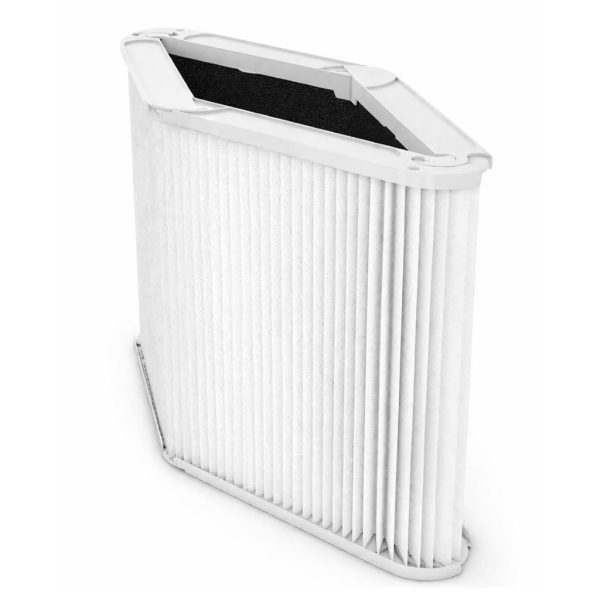
Choose effective particle filtration for pollen, pet dander, dust, smoke particles and PM2.5. Activated carbon is also useful when odours or gases are a concern. The replacement filter for Blue 3410 combines particle and carbon filtration to capture fine particles and reduce everyday odours.
Check Bedroom Noise Levels
Compare noise at the fan speed you expect to use, not only the quietest setting. Sleep mode may reduce both sound and airflow. Choose a unit that stays comfortable while moving enough air for the room.
Review Maintenance and Filter Availability
Check the replacement schedule, price and local availability before choosing a purifier. Follow the filter indicator and never wash the main filter unless the manual confirms it is washable. Genuine options such as the replacement filter for DustMagnet 5440i help maintain proper airflow and filtration performance.
Consider Blueair Without Choosing by Brand Alone
Blueair air purifiers use HEPASilent technology, which combines mechanical and electrostatic filtration. A model such as the HealthProtect 7770i may suit a large room, but the right choice still depends on room size, CADR and individual indoor air quality needs. Do not choose the largest purifier without first measuring the space.
Where Should You Place an Air Purifier for Asthma, Allergies or Sleep?
Place the air purifier in the room where the person spends the most time or where symptoms are most noticeable. Keep the air intake and outlet unobstructed, follow the manufacturer’s spacing instructions and place the unit on a stable surface.
Suitable locations include:
- Bedroom: Place it close enough to clean the sleeping area, but avoid directing strong airflow toward the face or bed. Use a quiet setting that still provides sufficient airflow throughout the night.
- Living room: Position it in an open area near the main seating space. Avoid corners, curtains, sofas and cabinets that could restrict circulation.
- Study or home office: Place it near the occupied area without allowing papers, walls or furniture to block the intake or outlet.
- Near outdoor pollution entry points: If roadside dust, pollen or smoke regularly enters from a particular door or window, position the purifier between that entry point and the occupied area.
- Rooms used by pets: Place the purifier in the room where the pet spends the most time to help reduce airborne pet dander. Regular cleaning is still necessary because settled allergens cannot be removed from floors or furniture by the purifier.
- Near connected living and dining spaces: A purifier may serve a small open-plan area when air circulates freely and the total space remains within its recommended coverage.
- Close to cooking areas, but away from the stove: Position it outside the immediate cooking zone to help capture particles and odours that spread into nearby rooms. Keep it away from heat, grease and steam, and continue using a kitchen exhaust fan.
One portable purifier mainly serves one room or connected open area. If family members use separate bedrooms with closed doors, each priority room may require its own purifier.
How Can You Maximise Air Purifier Performance?
Control pollution at its source first, then use filtration to maintain cleaner air.
- Run the purifier continuously or for long periods at a comfortable, effective speed.
- Use a higher fan setting after cooking, cleaning or when outdoor PM2.5 rises.
- Keep windows closed when nearby outdoor air is heavily polluted, smoky or dusty.
- Ventilate briefly when outdoor air becomes cleaner because a purifier does not remove carbon dioxide.
- Use an outdoor venting kitchen exhaust while cooking.
- Avoid smoking and limit incense, dhoop and candles indoors.
- Damp dust and vacuum regularly to remove particles already settled on surfaces.
- Wash bedding and clean curtains according to their care instructions.
- Repair leaks and control moisture instead of relying on filtration for mould.
- Clean the prefilter and replace the main filter as instructed.
Do not use an ozone generator in an occupied home. Ozone can irritate the lungs and is not a safe substitute for effective particle filtration and source control.
A Cleaner Room Starts with the Right Expectations
Air purifiers can reduce airborne dust, pollen, pet dander, smoke particles, PM2.5 and mould spores. The strongest results come from combining the right purifier with cleaning, source control, moisture management and timely ventilation.
Measure the room, identify whether particles or odours are the main concern, then compare CADR, filters, noise and replacement availability. For help matching filtration and coverage to your space, ask for practical model guidance.
FAQs
Do air purifiers help with asthma allergies and sleep?
Yes. They can reduce airborne triggers and bedroom pollutants, but cannot cure asthma, allergies or sleep disorders.
What is the best air purifier for asthma?
Choose effective particle filtration and enough CADR for the room. The right model depends on triggers, room size, noise and filter availability.
Do doctors recommend air purifiers for asthma?
A clinician may suggest filtration as part of trigger reduction. It must not replace an asthma action plan or prescribed treatment.
Can an air purifier stop an asthma attack?
No. An air purifier cannot stop an asthma attack. Follow the person’s prescribed asthma action plan and seek urgent medical help when symptoms are severe or do not improve.
Which filter is best for allergies?
A HEPA or another independently tested high efficiency particle filter is suitable for airborne pollen, pet dander, dust and mould spores. Activated carbon serves a different purpose by reducing certain odours and gases.
Can an air purifier remove dust mites?
It may capture airborne dust mite material but cannot remove mites or allergens embedded in bedding, mattresses and carpets. Cleaning remains essential.
Can I sleep with an air purifier running all night?
Yes, if the purifier is designed for continuous indoor use and operated according to its manual. Use a comfortable fan speed, keep airflow clear and maintain the filter.
Where should I place an air purifier in a bedroom?
Place it where the intake and outlet remain unobstructed, with the clearance stated in the manual. Keep it near the occupied area without directing uncomfortable airflow at the bed.
Can an air purifier remove mould?
It can capture some airborne mould spores, but it cannot remove mould growing on walls or furniture. Fix moisture, repair leaks and arrange safe mould removal.
How long does an air purifier take to clean a room?
There is no fixed time. It depends on CADR, room volume, fan speed, starting pollution level, air leakage and whether pollution continues entering the space.