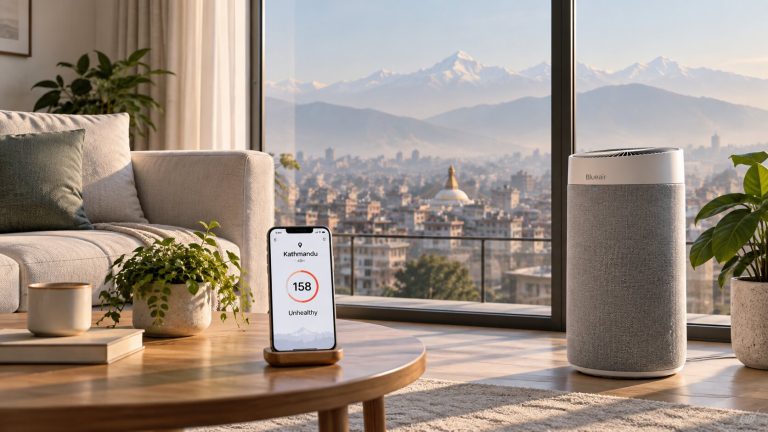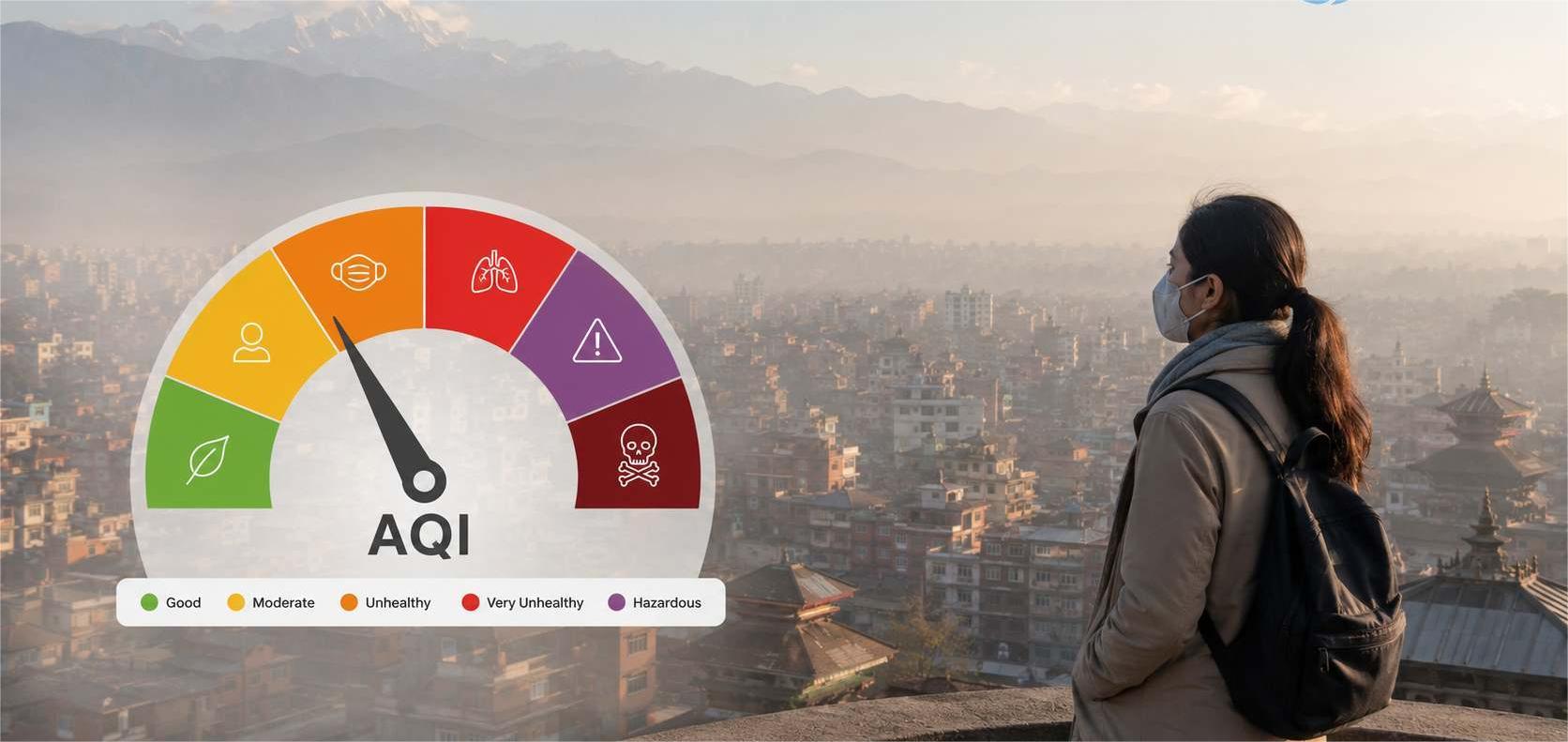
If you’ve ever checked the weather app and noticed a number labelled “AQI,” you may have wondered what it actually means, and whether you should be concerned. In a city like Kathmandu, where air pollution is a daily reality, understanding AQI isn’t just useful. It can directly protect your health.
The higher the AQI number, the more polluted the air is and the higher the possible health risk. AQI helps people understand whether the air outside is safe for normal activities or whether they should reduce outdoor exposure. For cities like Kathmandu, where dust, vehicle emissions, construction activity, and seasonal pollution can affect daily air quality, understanding AQI is important for protecting your health and your family’s comfort.
What Is AQI?
AQI stands for Air Quality Index. It is a standardised scale used by governments and environmental agencies to measure how clean or polluted the outdoor air is at any given time.
Instead of presenting raw scientific data that most people wouldn’t understand, AQI converts pollution measurements into a simple number, typically ranging from 0 to 500. The higher the number, the worse the air quality and the greater the potential health risk.
Think of it like a temperature reading for air pollution. Just as you’d check the temperature before deciding what to wear, checking the AQI before stepping outside can help you make smarter decisions about your health.
How Is AQI Measured?
AQI is calculated based on the concentration of key air pollutants, including:
- PM2.5: fine particles smaller than 2.5 microns that can penetrate deep into the lungs
- PM10: slightly larger dust and smoke particles
- Ozone (O₃): a gas formed by sunlight reacting with vehicle and industrial emissions
- Carbon Monoxide (CO): produced mainly by vehicle exhaust
- Nitrogen Dioxide (NO₂): from traffic and burning fuels
- Sulfur Dioxide (SO₂): from industrial activity and coal burning
Among these, PM2.5 is the most critical indicator in cities like Kathmandu, where vehicle emissions, brick kilns, road dust, and open burning are major pollution sources.
AQI Levels and What They Mean
Different AQI levels show different health risks. The exact colour scale may vary slightly depending on the platform, but the general meaning is similar.
| AQI Range | Air Quality Level | What It Means |
| 0–50 | Good | Air quality is generally considered satisfactory. |
| 51–100 | Moderate | Acceptable for most people, but very sensitive people may feel effects. |
| 101–150 | Unhealthy for Sensitive Groups | Children, elderly people, and people with asthma or heart/lung conditions should be careful. |
| 151–200 | Unhealthy | Some people may experience health effects; sensitive groups may feel stronger effects. |
| 201–300 | Very Unhealthy | Health warnings become more serious; outdoor activity should be limited. |
| 301+ | Hazardous | Everyone may be affected; outdoor exposure should be avoided whenever possible. |
What Does AQI Mean for Your Health?
The impact of air quality on your body depends on both the AQI level and the duration of your exposure. A single afternoon in moderately polluted air affects you very differently from breathing that same air every day for months. Over time, repeated exposure adds up, and the effects on your lungs, heart, and overall health can become significant long before any symptoms feel obvious.
Short-Term Effects
Even short periods of exposure to polluted air can affect how you feel, especially when AQI levels are high. The symptoms may vary depending on your age, health condition, and the amount of time spent outdoors. Even brief exposure to high AQI levels can cause:
- Irritation in the eyes, nose, and throat
- Coughing, sneezing, or shortness of breath
- Headaches and fatigue
- Aggravated asthma or allergy symptoms
Long-Term Effects
Breathing polluted air regularly over months or years can gradually affect the lungs, heart, and overall health. These effects may not appear immediately, but repeated exposure to poor air quality can increase health risks over time. Prolonged exposure to poor air quality, which is a real concern for Kathmandu residents, can contribute to:
- Chronic respiratory diseases such as asthma and bronchitis
- Reduced lung function over time
- Increased risk of cardiovascular disease
- Cognitive effects in children, including reduced concentration
- Higher risk of lung cancer with years of exposure to PM2.5
Who Is Most at Risk?
Air pollution can affect anyone, but some groups are more vulnerable because of their age, health condition, or level of exposure. These individuals may experience symptoms sooner and face greater health risks when AQI levels are high. Certain groups are more vulnerable to the effects of poor air quality:
- Children’s lungs are still developing
- Elderly individuals have reduced immune and respiratory resilience
- Pregnant women’s pollution can affect fetal development
- People with asthma, COPD, or heart conditions
- Outdoor workers’ rickshaw drivers, traffic police, and street vendors
Can an Air Purifier Help During High AQI Days?
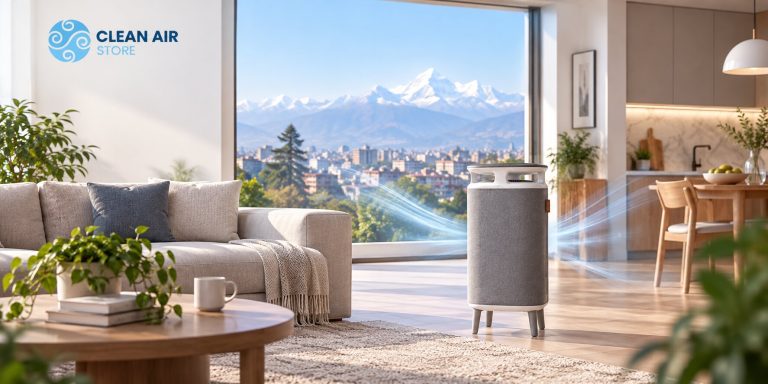
An air purifier cannot clean outdoor air, but it can make a significant difference to the air inside your home. On high-AQI days when keeping windows closed is the safer choice, a good air purifier becomes one of the most practical tools you have.
For homes in Kathmandu and across Nepal, this matters most in the spaces where people spend the longest hours:
- Bedrooms, where you spend 6–8 hours breathing the same air every night
- Baby rooms, where infants and young children are especially vulnerable to fine particles
- Living rooms are high-traffic spaces that accumulate dust, allergens, and outdoor pollutants
- Study and home office rooms, where concentration and air quality are closely linked
- Pet-friendly spaces, where pet dander and hair add to the existing pollution load
Blueair air purifiers, available through Clean Air Nepal, use advanced filtration technology and come in a range of models suited to different room sizes and usage needs. A few things that make them well-suited for Nepal’s conditions:
- Multiple filtration stages that capture PM2.5, dust, smoke, and allergens
- Models designed for smaller bedrooms as well as larger living spaces
- Quiet operation, practical for bedrooms and study rooms where noise matters
Whether your home sits near a dusty road, a busy intersection, or a construction-heavy area, the right air purifier can meaningfully reduce the indoor pollution load, making your space feel fresher and more comfortable even when the air outside is at its worst.
What Can You Do When AQI Is High?
When AQI is high, reducing your exposure to polluted air becomes important. A few simple precautions can help protect your health, improve indoor comfort, and reduce the impact of poor air quality on your daily routine.
Outdoors
- Avoid strenuous outdoor activity when the AQI exceeds 150
- Wear an N95 or KN95 mask; standard cloth masks offer very limited protection against PM2.5
- Avoid high-traffic areas during peak hours
- Try to commute or exercise early in the morning when pollution levels tend to be slightly lower
Indoors
- Keep windows closed on high-pollution days, especially if you live near a busy road
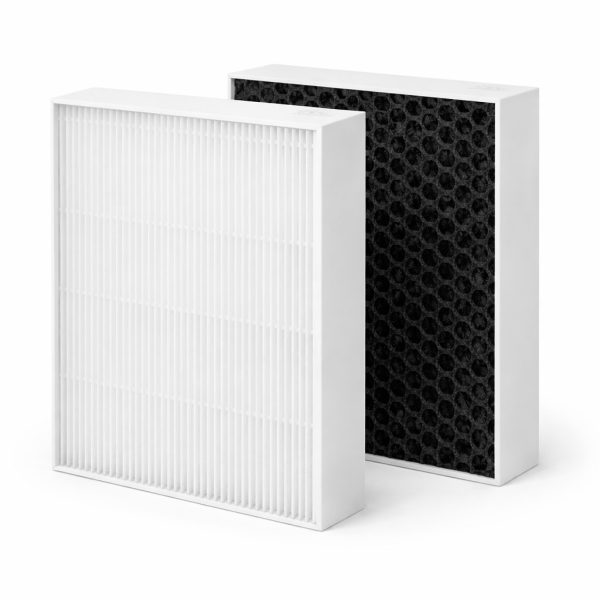
- Use an air purifier with a HEPA filter to significantly reduce indoor PM2.5 levels
- Avoid indoor pollution sources such as incense burning, candles, and smoking
- Maintain your air purifier regularly; a clogged or neglected filter won’t protect you effectively.
AQI vs. Air Quality: Common Misconceptions
Air quality refers to the actual level of pollutants in the air, such as PM2.5, PM10, ozone, carbon monoxide, and other harmful particles or gases. AQI, or Air Quality Index, turns that pollution data into a simple number and colour category so people can quickly understand the health risk.
One common misconception is that clear air always means clean air. In reality, harmful pollutants like PM2.5 can be invisible, so a clear-looking sky may still have poor air quality. Another myth is that indoor air is always safer than outdoor air. Without proper ventilation or filtration, indoor spaces can also collect dust, smoke, odours, and fine particles over time.
It is also important to remember that a lower AQI number does not mean the air is completely pure. It simply means the pollution level is low enough to pose little or no immediate health risk for most people. Similarly, repeated exposure to high AQI levels can increase health risks, especially for children, elderly people, and those with breathing or heart conditions.
How AQI Helps You Plan Your Day
AQI is a simple yet valuable tool that helps you understand the quality of the air around you and the potential impact it can have on your health. In cities like Kathmandu, where air quality can fluctuate due to traffic, dust, weather conditions, and seasonal pollution, checking the AQI regularly can help you make more informed decisions about your daily activities.
When AQI levels are high, even small precautions can make a meaningful difference. Limiting outdoor exposure, wearing an N95 mask, keeping windows closed during peak pollution hours, and using a well-maintained air purifier indoors can help reduce your exposure to harmful pollutants and create a healthier indoor environment for you and your family.
FAQs
What does AQI mean?
AQI stands for Air Quality Index. It is a number that shows how clean or polluted the air is and what level of health risk it may pose.
What is a good AQI level?
An AQI between 0 and 50 is generally considered good. This means the air quality is satisfactory for most people, and outdoor activities are usually safe.
At what AQI level is the air unhealthy?
Air quality becomes unhealthy for sensitive groups when the AQI goes above 100. When AQI goes above 150, it may start affecting the general public as well.
Is AQI 150 dangerous?
AQI 150 is considered unhealthy for sensitive groups. Children, elderly people, pregnant women, and people with asthma, COPD, allergies, or heart conditions should reduce outdoor exposure.
Can high AQI affect your health?
Yes, high AQI levels can affect your health. Short-term exposure may cause eye irritation, coughing, headaches, and breathing discomfort, while long-term exposure can increase the risk of respiratory and heart-related problems.
Why is PM2.5 important in AQI?
PM2.5 is important because these fine particles are small enough to enter deep into the lungs. Long-term exposure to PM2.5 can increase health risks, especially for people with respiratory or heart conditions.
Should I go outside when the AQI is high?
When AQI is high, it is better to reduce outdoor activities, especially exercise, walking near traffic-heavy areas, or spending long hours outdoors. Sensitive groups should be extra careful.
Can an air purifier help when the AQI is high?
Yes, an air purifier can help improve indoor air quality during high AQI days. It cannot clean outdoor air, but it can reduce fine particles and pollutants inside a room when used properly.
Is indoor air always cleaner than outdoor air?
No, indoor air is not always cleaner. Dust, smoke, cooking fumes, odours, and outdoor pollution can build up indoors, especially when there is poor ventilation or no air filtration.
How often should I check AQI?
You should check AQI daily, especially before outdoor exercise, morning walks, commuting, school activities, or opening windows for ventilation.