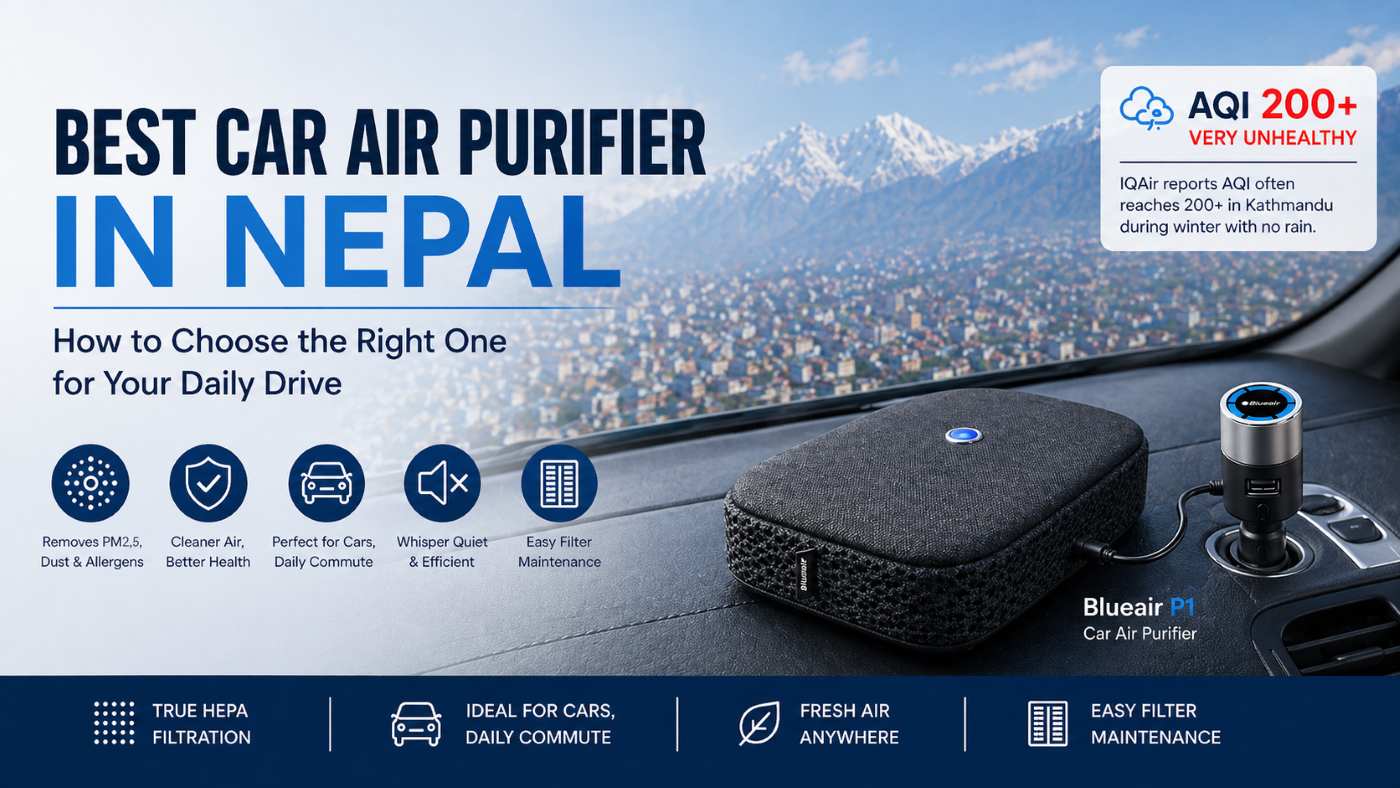
Driving in Nepal, especially in busy cities like Kathmandu, often means inhaling dust, smoke, traffic fumes, and polluted air every day. Even with the windows closed, dirty air can still enter and stay trapped inside your car, making daily travel less comfortable for you and your family. This is especially important for people who spend a lot of time on the road, travel with children, or want a cleaner cabin during long commutes.
That is why more drivers are now looking for the best car air purifier in Nepal. A good car air purifier can help reduce dust, PM2.5 particles, smoke, and unwanted odors inside the vehicle, making the air feel fresher and easier to breathe.
This guide explains how to choose the right model for Nepal’s road and traffic conditions, with a clear focus on cabin pollution, odors, daily commute use, and car size fit.
Why Do Kathmandu Drivers Need a Car Air Purifier?
Kathmandu drivers deal with dust, traffic fumes, stop-and-go roads, idling vehicles, seasonal haze, and trapped odors inside a small cabin. In 2024, Kathmandu recorded an average PM2.5 level of 45.1 µg/m³, which is 9.2 times higher than the WHO annual guideline. Because the valley is bowl-shaped, pollution tends to accumulate and remain trapped, so drivers continue to face poor air quality during everyday travel.
A car cabin is a small enclosed space. That matters because polluted air and smells can build up quickly inside, especially when:
- You drive during rush hour
- You sit in traffic with windows partly open
- You travel on dusty roads
- You park in polluted roadside areas
- You carry food, pets, smoke residue, or damp items in the car
Kathmandu’s pollution is also strongly local. The World Bank estimates that around 63% of PM2.5 in Kathmandu comes from local sources, including road dust, vehicle emissions, and traffic congestion. That means the pollution drivers face is not only outside on the road. It can also keep circulating inside the car during the drive.
Your car may already have a cabin filter, but that does not always make an added purifier unnecessary. A dedicated car air purifier adds another layer of filtration inside the space where you actually sit and breathe, helping reduce fine dust, smoke, PM2.5 particles, and trapped odors.
For a Kathmandu commuter, the benefit is simple: cleaner-feeling cabin air during everyday driving. In a country where air pollution contributes to around 26,000 premature deaths each year and reduces average life expectancy by 3.4 years, cleaner cabin air is more than a comfort feature. It is a practical upgrade for daily travel.
What to Look for Before Buying the Best Car Air Purifier in Nepal
The best car air purifier in Nepal isn’t necessarily the one with the most features. It is the one that matches the kind of driving you do every day. For Kathmandu roads, the right model should handle dust, traffic pollution, trapped odors, daily commuting, and your car’s cabin size without becoming difficult or expensive to use.
Filtration for dust and traffic pollution
One of the first things to check is how well the purifier handles fine dust and traffic-related pollution. In Nepal, car cabins are exposed to road dust, smoke, and exhaust almost every day, especially in busy urban areas. A good purifier should be designed to capture these particles effectively within a small, enclosed cabin.
This is why filtration quality, air circulation, and stable daily performance matter so much. If a purifier cannot keep up with normal city dust, it will not feel useful for long.
Odor control for everyday driving
Many drivers notice the smell before they notice particles. Fuel fumes, stale air after parking, food smells, smoke residue, damp items, and even roadside pollution can make the cabin uncomfortable. That is why odor control should be treated as a real buying factor, not just a bonus.
A strong car air purifier should help the cabin feel fresher during normal use, especially if you drive every day, often carry passengers, or want the car to feel clean after long commutes.
Easy use in heavy traffic
If you drive through traffic every day, convenience matters. A purifier should be easy to run without constant adjustment. Simple fan controls may be enough for some drivers, while others may prefer features like auto mode, real-time air quality display, or smartphone control for a more set-and-forget experience.
This becomes especially useful during:
- long traffic jams
- office commutes
- The school runs during peak hours
- rideshare or taxi driving
- slow driving on busy city roads
In these situations, ease of use can make a big difference in everyday comfort.
The right fit for your car size
Not every purifier suits every vehicle equally. A unit that works well in a hatchback may not feel as effective in a larger SUV or people carrier. That is why car size fit should always be part of the decision.
Before buying, think about:
- whether you drive a hatchback, sedan, or SUV
- How many passengers usually travel with you
- whether rear seats are often occupied
- How long do people stay inside the cabin per trip
- whether you mostly drive with windows closed
A purifier that does not match the cabin size can lead to disappointing results, even if the product itself is good.
Running cost and filter replacement
A car air purifier is usually used regularly, so the long-term cost matters too. Check the filter life, replacement cost, and power use before buying. A model may look affordable at first, but if filter replacements are frequent or expensive, the overall cost increases over time. For most buyers in Nepal, a good purifier should not only clean well but also feel practical to maintain for daily driving.
Best Car Air Purifier in Nepal
| Feature | Blueair Cabin P1 | Blueair Cabin P2i |
| Filtration | HEPASilent™ | HEPASilent™ |
| Best for | Simple everyday cabin air cleaning | Smarter daily driving in changing traffic conditions |
| Claimed key benefit | Cleans cabin air in under 6 minutes | Smart monitoring and automatic adjustment |
| Noise level | 35–55 dB(A) | 35–55 dB(A) |
| Filter life | 6 months | 6 months |
| Room/cabin capacity | 3–4 sqm | 3–4 sqm |
| Wattage | 1.7–5.5 W | 2.2–7 W |
| Weight | 1.4 kg | 1.4 kg |
| Smart features | No smart controls highlighted | Built-in sensors + Bluetooth app control |
| Suggested user | Budget-aware driver, basic needs | Heavy commuter, tech-friendly user, family driver |
Blueair Cabin P1: A Simple and Practical Car Air Purifier for Everyday Driving in Nepal
If you want a car air purifier in Nepal that is easy to use and practical for daily travel, the Blueair Cabin P1 is a strong option. It is designed for drivers who want help with dust, smoke, exhaust, and odors without paying extra for smart controls or advanced features. That makes it a good fit for regular commuting in Kathmandu and other busy urban areas.
The Blueair Cabin P1 uses 360° airflow and is designed to clean cabin air in under 6 minutes, which is helpful when stale air, traffic fumes, or dust build up quickly inside the car. It uses HEPASilent™ technology, which helps filter fine particles while keeping airflow steady inside the car.
The unit runs at 35–55 dB(A), uses only 1.7–5.5 watts of power, weighs 1.4 kg, and comes with a 6-month filter life. In short, it is compact, quiet, and easy to keep running without hassle.
Why it stands out:
- Cleans cabin air in under 6 minutes
- Helps reduce dust, smoke, exhaust, and odors
- Uses HEPASilent™ filtration
- Quiet enough for comfortable driving
- Low power use for regular daily trips
- Compact and lightweight design
- Good value for buyers who want simplicity
Price: The Blueair Cabin P1 is priced at Rs 26,500, making it the more affordable option for buyers who want cleaner cabin air without moving up to a higher-priced smart model.
Filter used and filter price
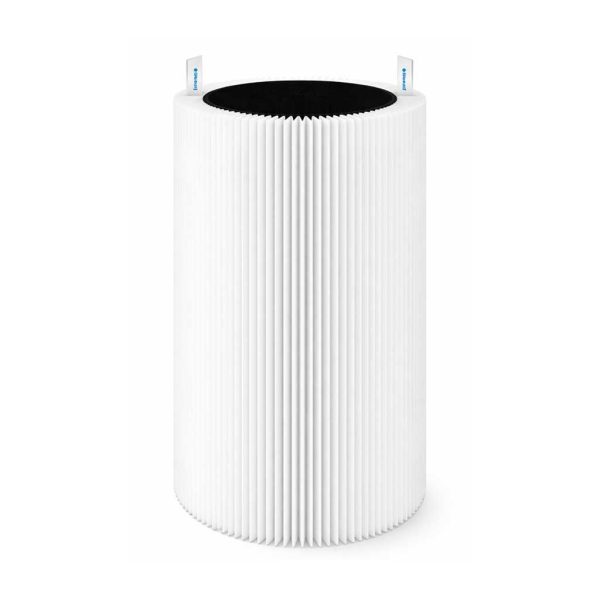
This model uses a HEPASilent™ filter, and the filter life is around 6 to 8 months with normal use. The replacement filter costs Rs 4,000, an important running cost to keep in mind when comparing car air purifiers in Nepal.
Blueair Cabin P2i: A Smart Car Air Purifier for Daily Driving in Nepal
For drivers who want more than a basic car air purifier, the Blueair Cabin P2i is a strong everyday option. It is designed for real driving conditions in Kathmandu and other busy cities, where dust, smoke, exhaust fumes, traffic pollution, and trapped odors can make the cabin feel uncomfortable. HEPASilent™ technology helps reduce fine particles and bad smells, so the air inside the car feels cleaner and fresher for both drivers and passengers.
What makes the Cabin P2i different is its smart, responsive design. Air conditions inside a car keep changing during traffic jams, long commutes, dusty roads, and close driving behind other vehicles. To handle that, it features built-in air quality sensors that automatically adjust performance. It also comes with Bluetooth app control, giving drivers an easy set-and-forget experience with extra control when needed.
The Cabin P2i is also compact, quiet, and energy-efficient, which makes it practical for daily use. It is suitable for cars, vans, microbuses, and SUVs, and is built to run comfortably without taking up much space. With a 6-month filter life, 35–55 dB(A) noise level, and 2.2–7 watts of power use, it is a good fit for drivers who want cleaner cabin air with less effort.
Why Blueair Cabin P2i stands out
- Helps reduce dust, smoke, exhaust, and traffic pollution
- Supports odor control inside the cabin
- Uses HEPASilent™ filtration
- Includes built-in sensors for auto adjustment
- Offers Bluetooth app control
- Runs quietly for daily driving comfort
- Uses low power for regular use
- Fits cars, vans, microbuses, and SUVs
Price: The Blueair Cabin P2i is priced at Rs 35,000, making it a solid choice for buyers who want smarter features and more responsive air cleaning inside the car.
Filter: Cabin P2i uses a HEPASilent™ filter, and the filter life is around 6 to 8 months with normal use. The replacement filter costs Rs 4,000, an important running cost to keep in mind when comparing car air purifiers in Nepal.
How Do You Get the Best Results After Buying a Car Air Purifier?
To get the best results from a car air purifier, place it where airflow is not blocked, keep the cabin reasonably clean, and replace the purifier filter and cabin AC filter on time. It also works better when you use it consistently on daily drives, especially in traffic, on dusty roads, and in polluted areas.
Place the purifier where the airflow works
Placement directly affects how well a car air purifier performs. It should be kept in a spot where air can move freely through the cabin, so the purifier can draw in polluted air and expel cleaner air without obstruction. If the intake or outlet is blocked by bags, seat covers, or other items, the purifier may not circulate air properly, and the results can feel weaker.
Before placing it, check whether the position provides enough open space around the unit and does not interfere with the car’s normal use. A good setup should also avoid reducing passenger comfort or blocking important interior areas.
Keep the car cabin clean
A car air purifier works best when the cabin is already kept reasonably clean. If dust, food crumbs, rubbish, moisture, and stale smells build up inside the car, the purifier has to work harder and may not feel as effective in daily use. In simple terms, the purifier should support a cleaner cabin, not fight against ongoing dirt and odor buildup on its own.
Regular cleaning also helps reduce the amount of dust and smell sources already sitting inside the vehicle. When the seats, mats, dashboard, and AC area are cleaner, the air purifier can focus more on the fine particles and polluted air circulating while you drive.
Try to do these regularly:
- vacuum seats and floor mats
- Wipe the dashboard and other hard surfaces
- remove food waste and rubbish
- air out damp or moisture-prone items
- clean the AC area when needed
Replace the cabin AC filter on time
A car air purifier works best when the car’s own cabin AC filter is also in good condition. These two do not do exactly the same job, but they support each other. If the cabin AC filter is old, dirty, or overdue for replacement, dust and unpleasant air can still keep circulating through the car, even when the purifier is running.
This is why replacing the cabin AC filter on time is an important part of getting better in-car air quality. Many buyers install a purifier and expect full results, but ignore the vehicle’s existing filter system. A better approach is to treat both as part of the same cabin-air routine: keep the AC filter maintained, and let the purifier handle the extra air cleaning inside the space where you sit and breathe.
Use recirculation mode wisely
Recirculation mode can be useful when you are driving through heavy traffic, dusty roads, or areas with smoke and exhaust, because it reduces the amount of polluted outside air that enters the cabin. This gives your car air purifier a better chance to clean and maintain the air already inside the vehicle, instead of constantly dealing with new pollution coming in.
At the same time, the recirculation mode should be used with some judgment. Road conditions, weather, cabin fogging, and comfort all matter, so it is not something to leave on without thinking. The key point is simple: a car air purifier usually performs better when used with good cabin-air habits, and smart use of recirculation mode is one of them.
Stay consistent
A purifier gives better results when you use it regularly. If it stays off during the worst part of your commute, it will not significantly improve the air inside the car. For the best results, keep it running during daily drives, especially when you are exposed to dust, smoke, traffic fumes, and stale cabin air.
Find the Right Air Purifier To Clean Your Car Air
If you are thinking about cleaner cabin air for daily driving, Blueair Cabin P1 and Cabin P2i are two practical options worth comparing. Whether you want a simple, everyday solution or a smarter model to address changing traffic conditions, Clean Air Nepal offers options to help you find the right car air purifier for your needs.
FAQs
What is the best car air purifier in Nepal?
If you want a simple and practical option for everyday dust, smoke, and odour control, Blueair Cabin P1 is a strong choice. If you want smarter features like built-in sensors, auto adjustment, and Bluetooth app control, Blueair Cabin P2i is the better option.
Do I really need a car air purifier in Kathmandu?
Yes, a car air purifier can be useful in Kathmandu because drivers face dust, traffic fumes, smoke, trapped odors, and stop-and-go traffic in a small, enclosed cabin. Even with the windows closed, polluted air can still enter and build up inside the car, which is why many drivers look for an added layer of filtration.
Is a car air purifier still useful if my car already has a cabin AC filter?
Yes, because a car air purifier and cabin AC filter support each other rather than doing exactly the same job. A purifier adds extra air cleaning inside the space where you actually sit and breathe, while the car’s cabin AC filter still needs to be replaced on time for the best overall cabin air quality.
How often should you replace a car air purifier filter in Nepal?
In Nepal, a car air purifier filter is usually replaced every 6 to 8 months under normal use, though the exact timing can vary depending on dust levels, traffic pollution, and how often you drive. If you drive regularly in Kathmandu or other dusty areas, it is a good idea to check the filter sooner, as heavier use can shorten its lifespan.