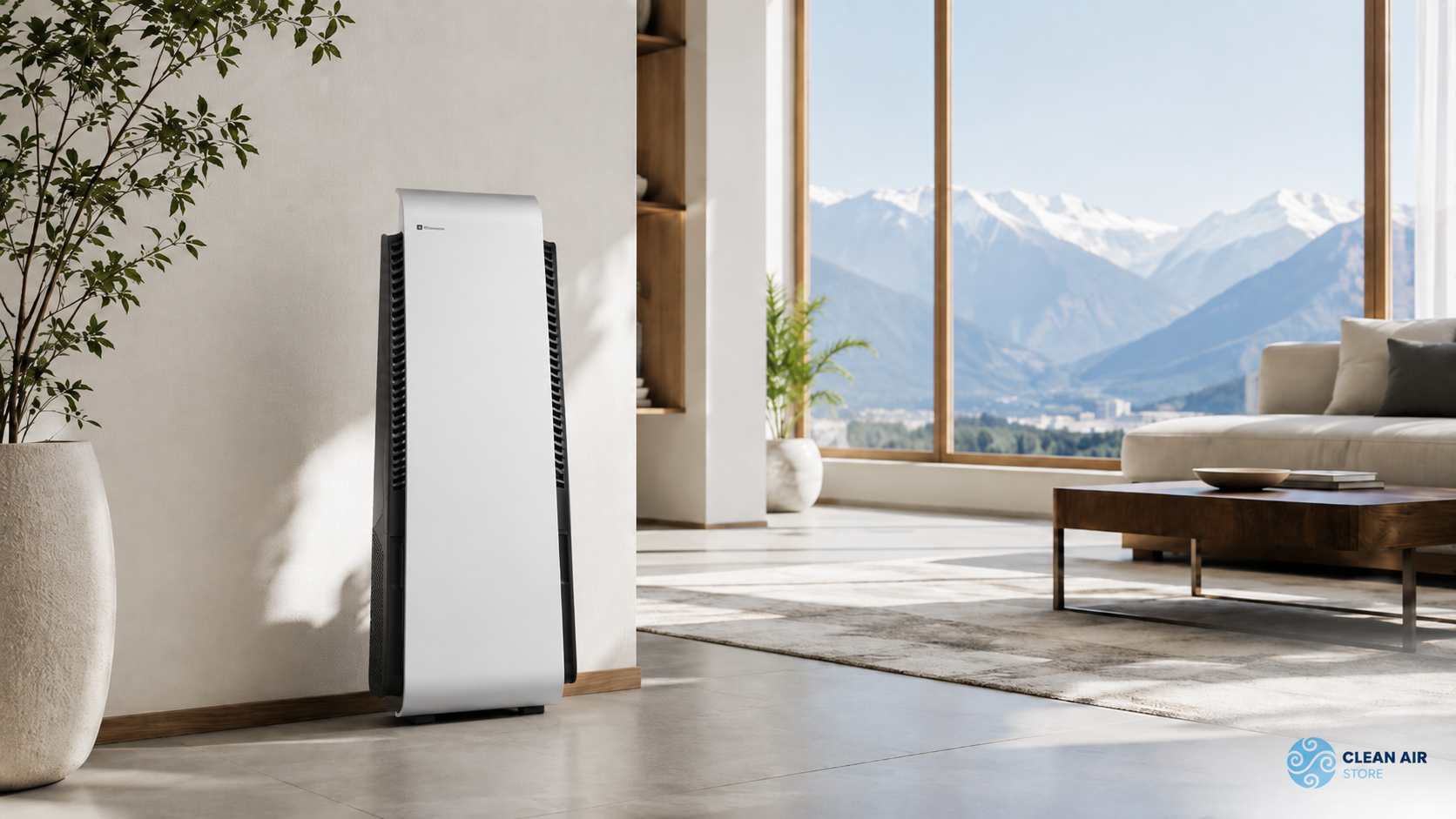
Monsoon in Nepal can feel like an air-quality reset. The rain washes the roads, settles visible dust, cools the air, and makes the hills, streets, and skies look fresher. It is natural to feel like pollution has disappeared during rainy days, and studies on Kathmandu Valley also show a real drop in outdoor particle pollution during the monsoon, with PM2.5 levels falling much lower than in the dry winter months.
Rain controls pollution; it doesn’t remove it. Monsoon downpours cut Kathmandu’s PM2.5 by 60–70%, but even that “cleanest” air still exceeds the WHO’s guideline. Cleaner surroundings do not always mean truly clean air, especially indoors. Even during the monsoon, Kathmandu’s PM2.5 levels can remain above the WHO’s recommended air quality guideline, while indoor spaces can face a different kind of air problem: closed windows, damp smell, humidity, mould spores, cooking fumes, incense smoke, pet dander, allergens, and trapped indoor particles.
Does Rain Really Clean the Air?
Rain can help settle outdoor dust and particles for some time, which is why the air often feels fresher after rainfall. But rain does not automatically make indoor air clean. During monsoon, outdoor air may improve, but indoor spaces can still hold dust, odours, moisture, allergens, smoke particles, and trapped pollutants.
Key points to understand:
- Rain can reduce visible dust outdoors, especially road dust and dry particles.
- Outdoor air may feel fresher after rainfall, but that effect may be temporary.
- Indoor air can still contain particles from cooking, incense, pets, cleaning, damp areas, and furniture.
- Closed windows can make rooms feel stale, especially in bedrooms, apartments, offices, and clinics.
- Open windows during damp weather can bring moisture inside, which may add to a damp smell and discomfort.
- Humidity can support mould and allergens if rooms are not cleaned, dried, or ventilated properly.
- Traffic, smoke and outdoor particles can still enter the room when windows and doors are open.
- Rain helps the outside feel cleaner, but it does not replace proper indoor air management.
Why Indoor Air Can Still Be Poor During Monsoon
During the monsoon, rain may make the outside feel cleaner, but indoor air can still become damp, stale, and heavy. Closed windows, humidity, cooking fumes, incense smoke, mould spores, allergens, and trapped dust can all affect the air inside your room. So even when the outside looks fresh, indoor air quality still needs attention.
Damp Smell and Stuffy Rooms
During monsoon, rooms can feel closed, heavy, or damp, especially in apartments, bedrooms, offices, and spaces with poor airflow. An air purifier with proper filtration and carbon support may help reduce some indoor odours and trapped airborne particles, but moisture control and ventilation are still important. For rooms that often feel dusty, closed, or uncomfortable during monsoon, a model like DustMagnet 5210i may be useful, depending on the room size and air quality needs.
Common monsoon indoor air problems include:
- Damp smell: Rooms may feel musty when moisture stays trapped.
- Stuffy air: Closed windows can make indoor air feel heavy.
- Dust and particles: Indoor dust can remain even after rain.
- Poor airflow: Blocked or closed spaces can hold odours longer.
- Daily indoor sources: Cooking, incense, pets, and cleaning can add more particles.
An air purifier can help improve indoor freshness, but it works best when combined with proper ventilation, cleaning, and moisture control.
Mould Spores and Allergens
Humidity and damp surfaces during the monsoon can support mould growth, especially in rooms with poor airflow. An air purifier can help reduce airborne particles such as mould spores, dust, pollen, and allergens, but it cannot remove mould growing on walls, ceilings, or furniture. For allergy-sensitive homes or rooms used by children and elderly family members, a model like HealthProtect 7470i may be useful, depending on the room size and indoor air concerns.
Common monsoon allergy triggers include:
- Mould spores: Can become airborne from damp areas.
- Dust and allergens: Can remain trapped inside closed rooms.
- Pet dander: Can circulate more in poorly ventilated spaces.
- Pollen and outdoor particles: Can enter when windows and doors are open.
- Damp surfaces: Can support mould growth if not cleaned or dried properly.
An air purifier can support cleaner indoor air, but visible mould and moisture problems must be controlled at the source.
Cooking Fumes and Incense Smoke
Many Nepali homes use incense, candles, gas cooking, frying, and indoor cooking more often during rainy days. These can add fine particles, smoke smell, cooking odour, and trapped indoor pollutants to the air. A good air purifier with proper filtration and carbon support may help reduce airborne smoke particles and some odours when used correctly. For rooms where incense smoke or cooking smell is common, a model like Blueair Classic 480i may be useful, depending on the room size and filter setup.
Common indoor sources during monsoon include:
- Incense smoke: Can release fine particles into indoor air.
- Cooking fumes: Frying and gas cooking can add smoke particles and odours.
- Candle smoke: Can affect indoor freshness in closed rooms.
- Closed windows: Can trap smells and particles for longer.
- Poor ventilation: Can make the room feel heavy and stale.
An air purifier can help reduce airborne smoke particles and odours, but it works best when paired with proper ventilation and regular cleaning.
Dust Does Not Disappear Completely
Rain may settle outdoor dust for some time, but indoor dust does not disappear completely during the monsoon. Dust can still come from carpets, curtains, bedding, furniture, pets, shoes, and open windows. For homes that collect dust quickly, especially near roads or construction areas, a model like DustMagnet 5440i may be useful, depending on the room size and air quality needs.
Common indoor dust sources include:
- Carpets and curtains: Can hold dust and allergens.
- Bedding and furniture: Can release fine particles into the air.
- Shoes and pets: Can bring dust inside the home.
- Open windows: Can allow outdoor particles to enter.
- Closed rooms: Can trap dust and make the air feel heavy.
A room may look clean after the rain, but fine particles can remain in the air. That is why regular cleaning, proper ventilation, and the right air purifier can work better together.
When Is an Air Purifier Useful During Monsoon?
An air purifier during the monsoon in Nepal can be useful when your indoor air feels damp, heavy, dusty, or uncomfortable even after the rain. While monsoon may reduce outdoor dust for some time, indoor air quality can still be affected by humidity, closed windows, cooking fumes, incense smoke, pet dander, mould spores, and trapped particles. This is especially important for homes, apartments, bedrooms, offices, clinics, and hotel rooms where people spend long hours indoors.
An air purifier can be useful during the monsoon if:
- Your room feels stuffy or smells damp, especially after keeping windows closed.
- You live near traffic, construction, or busy roads, where outdoor particles can still enter.
- You use incense, candles, gas cooking, or frying indoors, which can add smoke particles and odours.
- Your home has children, elderly parents, or allergy-sensitive family members, who may be more affected by poor indoor air.
- You live in an apartment or room with poor ventilation, where stale air stays trapped.
- You want cleaner air in a bedroom, office, clinic, hotel room, or family space.
- You want to reduce airborne dust, pollen, pet dander, smoke particles, and some mould spores with proper filtration.
An air purifier is still useful during the monsoon, but it works best when paired with regular cleaning, proper ventilation, moisture control, and timely filter replacement.
What an Air Purifier Can and Cannot Do During Monsoon
An air purifier can be useful during the monsoon, but it is important to understand its role clearly. It can help reduce airborne particles, odours, smoke, allergens, and some mould spores, but it cannot fix moisture problems, leaks, or mould growing on walls. That is why it works best as part of a complete indoor air care routine.
What It Can Help With
A properly selected air purifier can help reduce airborne dust particles, pollen, pet dander, smoke particles, incense smoke particles, PM2.5, and some mould spores during the monsoon. If the purifier includes activated carbon support, it may also help reduce some indoor odours from damp rooms, cooking, smoke, or closed spaces.
It can be especially helpful for:
- Bedrooms and living rooms that feel damp, dusty, or stuffy.
- Homes with children, elderly parents, pets, or allergy-sensitive family members.
- Rooms where incense, cooking fumes, or smoke smells stay trapped for long hours.
What It Cannot Do Alone
An air purifier can support cleaner indoor air, but it cannot solve every monsoon-related air problem on its own. It cannot remove mould growing on walls, fix water leakage, reduce room humidity like a dehumidifier, replace regular cleaning, or remove every pollutant from indoor air.
You still need to manage the source of the problem, especially when there is:
- Visible mould or damp patches on walls, ceilings, furniture, or corners.
- Water leakage or high humidity that keeps the room wet or musty.
- Poor ventilation and dust buildup from closed rooms, carpets, curtains, and daily indoor activity.
What Type of Air Purifier Should You Use in Monsoon?
During the monsoon, the best air purifier is one that can handle both fine airborne particles and indoor odours. Rain may reduce outdoor dust for some time, but it does not remove everything from the air inside your home. Damp rooms, mould spores, cooking fumes, incense smoke, pet dander, PM2.5, and musty smells can still remain indoors, especially when windows stay closed for long hours.
For monsoon use, look for these features:
- High-efficiency particle filtration: Helps reduce fine dust, pollen, pet dander, PM2.5, and some airborne mould spores.
- Activated carbon support: Helps reduce damp smell, cooking odours, incense smoke smell, and other indoor odours.
- Good CADR and room coverage: Makes sure the purifier can clean the air properly for the size of your room.
- Quiet operation: Important for bedrooms, children’s rooms, offices, clinics, and hotel rooms.
- Auto mode or air quality sensor: Useful when indoor air changes because of cooking, incense, closed windows, or outdoor particles.
- Genuine replacement filters: Very important for long-term performance, especially in Nepal’s dusty and humid conditions.
One important thing to remember is that air purifiers do not remove moisture from the air like a dehumidifier. If your main problem is high humidity, wet walls, water leakage, or visible mould growth, you also need moisture control, cleaning, and proper ventilation. An air purifier can support cleaner indoor air, but it works best when used with the right room care routine.
How to Use an Air Purifier During Monsoon
Using an air purifier during the monsoon in Nepal is not just about switching it on and leaving it anywhere in the room. To get better results, you need to use it properly, especially when indoor air feels damp, stuffy, or heavy. During rainy days, air purifiers can help reduce airborne dust, allergens, mould spores, smoke particles, and odours, but they work best when combined with proper placement, filter care, ventilation, and moisture control.
Here are the best ways to use an air purifier during the monsoon:
- Run it in closed rooms: Keep doors and windows closed while the purifier is running so it can filter the indoor air more effectively.
- Use auto mode if available: Auto mode helps the purifier adjust fan speed when air quality changes because of cooking, incense smoke, damp smell, or outdoor particles.
- Place it away from walls and curtains: Keep the purifier at least 1 to 2 feet away from walls, furniture, curtains, or corners so airflow is not blocked.
- Use it where you spend the most time: Place it in bedrooms, living rooms, offices, clinics, or family spaces where clean air matters most.
- Control humidity separately: An air purifier does not remove moisture like a dehumidifier. If your room feels very damp or has wet walls, moisture control is still necessary.
- Clean pre-filters regularly: If your purifier has a washable or vacuumable pre-filter, clean it regularly and make sure it is completely dry before placing it back.
- Check filters more often: Monsoon humidity, dust, and mould spores can affect filters faster, so check them on time and replace them when needed.
- Ventilate at the right time: When outdoor air feels fresh and moisture is controlled, open windows briefly for air circulation. After that, close the windows and run the purifier again.
- Do not ignore visible mould or leaks: If there is mould on walls, ceilings, or furniture, clean and fix the source. An air purifier can help with airborne particles, but it cannot remove mould growing on surfaces.
For best results, use the air purifier as part of a complete monsoon indoor air routine: filter the air, control moisture, clean damp areas, and ventilate safely when conditions are suitable.
Final Thoughts
An air purifier is not only useful during winter pollution. During the monsoon in Nepal, the indoor air problem changes from dry dust and winter haze to damp smell, mould spores, allergens, smoke particles, humidity-related discomfort, and trapped indoor air. So even when the rain makes the outside feel cleaner, your indoor air may still need proper care.
If your room is small, well-ventilated, and has very light air concerns, you may not need a large purifier. But for bedrooms, family spaces, offices, clinics, homes with children or elderly parents, and rooms that feel damp, dusty, or stuffy, a good air purifier can still be useful. The goal is to help you choose the right Blueair air purifier for your room size, lifestyle, and indoor air needs, with genuine filters, a warranty, and local support in Nepal.
FAQs
Do I need an air purifier during the monsoon in Nepal?
Yes, an air purifier can still be useful during the monsoon, especially if your room feels damp, stuffy, dusty, or has odours from cooking, incense, pets, or poor ventilation.
Does rain clean indoor air?
Rain can make outdoor air feel fresher, but it does not automatically clean indoor air. Indoor air can still contain dust, smoke particles, allergens, mould spores, and odours.
Can an air purifier remove a damp smell?
An air purifier with carbon support may help reduce some indoor odours, but it cannot fix moisture problems, leaks, or mould growth. Those issues should be managed at the source.
Can an air purifier help with mould spores?
A good air purifier can help reduce some airborne mould spores, but it cannot remove mould growing on walls, ceilings, furniture, or damp surfaces.
Should I open windows during the monsoon?
You can open windows when the outdoor air is fresh, and rain is not bringing moisture indoors. However, if outdoor air is polluted, humid, or dusty, keeping windows closed and using an air purifier may be better.
Which air purifier is good for the monsoon in Nepal?
The right purifier depends on room size, filter quality, CADR, noise level, odour control, and filter availability. Clean Air Nepal can help recommend the right Blueair model for your space.
Is an air purifier useful for bedrooms during the monsoon?
Yes, it can be useful in bedrooms that feel stuffy, dusty, damp, or poorly ventilated. Quiet operation and the right room coverage are especially important for bedrooms.
How often should I change air purifier filters in Nepal?
Filter life depends on dust, smoke, usage, and room conditions. In many homes in Nepal, checking the filter regularly and replacing it on time is important for good performance.