The most common types of air purifiers in the Nepalese market are HEPA, activated carbon, UV, smart, and multi-stage models that combine multiple technologies in a single unit. You may have noticed these technical terms on most air purifiers, but they are not always explained clearly, which can make it confusing to choose the right one.
Each type of air purifier is made for specific air problems. Some are better at removing dust, pollen, and PM2.5, while others are more effective at removing odours, gases, and VOCs. Some also include smart features to make monitoring and control easier.
This guide explains these purifier types in simple language to help you understand the difference and choose the right one for your home in Nepal.
HEPA Air Purifiers
A HEPA (High-Efficiency Particulate Air) purifier is one of the most common and useful types of air purifiers for home use. In simple terms, it is a very dense mechanical filter that captures tiny particles from the air as the purifier draws air through it.
What Does HEPA Remove?
A HEPA air purifier is mainly designed to remove dust, pollen, PM2.5, smoke particles, pet dander, mould spores, and many airborne allergens. These are some of the most common pollutants found inside homes, especially in places where outside dust and traffic pollution easily enter indoor spaces.
This pollutant-eliminating feature makes HEPA one of the most effective air-purifier technologies for homes where the main concerns are dust, everyday pollution, allergy triggers, and overall breathing comfort. For many households, especially in cities with poor air quality, HEPA filtration plays a major role in creating cleaner and healthier indoor air.
Why use HEPA Filters in Nepal
For many homes in Nepal, especially in Kathmandu, major indoor air problems include dust, PM2.5, and fine particles. HEPA filtration is widely regarded for its ability to effectively remove fine particles that affect indoor air quality and daily comfort.
A good example of a HEPA air purifier is the Blueair Blue 3610, which is suitable for medium-sized rooms and offers strong filtration of dust and other airborne particles for everyday home use.
Activated Carbon Air Purifier
An activated carbon air purifier is designed to address pollutants that a HEPA filter does not remove effectively. You may also see this referred to as a carbon filter air purifier or a charcoal air purifier. These terms are closely related, as they all refer to carbon-based filtration technology that removes odours, gases, and chemical pollutants from the air.
Activated carbon is mainly used to absorb odours, smoke smell, cooking smells, gases, and VOCs. This is why an activated carbon air purifier is useful when the air problem is not just visible dust, but also unpleasant indoor smells or gas-based pollutants that make the air feel stale or uncomfortable.
How It Works in Simple Language
Activated carbon works differently from HEPA filtration. Instead of physically trapping tiny airborne particles, it is designed to absorb gaseous pollutants into the filter material. This helps reduce bad smells, stale air, and other unwanted odours, making the air inside a room feel fresher and more comfortable.
This makes carbon filtration especially useful in homes affected by cooking smells, smoke, and outside pollution. It does not replace HEPA, but it adds another important layer of filtration that helps create cleaner and healthier air to breathe.
Why use Activated Carbon Filters in Nepal
In many homes in Nepal, indoor air pollution is not limited to dust alone. Homes may also deal with kitchen smells, smoke, traffic-related odours, and chemical smells from household products. These pollutants can build up indoors and make the air feel heavy or uncomfortable, especially in homes with limited ventilation.
That is why activated carbon matters. It helps remove the smell-related and gas-based components of indoor air pollution that a HEPA filter alone cannot handle. A good example is the Blueair Blue 3610 Air Purifier, which is suitable for shared spaces and offers strong everyday filtration support for dust, smoke, and indoor air freshness.
UV Air Purifier
A UV air purifier, also called an ultraviolet air purifier or UV light air purifier, uses UV-C light as an added air-cleaning feature inside the unit. UV-C is a type of ultraviolet light used to target specific microorganisms as air passes through the purifier.
This technology is mainly used to target bacteria, viruses, and some biological contaminants. In simple terms, the UV-C light is meant to damage these microorganisms and reduce their ability to remain active. That is why UV is sometimes included as an extra purification layer in more advanced air purifiers.
What Does UV-C Light Do?
A UV light air purifier is mainly designed to target microorganisms such as bacteria, viruses, and other biological contaminants. In simple terms, UV-C light damages these microorganisms and reduces their ability to remain active.
This is why UV technology is usually discussed as an added layer of purification rather than the primary means of handling everyday indoor pollution. It is more about support than primary air cleaning.
Why UV Is Not the First Priority for Most Homes
For most homes, especially in Nepal, the main indoor air problems are usually dust, PM2.5, smoke particles, and odours. These are more common in daily life than situations where UV alone would be the main reason to buy a purifier.
That is why a UV air purifier is usually best seen as a secondary feature rather than the most important filtration technology. If you want a more advanced purifier with stronger overall air-cleaning performance, a premium model like the Blueair HealthProtect 7470i Air Purifier is a better choice.
Smart Air Purifier
A smart air purifier focuses on convenience, monitoring, and automatic adjustments. The actual filtration inside may still be HEPA, activated carbon, or a multi-stage combination, but the “smart” part refers to features that make the purifier easier and more efficient to use in everyday life.
Smart air purifiers are generally more expensive than basic air purifiers because they include extra technology and added convenience features.
What Makes a Smart Air Purifier Smart?
Smart Air Purifier includes air quality sensors, a PM2.5 sensor, auto mode, app control, filter replacement alerts, and real-time monitoring. Such features help the machine detect changes in air quality, monitor pollution levels, and automatically adjust performance.
This makes a smart air purifier especially useful for homes where you want cleaner air without constantly changing settings by hand. It adds convenience and helps maintain more consistent air cleaning throughout the day.
Why Smart Features Matter
Smart functionality does not replace strong filtration, but it makes the purifier easier to use in Nepal’s changing indoor environment. In places like Kathmandu, indoor air quality can change throughout the day due to dust, traffic pollution, smoke, and daily household activities. A smart purifier can detect these changes and automatically adjust the fan speed, so the machine responds when pollution levels rise without needing constant manual changes.
It helps maintain cleaner indoor air more consistently, especially for families, busy households, and people who want easier day-to-day air cleaning. A good example is the Blueair DustMagnet 5440i Air Purifier, which combines smart functionality with strong everyday purification for modern home use.
What Is Multi-Stage Filtration?
Many modern air purifiers use multi-stage filtration, combining multiple filtration technologies in a single machine. Instead of relying on a single method, they use multiple layers to target different types of indoor pollutants more effectively.
For example, the Blueair HealthProtect 7770i Air Purifier uses HEPASilent Ultra filtration, activated carbon, and smart sensing technology to provide advanced filtration for dust, smoke, allergens, odours, and fine airborne particles.
What Does Multi-Stage Filtration Include?
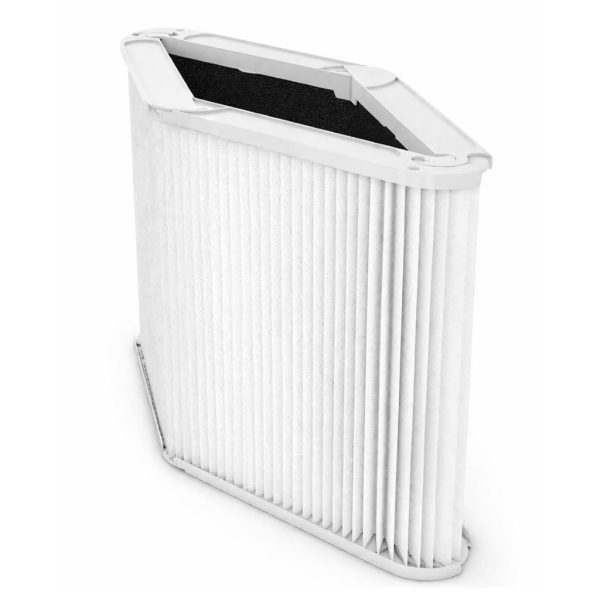
A multi-stage air purifier may include a pre-filter for larger dust particles, a HEPA filter for fine particles, activated carbon for odours and gases, and, in some models, extra features such as UV-C support or smart sensors. This combination allows the purifier to address multiple indoor air problems at the same time.
Multi-stage filtration is often considered the most balanced setup because it does not focus solely on dust or solely on odours. Instead, it provides broader support for the mixed indoor air problems that many homes face every day.
Why Multi-Stage Filtration Is Useful in Nepal
For many homes in Nepal, the air problem is not just one thing. A room may have dust, PM2.5, smoke particles, traffic-related odours, and stale indoor air all at once. That is why a purifier with just one strength may not always feel complete enough in daily use.
This is where multi-stage filtration becomes especially useful. It offers a more practical, well-rounded solution for households seeking better overall indoor air quality. A strong example is the Blueair HealthProtect 7770i Air Purifier, which is built for advanced, multi-layer purification in large rooms at homes and offices.
Types of Air Purifiers: What Does Each One Target?
Every type of air purifier works differently. Some are mainly used for particles, while others are better for odours, gases, or added convenience. Understanding what each one targets makes it much easier to choose the right purifier for your home.
- HEPA: Best for dust, pollen, smoke particles, PM2.5, allergens, and mould spores. It is mainly used for particle removal.
- Activated Carbon: Best for odours, gases, VOCs, smoke smell, and stale indoor air. It is mainly used for gas removal and smell absorption.
- UV Air Purifier: Mainly used to target bacteria, viruses, and some biological contaminants as an added purification feature.
- Smart Air Purifier: Mainly focused on monitoring, convenience, auto adjustment, and easier control through features like sensors and app support.
HEPA vs Activated Carbon vs UV vs Smart Air Purifier
Instead of asking which type of air purifier is best, you should be asking what each type is best for. That is because each technology serves a different purpose, and comparing them only makes sense when you first understand what kind of indoor air problem you are trying to solve.
- HEPA: Best for dust, pollen, PM2.5, smoke particles, allergens, and other fine airborne particles.
- Activated Carbon: Best for odours, gases, VOCs, smoke smell, and stale indoor air.
- UV-C: Usually a secondary support feature that is mainly used to target bacteria, viruses, and some biological contaminants.
- Smart Air Purifier: Best for convenience, monitoring, auto adjustment, and easier day-to-day use through sensors and controls.
These technologies are not direct replacements for one another. In many cases, the best air purifier is one that practically combines more than one of these features.
HEPA vs Activated Carbon
HEPA is best for dust, pollen, PM2.5, and other fine airborne particles, while activated carbon is best for odours, gases, VOCs, and stale indoor smells. They address different air problems, which is why many good air purifiers use both.
HEPA vs UV Air Purifier
HEPA is generally more important for homes because it directly handles the pollutants people encounter every day, such as dust, PM2.5, pollen, and smoke particles. These are the main reasons Nepalese people buy an air purifier in the first place.
UV-C is usually a secondary feature that may add value in certain models, but for most homes, it is not more important than strong particle filtration. That is why HEPA should be treated as the bigger priority between the two.
Smart Air Purifier vs Regular Air Purifier
A smart air purifier offers extra features such as sensors, monitoring, app control, and auto mode, which make it more convenient to use. A regular purifier may still clean the air very well if the underlying filtration technology is strong and well-matched to the room.
Smart models are usually more expensive because of these added features. For example, models like the Blueair DustMagnet 5440i and Blueair HealthProtect 7470i are more advanced and cost around NPR.60,000-96,000, while a simpler model like the Blueair Blue 411 is a more basic option and costs around NPR.22,000.
The main thing to remember is that smart features add convenience, but filtration quality matters more.
Which Type of Air Purifier Is Best for Typical Homes in Nepal?
For most homes in Nepal, the most practical choice is a purifier with HEPA filtration, activated carbon, and smart features if the budget allows. This is because the most common real-life indoor air problems are not single issues. They include dust, PM2.5, smoke particles, stale indoor air, cooking smells, and traffic-related odours.
A multi-stage air purifier is usually the most suitable option because it handles both particle and gas removal more comprehensively. For day-to-day use in Nepal, especially in dusty, urban areas, this kind of balanced setup is often far more useful than choosing a purifier that focuses too heavily on a single feature.
How to Choose the Right Air Purifier Technology
Choosing the right Air Purifier Technology becomes much easier when you focus on your actual indoor air problem rather than getting distracted by technical terms. If your main problem is dust, you should choose a purifier with strong HEPA filtration. If your main problem is odours and gases, an activated carbon air purifier, or a model with a meaningful carbon stage, is the better option.
If you want convenience and better monitoring, a smart air purifier with a PM2.5 sensor and auto mode can be a strong choice. If you are considering UV, it is better to treat a UV light air purifier as an added feature rather than the main reason to buy. For most people, the best option is a purifier with multi-stage filtration that combines HEPA and activated carbon, and, if possible, smart features.
Common Mistakes to Avoid
A wrong air purifier choice often happens when you pay more attention to marketing terms than to the purifier’s actual function. A little clarity here can save money and help you choose a model that truly fits your room and air problem.
- Focusing on one feature only, such as UV or smart control, without checking the main filtration.
- Ignoring the difference between particles and odours, even though they need different filtration support.
- Assuming all filters are the same, when filter quality can vary a lot.
- Overpaying for smart features while overlooking core purification performance.
- Buying a purifier without matching it to the room size or the space’s actual use.
- Expecting one purifier type to solve every air problem without checking what it is best at.
FAQs
What are the main types of air purifiers?
The main types of air purifiers are HEPA, activated carbon, ultraviolet, and smart air purifiers. Many modern models combine these in a multi-stage system.
What does a HEPA air purifier remove?
A HEPA air purifier is designed to capture dust, pollen, PM2.5, smoke particles, allergens, and mould spores from the air.
What does an activated carbon air purifier do?
An activated carbon air purifier helps absorb odours, gases, VOCs, and smoke smells, making indoor air feel fresher and less stale.
Is a UV air purifier better than a HEPA?
No, a UV air purifier is not usually better than a HEPA air purifier for everyday home use, because most homes mainly need help with dust, PM2.5, pollen, and smoke particles. HEPA directly captures these pollutants, while UV is usually a support feature.
Is a smart air purifier worth it?
A smart air purifier is worth it if you want features like sensors, PM2.5 monitoring, auto mode, and app control. It improves convenience, but filtration quality still matters most.
Which type of air purifier is best for homes in Nepal?
For most homes in Nepal, a purifier with HEPA + activated carbon is the best and most balanced choice, as it can effectively target both particles and odours.