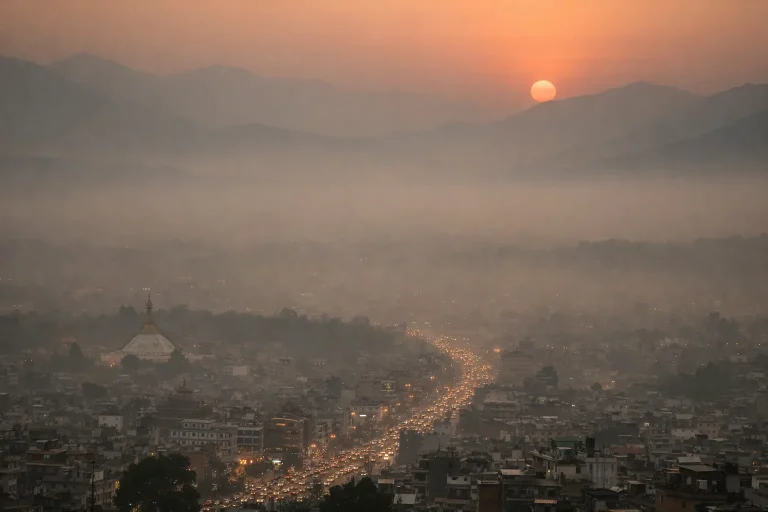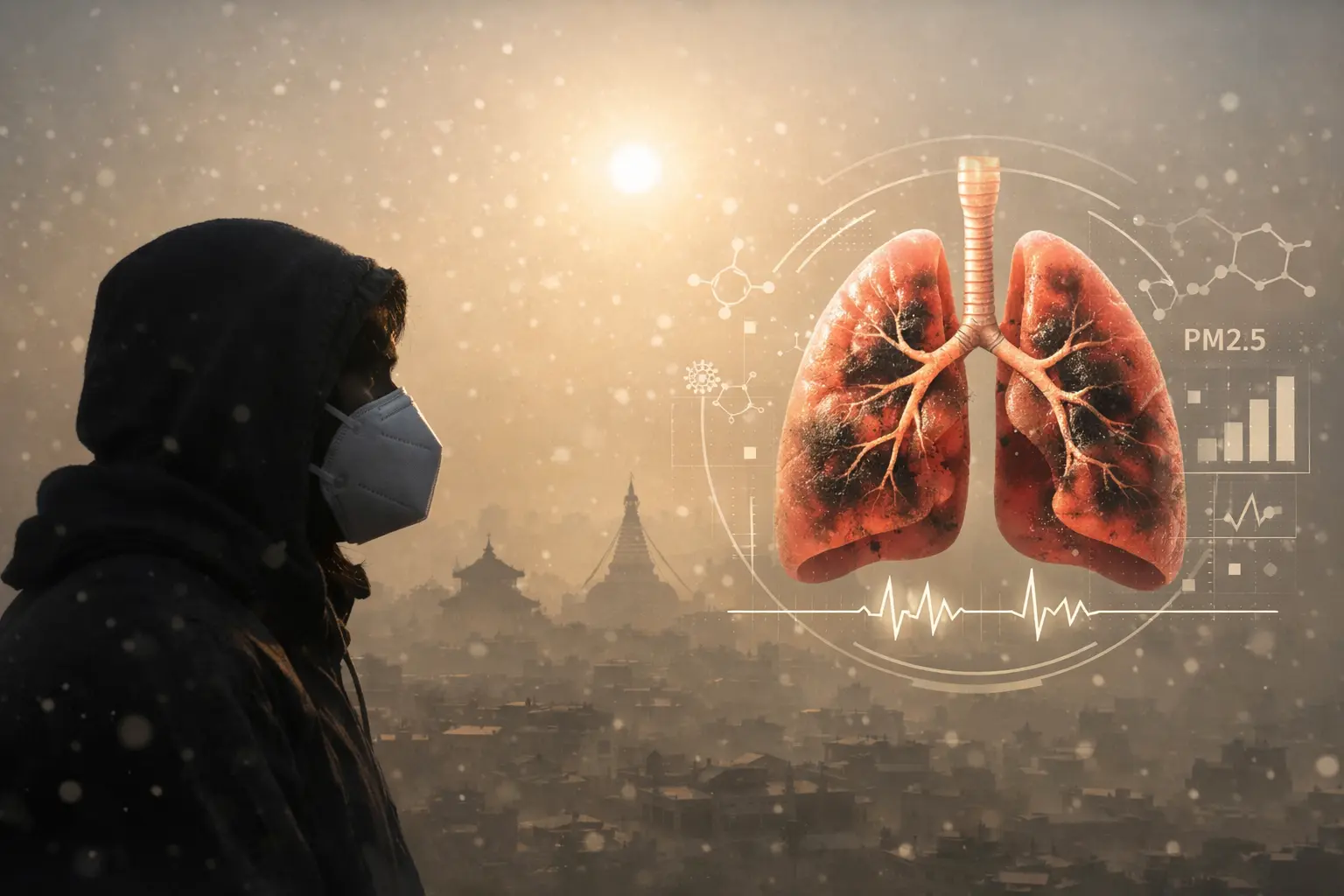
Air pollution in Kathmandu Valley has become one of the most serious environmental and public health challenges.
While many residents are now checking daily pollution levels online, understanding what those numbers actually mean for our health is equally important.
In this article, we explore the differences between visible dust and fine particulate pollution, and why PM2.5 is one of the most dangerous pollutants in urban environments.
Dust vs. Fine Particles: What’s the Difference?
If you live in Kathmandu, you have probably noticed the large amount of dust created by road expansion projects, building construction, and underground pipe installation.
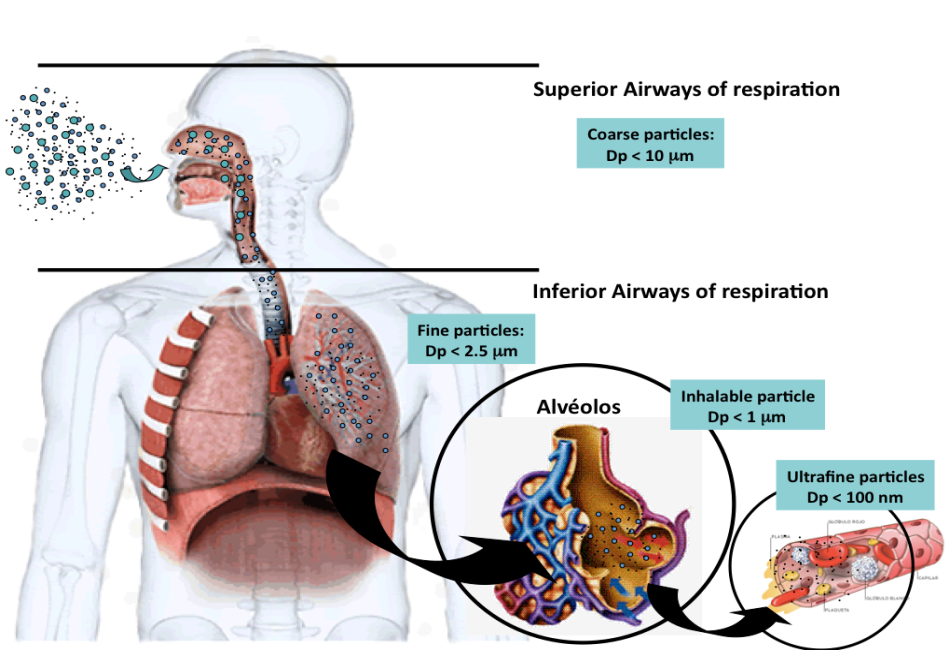
The dust we commonly call “Dhulo” consists mostly of particles larger than 2.5 microns.
Scientists refer to these as coarse particles.
Because these particles are relatively large:
- They fall to the ground quickly
- They usually remain close to roads or construction sites
- They are easier for our bodies to filter out
When inhaled, most coarse particles get trapped in the nose and throat, and our body removes them naturally through coughing or sneezing.
You can reduce exposure by:
- Wearing a mask
- Covering your nose and mouth with a cloth
- Avoiding dusty construction areas
While dust is unpleasant and irritating, it is generally less harmful than fine particulate pollution.

What is PM2.5?
PM2.5 refers to fine particulate matter smaller than 2.5 microns in diameter.
These particles can remain suspended in the air for long periods and penetrate deep into the lungs, causing serious respiratory and cardiovascular health problems.
Why PM2.5 Is More Dangerous
Fine particulate matter, known as PM2.5, consists of particles smaller than 2.5 microns.
These particles behave very differently from dust.
PM2.5 can:
- Stay suspended in the air for days or even weeks
- Travel long distances
- Penetrate deep into the lungs
Once inhaled, these particles reach the alveoli, the tiny air sacs where oxygen enters the bloodstream.
This is where the real health problems begin.
PM2.5 can also carry harmful chemicals, including toxins and cancer-causing substances.
Health Effects of PM2.5 Exposure
Exposure to fine particulate pollution can lead to both short-term and long-term health problems.
Short-Term Effects
- Coughing
- Wheezing
- Breathing difficulty
- Irritated airways
Long-Term Health Risks
Long-term exposure to PM2.5 can cause or worsen serious conditions such as:
- Asthma
- Chronic bronchitis
- Heart disease
- Pneumonia
It is also linked to:
- Increased hospital visits
- More emergency room cases
- Missed days from work and school
For pregnant women, long-term exposure may lead to premature birth or low birth weight.

Who Is Most at Risk?
Although everyone can be affected, certain groups are especially vulnerable to PM2.5 pollution:
- Infants and young children
- Elderly people
- People with asthma
- Individuals with heart disease
- People with diabetes or high blood pressure
Air pollution and asthma are a particularly dangerous combination, as PM2.5 can trigger more frequent and severe asthma attacks.
The Situation in Kathmandu
Research from global health studies shows that for every 10 µg/m³ increase in PM2.5 exposure, cardiopulmonary deaths increase by approximately 6–13%.
A study conducted by the Nepal Health Research Council (NHRC) in 12 major hospitals in Kathmandu revealed alarming findings:
- 15% of pneumonia cases are linked to PM2.5 exposure
- Nearly 10% of acute respiratory infections are attributable to air pollution
- A 10 µg/m³ increase in PM2.5 levels corresponds to a 3.7% rise in daily death rates
Further analysis suggests that around 9 deaths per day in Kathmandu Valley may be related to PM2.5 exposure.
That adds up to approximately 3,400 premature deaths every year.

Why Action Is Urgent
These numbers highlight a critical reality: air pollution is not just an environmental issue; it is a major public health crisis.
Reducing PM2.5 levels will require action from:
- Government authorities
- Industries and businesses
- Urban planners
- Citizens
Cleaner transportation, better construction practices, and stricter emission control policies are essential steps toward protecting the health of Kathmandu residents.
Final Thoughts
Dust from construction may be visible and irritating, but fine particulate pollution (PM2.5) poses a far greater threat to our health.
Because these particles are invisible and persistent, they silently impact the lungs, heart, and overall well-being of millions of people.
Understanding the risks is the first step.
The next step is taking action to reduce pollution and protect public health in Kathmandu Valley.