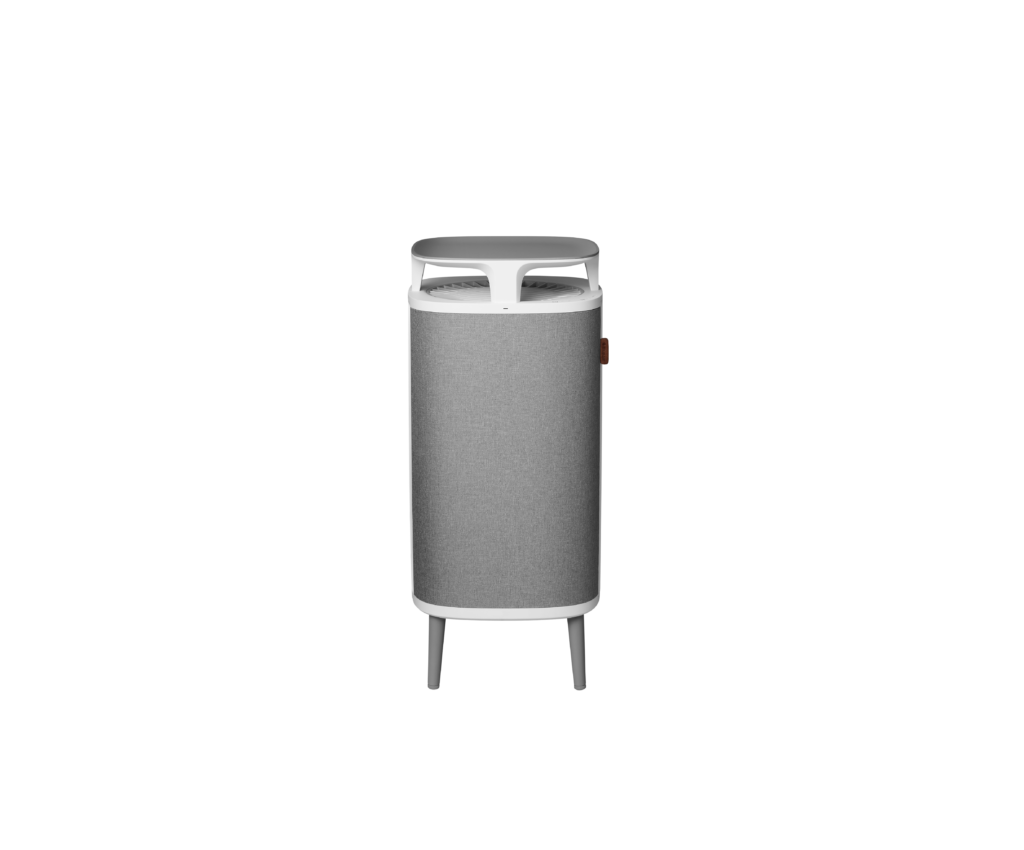
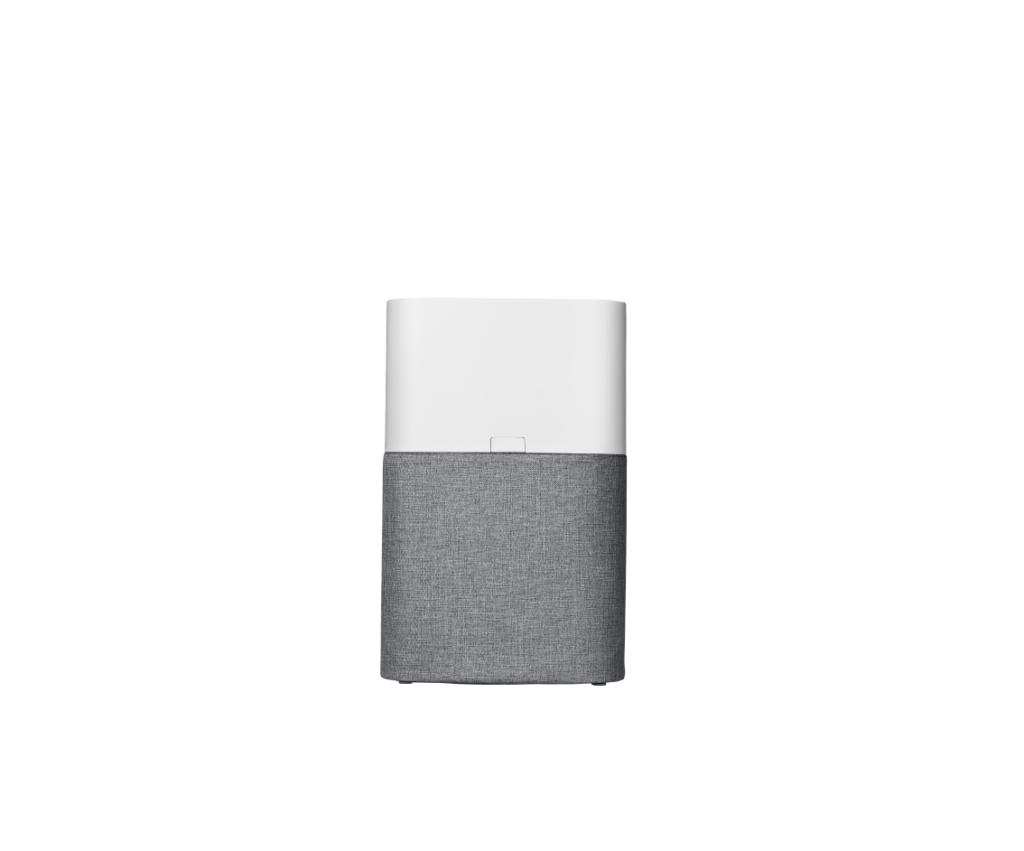
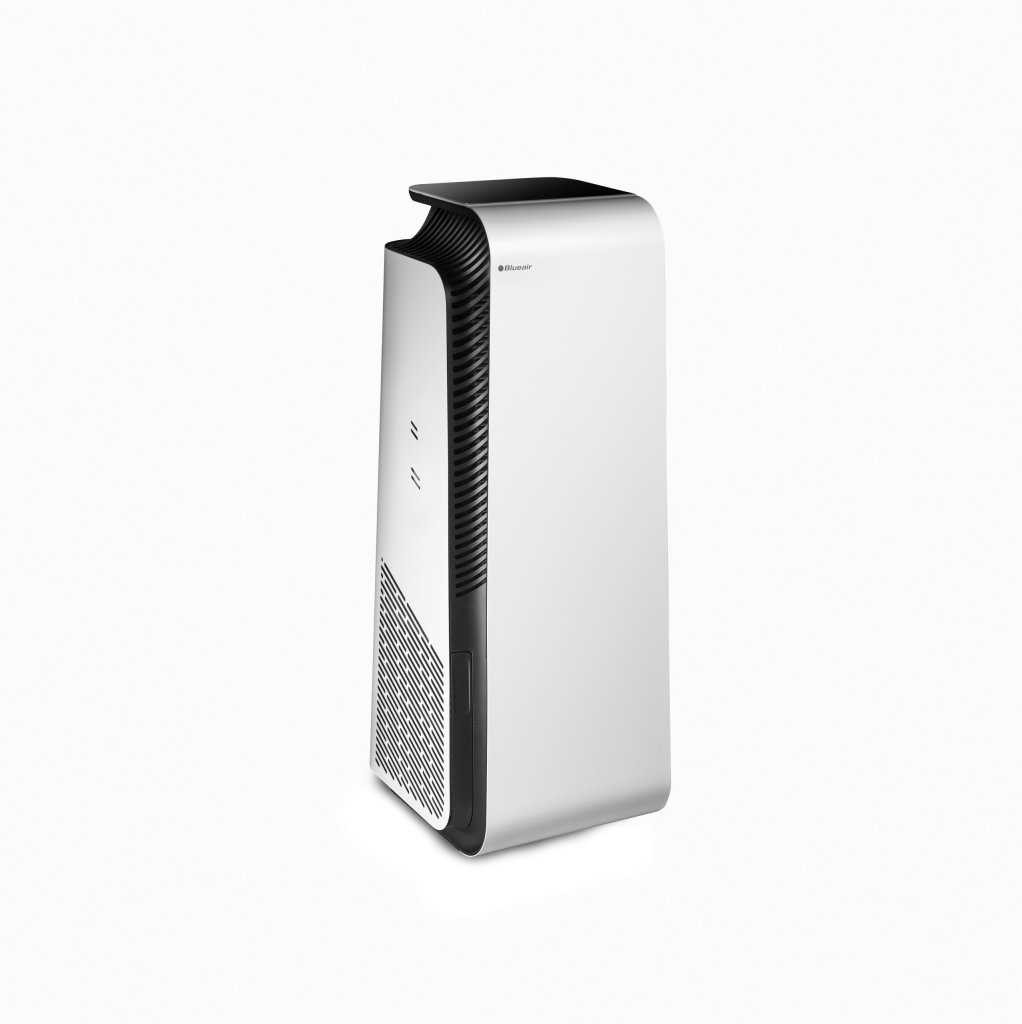
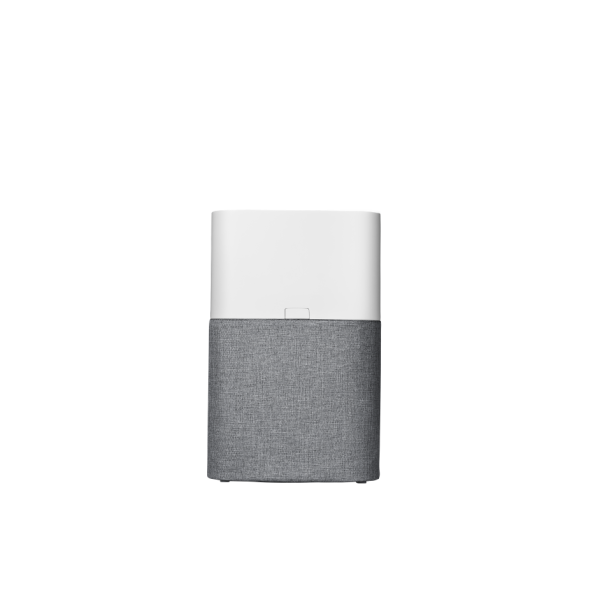
The Large Room Air Purifier is a high-capacity purifier that matches your room size, uses powerful particle filtration, includes odour control, runs quietly, and supports easy filter replacement. Large bedrooms, living rooms, offices, clinics, reception areas, and open spaces need more airflow than small rooms.
A large-room air purifier must clean a larger volume of air. A small purifier may look affordable, but it can struggle in a large room. The result is weaker dust control, slower air cleaning, and longer run times.
In Nepal, many buyers need large-room purifiers for homes in Kathmandu, roadside offices, clinics, schools, showrooms, and apartments with open living areas. The right purifier can help reduce indoor dust, smoke particles, pollen, pet dander, cooking smells, traffic-related particles, and common indoor odours.
This guide explains how to choose the right large-room air purifier by comparing room coverage, airflow, filtration, noise level, filter replacement cost, price, and practical use cases for homes and workplaces in Nepal.
Why Large Rooms Need a Stronger Air Purifier?
Large rooms need a stronger air purifier because they contain more air, and the purifier must circulate and filter that air across a wider space. On dry or high-AQI days, large rooms can feel dustier, heavier, and more polluted, especially in Kathmandu homes, offices, clinics, and reception areas.
You can check live Kathmandu air quality from sources like IQAir before choosing a purifier, but the main point is to select a model with enough coverage and airflow for the room size.
Common large-room air problems in Nepal
| Air Problem | Common Source | Helpful Purifier Feature |
| Fine dust | Roads, windows, construction | HEPA-grade particle filter |
| Smoke particles | Cooking, incense, tobacco, traffic | HEPA filtration |
| Odor | Food, dampness, smoke, chemicals | Activated carbon filter |
| Allergens | Pollen, pets, bedding, curtains | HEPA filtration |
| Indoor stuffiness | Poor air movement | Higher airflow and proper placement |
| Visitor-related dust | Offices, clinics, reception areas | more extensive coverage and continuous use |
If the purifier is not powerful enough for a large room, you may notice dust settling quickly on furniture, heavy or stale air, smoke or odours lingering longer, uneven air cleaning in corners, weak performance on bad AQI days, and poor results in open-plan spaces. That is why a large-room air purifier should be selected based on room coverage, CADR/airflow capacity, filtration efficiency, noise level, replacement filter cost, and actual room conditions, not price alone.
Best Large Room Air Purifier for Different Spaces in Nepal
The best large room air purifier depends on how the space is used. A master bedroom needs quiet airflow, a living room needs wide coverage, an office needs durable performance, a clinic needs clean and consistent operation, and a reception area needs fast air movement with simple maintenance.
Best Large Room Air Purifier for Large Bedrooms
A large bedroom air purifier should clean the air quietly while you sleep. It should reduce dust, pollen, smoke particles, pet dander, and other allergens without creating excessive noise. Features like sleep mode, low fan settings, dim light, or display-off mode are helpful for nighttime use.
For bedrooms, look for a purifier that offers:
- Quiet nighttime operation for comfortable sleep
- Strong particle filtration for dust, pollen, and allergens
- Activated carbon filter for smoke, traffic smell, and odours
- Sleep mode or low fan setting for overnight use
- Dim the light or put the display in off mode to avoid disturbance
- Enough room coverage for master bedrooms and larger sleeping spaces
Large bedrooms often include wardrobes, curtains, carpets, bedding, and attached bathrooms. These areas can collect dust, fibres, and moisture, so a purifier helps improve air circulation and keep the room air fresher. However, it should still be used along with regular cleaning and proper moisture control. For large bedrooms in Nepal, Clean Air Nepal offers Blueair, a premium Swedish air-purifier brand known for quiet operation, strong particle filtration, and reliable everyday use.
For example, a master bedroom near a busy road can benefit from the Blueair HealthProtect™ 7470i. It is suitable for bedrooms and home offices up to 38 m², offers quiet operation for sleep, and is designed to remove dust, allergens, bacteria, and viruses. Its particle filtration helps reduce fine dust and PM2.5, while its carbon filter helps control smoke, traffic smells, and other odours.
Best Large Room Air Purifier for Living Rooms
A living room needs a purifier with broader coverage and strong airflow because it often connects to dining areas, staircases, balconies, or open kitchens. In Nepal, living rooms can also collect dust from main doors, roadside windows, guests, and daily movement around the house. If the purifier is too small, it may clean only one part of the room and leave other areas feeling dusty or stale.
A good living room air purifier should offer:
- Wide room coverage for larger and semi-open spaces
- Strong CADR/airflow to circulate air across the room
- Particle filtration for dust, pollen, and fine particles
- Activated carbon filtration to reduce cooking smell, smoke, and odours
- Low-noise operation for family time, TV, and conversation
- Higher fan speed options for bad AQI days or heavy dust exposure
For living rooms in Nepal, placement is also important. Keep the purifier in the main air movement zone of the room, not hidden behind a sofa, curtain, or cabinet. Leave enough space around the air intake and outlet so the purifier can pull in polluted air and circulate clean air properly.
Placement is also important, so keep the purifier in the main airflow area rather than hiding it behind a sofa, curtain, or cabinet. Leave enough space around the air intake and outlet so the purifier can pull in polluted air and circulate clean air properly.
Best Large Room Air Purifier for Offices
An office air purifier should handle long daily use, multiple people, paper dust, carpet fibres, outdoor dust, and closed-room air. It should be reliable and easy to maintain. A good office air purifier should cover the entire office area, run for long hours, remain quiet during calls and meetings, and include filter alerts for easy maintenance.
Offices near busy roads in Kathmandu may need stronger filtration, while shared workspaces or meeting rooms divided by partitions may need multiple purifiers for better air circulation.
Office purifier sizing guide
| Office Type | Main Need | Recommended Purifier Trait |
| Small office room | Dust and daily use | Medium-to-large coverage |
| Meeting room | Quiet operation | Low-noise mode |
| Open office | Wider airflow | more extensive coverage and higher fan speed |
| Roadside office | Dust and exhaust exposure | HEPA plus carbon |
| Reception desk area | Visitor traffic | High airflow and simple controls |
Best Large Room Air Purifier for Clinics
A clinic air purifier should provide consistent particle filtration, low noise, and dependable operation. Clinics need careful indoor air management because patients, staff, and visitors share the same space.
For medical spaces, buyers should choose an air purifier based on verified product performance, filtration quality, and relevant certifications. An air purifier can help reduce airborne dust, fine particles, and certain pollutants. However, it should not replace proper ventilation, regular cleaning, hygiene practices, or medical infection-control measures.
Claims about disease prevention should always be checked through credible health guidance and product-specific evidence. The EPA notes that air cleaning and filtration can help reduce airborne contaminants, but filtration alone is not enough to protect people from respiratory infections.
A good clinic purifier should:
- Run continuously during working hours for consistent air cleaning
- Use strong particle filtration to reduce dust, fine particles, pollen, and allergens
- Include activated carbon filtration to help reduce odours, smoke, and outside air pollution
- Operate quietly in waiting areas so patients and staff are not disturbed
- Cover the full clinic or reception area based on room size and layout
- Offer filter change alerts for easier maintenance
- Allow remote control or app control so staff can adjust settings without touching the unit often
- Use simple controls so that daily operation is easy for staff
How to Choose the Best Large Room Air Purifier in Nepal?
To choose the best large-room air purifier in Nepal, first check your room size, then choose a purifier with sufficient coverage, a strong CADR/airflow rating, HEPA-grade particle filtration, activated carbon for odours, low noise, and easy filter replacement. Also consider filter cost, warranty, energy use, after-sales support, and whether the purifier can handle Nepal’s dust, smoke, traffic pollution, and bad AQI days.
Match the Purifier to Room Size
Room size is the first thing to check when choosing a large-room air purifier. The purifier should match the full area where it will be used, not just one corner of the room. Check the product’s recommended room coverage and compare it with your actual room size before buying.
Use this simple formula:
Length × Width = Room area
For example, a room that is 20 feet long and 15 feet wide has a floor area of 300 square feet. A larger or open-plan room may need a purifier with stronger airflow and wider coverage.
Check CADR or Clean Air Delivery Rate
CADR, or Clean Air Delivery Rate, indicates how quickly an air purifier delivers filtered air into a room. For large rooms, a higher CADR is usually better because there is more air to clean and circulate. If the CADR is too low, the purifier may clean the air slowly or struggle to maintain good air quality on dusty or high-AQI days.
However, CADR should not be the only factor when buying. Also, check the filter quality, room coverage, fan speed, air sealing, room layout, and purifier placement. A good, large-room air purifier needs strong CADR, genuine filters, proper airflow, and correct placement to perform well.
Choose HEPA-Grade Filtration
HEPA-grade filtration is one of the most important features in a large-room air purifier because it targets fine airborne particles such as dust, pollen, smoke particles, pet dander, fabric fibres, and particles from carpets or curtains. For larger spaces, choose a purifier with a high-efficiency particulate air (HEPA) filter as the primary filter, supported by strong airflow for better circulation.
For Nepal’s dusty homes, roadside offices, clinics, and open living spaces, this type of filtration is useful because visible dust is not the only problem. Fine particles can remain in the air even when the room looks clean. When choosing a large-room air purifier, check whether the product uses a high-efficiency particle filter, how long the filter lasts, and whether replacement filters are easily available.
Add Activated Carbon for Smoke and Odour
Activated carbon helps reduce odours from smoke, cooking, and chemicals, as well as certain gases. It is useful in Nepali homes and offices where incense, cooking, traffic exposure, or damp smell may be present.
A HEPA filter captures particles. Carbon handles odours and gases better. A combined system gives more complete air cleaning. Carbon filters also need replacement. A saturated carbon filter becomes less effective.
Activated carbon is useful for:
- Kitchens near living rooms.
- Homes that use incense.
- Roadside offices.
- Reception areas.
- Clinics with mixed indoor smells.
- Homes with pets.
Compare Noise Level Before Buying
Noise level is important because large-room purifiers often need to run at medium or high fan speed to move enough air. Check the purifier’s noise rating in dB(A), not just whether the brand says it is “quiet.” A good, large-room air purifier should balance high airflow/CADR with low operating noise, especially for bedrooms, offices, clinics, and reception areas.
Look for features such as sleep mode, low-fan setting, auto mode, quiet motor design, and display light control. Also, compare noise levels at different fan speeds because a purifier may be quiet on low speed but noticeably louder on high speed.
For context, the NIDCD notes that normal conversation is around 60–70 dBA. For bedrooms, buyers should look for an air purifier that runs at around 20–35 dB(A) in sleep mode or on low fan speed, so it cleans the air quietly without disturbing sleep.
| Noise Level | Bedroom Use |
| 20–30 dB(A) | Very quiet, best for sleep mode |
| 30–35 dB(A) | Comfortable for most bedrooms |
| 35–45 dB(A) | Better for daytime or medium-speed use |
| Above 45 dB(A) | May feel noticeable during sleep |
Review Filter Replacement Cost
Filter replacement cost is part of the real long-term cost of a large-room air purifier. A cheaper purifier may look affordable at first, but it can become difficult to maintain if the filters are expensive, unavailable, or not compatible with the model.
Before buying, check:
- Filter price and expected replacement cost
- Filter availability in Nepal
- Replacement schedule based on usage and room conditions
- Genuine filter source to avoid poor performance
- Model-specific compatibility
- Warranty and after-sales support
This is especially important for large rooms because the purifier may run for longer hours and collect more dust, smoke particles, and pollutants. For long-term use, choose a model with reliable filter support and easy access to genuine replacement filters.
Check Warranty and After-Sales Support
Air purifiers usually cost more than compact models, so warranty and after-sales support are important before buying. A good purifier should not only perform well on the first day but also be easy to maintain, service, and support over time.
Before purchasing, check:
- Warranty length and what the warranty covers
- Covered parts, such as the motor, sensors, or electrical components
- Service process in case the unit needs inspection or repair
- Filter availability for long-term use
- Brand support in Nepal
- Replacement or repair policy
- Access to genuine parts and filters
What Is the Price of a Large Room Air Purifier in Nepal?
The price of a large-room air purifier in Nepal usually ranges from around Rs. 50,000 to Rs. 125,000, the price depends on room coverage, CADR/airflow capacity, filtration technology, smart features, and filter type. Higher-capacity models for living rooms, offices, clinics, and open spaces generally cost more because they need stronger airflow and better coverage than small-room purifiers.
Here is a general Blueair price reference from Clean Air Nepal:
| Blueair Model | Approx. Price in Nepal | Best For | Key Technical Consideration |
| Blueair Blue 3610 | Around Rs. 50,000 | Large bedrooms, living rooms, and home spaces | Good coverage for medium-to-large rooms with simple operation and strong particle filtration |
| Blueair Classic 405 | Around Rs. 73,000 | Offices, large bedrooms, and living rooms | Higher airflow capacity with reliable filtration for continuous daily use |
| Blueair HealthProtect™ 7470i | Around Rs. 96,000 | Premium bedrooms, clinics, offices, and shared spaces | Advanced filtration, smart control, filter alerts, and quiet operation |
| Blueair Classic 480i | Around Rs. 87,000 | Larger rooms, offices, and open living areas | Strong CADR/airflow performance with particle and gas filtration support |
| Blueair Classic 680i | Around Rs. 118,000 | Large living rooms, clinics, offices, and open spaces | High-capacity air cleaning for bigger rooms with stronger airflow and more extensive coverage |
When comparing large-room air purifier prices, do not look at the product cost alone. Also check room coverage, CADR/airflow, replacement filter cost, warranty, filter availability, noise level, energy use, and after-sales support. A cheaper purifier may seem affordable at first, but if it is too small for the room, it may run continuously and still fail to clean the air properly.
Which Filter Is Best for a Large Room Air Purifier?
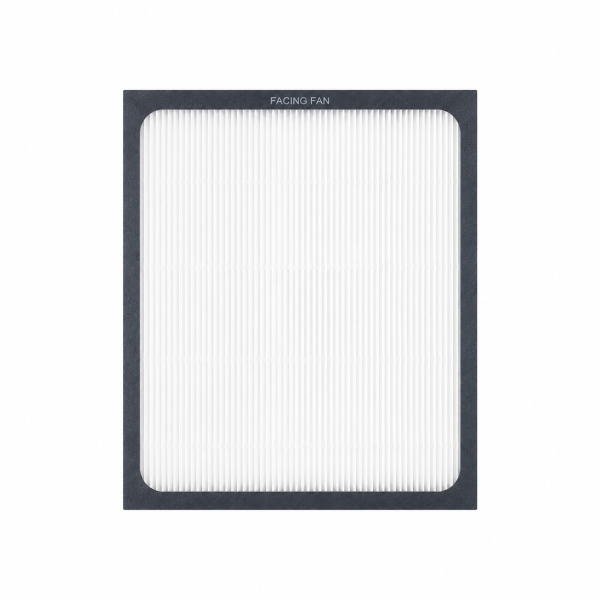
For a large-room air purifier, the best filter setup is a multi-stage filtration system that includes a pre-filter, a HEPA-grade particle filter, and an activated carbon filter. Large rooms collect more dust, smoke particles, odours, allergens, and fine pollutants, so a single filter type is usually not enough for everyday use.
A good, large-room purifier should include these filter types:
| Filter Type | What It Does | Best For |
| Pre-filter | Captures larger dust, hair, lint, and visible particles before they reach the main filter | Homes with dust, pets, carpets, curtains, and open windows |
| HEPA-grade particle filter | Traps fine particles such as dust, pollen, PM2.5, smoke particles, and allergens | Kathmandu homes, offices, clinics, bedrooms, and living rooms |
| Activated carbon filter | Helps reduce odours, smoke smell, cooking smell, traffic smell, and certain gases/VOCs | Living rooms, kitchens, roadside homes, offices, and reception areas |
| Combined particle + carbon filter | Handles both fine particles and odour control in one filter system | Large rooms with both dust and smell problems |
Filter replacement is also an important part of choosing a large-room air purifier. In Nepal, filters may need to be replaced more frequently because of road dust, construction debris, smoke, pets, long usage hours, and poor AQI days. For most homes and offices, replacement is usually needed every 6 to 9 months, while dusty roadside spaces, clinics, offices, or heavy-use rooms may need replacement every 4 to 6 months.
Filter costs also vary by purifier size and filter type, but replacement filters generally range from Rs. 7,000 to Rs. 22,500. This is why buyers should check filter availability, replacement cost, and how often the filter needs to be changed before purchasing, not just the purifier’s price.
Large Room Air Purifier Features That Matter Most
A large-room air purifier should be chosen for real performance, not only design or appearance. The most useful features are those that improve air circulation, capture fine particles, reduce odours, control noise, and simplify long-term maintenance.
Must-Have Features
| Feature | Why It Matters | Best For |
| Strong room coverage | Helps the purifier clean the full room area, not just the space nearby | Large bedrooms, living rooms, offices, and clinics |
| High CADR / strong airflow | Moves filtered air faster and improves air circulation in bigger spaces | Open rooms, high-dust areas, and bad AQI days |
| HEPA-grade particle filter | Captures fine particles such as dust, pollen, smoke particles, pet dander, and PM2.5 | Homes, offices, clinics, roadside spaces |
| Activated carbon filter | Helps reduce smoke, cooking smell, traffic odour, pet smell, and common indoor odours | Living rooms, kitchens nearby, and roadside offices |
| Multiple fan speeds | Let’s users adjust airflow based on dust level, room size, and noise preference | Bedrooms, offices, clinics, shared spaces |
| Low-noise or sleep mode | Supports quiet operation during sleep, calls, meetings, and patient conversations | Bedrooms, offices, clinics, reception areas |
| Filter replacement alert | Reminds users when the filter needs changing, helping maintain performance | Long-hour use, offices, clinics, busy homes |
| Local filter support | Ensures genuine replacement filters are available when needed | Long-term ownership in Nepal |
Helpful Extra Features
| Feature | Why It Helps | Best For |
| Air quality sensor | Shows air quality changes and helps users understand when pollution levels rise | Users who want visible feedback |
| Auto mode | Adjusts fan speed based on detected air quality | Busy homes, offices, and clinics |
| App control | Allows remote control, scheduling, and monitoring from a phone | Users who prefer smart control |
| Child lock | Prevents accidental setting changes | Families, clinics, waiting areas |
| Display dimming | Reduces light disturbance during sleep | Bedrooms and night-time use |
| Wheels or handles | Makes it easier to move the purifier between rooms | Large rooms, offices, shared spaces |
| Energy-efficient operation | Helps reduce electricity use during long daily operation | Homes, offices, and clinics using purifiers for many hours |
Find the Right Large Room Air Purifier for Your Space
Choosing a large-room air purifier becomes easier when you know your room size, airflow needs, preferred filter type, noise tolerance, and long-term filter costs. Clean Air Nepal offers genuine Blueair Swedish air purifiers for large bedrooms, living rooms, offices, clinics, reception areas, and open spaces in Nepal. Explore the available models, compare features, or contact Clean Air Nepal to choose a purifier that fits your space and daily air quality needs.
FAQs
What size air purifier do I need for a large room in Nepal?
Choose an air purifier based on your room area, coverage rating, CADR/airflow, and room layout. Large rooms, open living areas, offices, and clinics need stronger airflow than small bedrooms.
Is HEPA filtration enough for a large room air purifier?
HEPA-grade filtration is important for dust, pollen, PM2.5, smoke particles, and allergens, but activated carbon is also useful if the room has odours, cooking smells, smoke, traffic smell, or chemical smells.
How often should I change the filter in a large room air purifier?
For most homes and offices, filter replacement is usually needed around every 6 to 9 months. Dusty roadside spaces, clinics, offices, or heavy-use rooms may need replacement in 4 to 6 months.
Which air purifier is best for large living rooms in Nepal?
For large living rooms, choose a purifier with wide coverage, high CADR/airflow, HEPA-grade filtration, activated carbon, and low noise. High-capacity models such as Blueair Classic 680i can be suitable for bigger living spaces.
Can one air purifier clean an open-plan room?
Yes, one air purifier can clean an open-plan room only if its coverage and airflow match the full space. If the area is divided by partitions, furniture, or multiple zones, more than one purifier may be needed.